
होमWorld CricketThe Changing World of Cricket: T20 Dominance, Test Cricket's Survival Struggle and a New Global Ambition
The Changing World of Cricket: T20 Dominance, Test Cricket's Survival Struggle and a New Global Ambition
क्रिकेट का भविष्य तीन प्रारूपों के सहअस्तित्व पर निर्भर है, लेकिन यह सहअस्तित्व स्वतः स्थिर नहीं रहेगा। मुख्य तनाव तीन हैं: टी20 फ्रेंचाइज़ी लीगों का बढ़ता आर्थिक वर्चस्व, अंतरराष्ट्रीय कैलेंडर का अतिभार और टेस्ट क्रिकेट की आर्थिक व्यवहार्यता। समाधान की तीन शर्तें हैं — राष्ट्रीय और लीग दायित्वों के लिए स्पष्ट अलग विंडो वाला संतुलित वैश्विक कैलेंडर; ऐसा आय-वितरण मॉडल जो छोटे बोर्डों को प्रतिस्पर्धी बनाए, केवल जीवित न रखे; और खिलाड़ी कार्यभार-प्रबंधन को औपचारिक मान्यता। 2028 लॉस एंजिल्स ओलंपिक में क्रिकेट की भागीदारी वैश्विक विस्तार का निर्णायक मोड़ मानी जा रही है। यदि उपरोक्त सुधार नहीं हुए, तो जोखिम यह है कि खेल दो समानांतर आर्थिक दुनियाओं में बँट जाए — एक समृद्ध फ्रेंचाइज़ी परितंत्र और एक प्रतिष्ठित पर प्रासंगिकता खोती अंतरराष्ट्रीय व्यवस्था।
Cricket is passing through one of the largest transition phases in its history. Over the past two decades the sport's economic architecture, its broadcast model, the profile of its audiences and its geographic footprint have all been reshaped. What was once a game largely confined to the Commonwealth now reaches North America, the Gulf and East Asia. The decision to include cricket in the 2028 Los Angeles Olympics is the clearest signal of that expansion.
That expansion, however, is not frictionless. Cricket's three formats — Test, ODI and T20 — now compete directly for resources, calendar space and audience attention. T20 has opened new markets, but it has also destabilised the traditional calendar. National-team priorities, player availability and board revenue structures are all being redefined by that tension.
The centre of economic gravity has clearly shifted to the T20 franchise league. The Indian Premier League has become the sport's most valuable commercial property, and its influence is not confined to India. South Africa's SA20, the UAE's ILT20, Major League Cricket in the United States, the Caribbean Premier League, the Big Bash League, the Pakistan Super League and the Lanka Premier League all rest on the same model: franchise owners, national boards and broadcasters co-creating a shared financial ecosystem.
The most significant consequence of that model is player availability. Once a national jersey was the unquestioned priority. Today a white-ball specialist can earn more across several leagues in a year than a central contract pays. This has empowered players but weakened the grip of national boards. Several boards now have to schedule bilateral series around league windows.
Calendar overload has become the sharpest debate in the game. For top-tier players, constant travel, bubble experiences, injury and mental fatigue arrive together. A number of leading fast bowlers and all-rounders have opted for selective workload management — skipping certain bilateral series to stay fresh for major tournaments. If the trend expands, the quality and competitive balance of bilateral cricket will suffer.
Test cricket is the most vulnerable party to this shift. It remains the sport's technical and emotional summit, but its economic viability is under constant question. In countries where Test revenue is limited, the cost of hosting is rising. Day-night Tests, the proposal for four-day Tests and a dedicated championship points table are all attempts born from the concern that the format must remain relevant.
But the solution is not purely a matter of format. The real problem is that Test cricket's audience base is highly concentrated. Series between India, England and Australia still generate record revenue and viewership, while other pairings are seen far less. That imbalance has sharpened a long-running argument inside the International Cricket Council over revenue distribution.
For smaller cricket nations this is an existential question. The West Indies, Zimbabwe, Ireland, Afghanistan, the Netherlands and Scotland have neither large domestic markets nor large broadcast deals. Their development path depends fundamentally on ICC grants and on series against the bigger nations. When the big boards' calendars are full, adequate international fixtures become hard to secure.
Franchise leagues cut both ways. They open new markets and give local talent a global stage, but they also pull calendar space and players out of the national system. For players from associate nations, league contracts are becoming the primary livelihood — the beginning of a new international labour economy in the sport.
The technical side of the game has changed too. Ball tracking, biomechanical analysis, AI-driven performance models and decision review systems are now embedded in coaching and selection. Data has made player evaluation more precise, but it has also challenged the intuitive side of the sport. Many former players dispute that numbers capture a cricketer's full value.
Women's cricket is the decade's most positive story. The launch of the Women's Premier League opened financial opportunity and drew audience and sponsor attention. Competition among India, Australia, England and South Africa is tighter than ever. The challenge is to ensure growth is not confined to a few countries and that equal opportunity exists globally.
Rules themselves are being experimented with. The impact player rule in franchise leagues has changed the shape of matches: more specialisation, more aggression, and a shift from conventional strategy towards immediate impact. Critics call it an assault on the game's balance; supporters call it a response to audience demand. There is no international consensus on adopting it.
Pitch and venue debates have intensified. Preparing surfaces to suit home conditions is part of strategy, but excess damages competitive balance. Matches finishing in two or three days, disproportionate spin dominance, or relentless swing are all issues that referees and technical committees monitor closely.
The broadcast rights market is being restructured as well. Streaming platforms and traditional television are now direct competitors, and that makes rights valuations volatile. Small boards are especially exposed, because the size of their markets prevents them from bidding big.
The talent pipeline is under pressure too. The demand for fast cricket has altered under-19 and domestic structures. Players specialise earlier, raising fears that technically complete cricketers capable of long-format cricket will become scarcer.
Global expansion has several dimensions. Cricket's popularity has grown in the United States, and hosting major events has accelerated infrastructure there. Olympic inclusion is seen as a decisive turn, because it will encourage new countries to adopt the game and open the door to public funding.
But there is a warning attached to expansion. When commercial priorities begin to determine how the sport is run, the traditional structure of international competition weakens. The question is no longer only economic; it is one of governance. Who decides where cricket's future goes — boards, broadcasters, franchise owners, or players?
Amid all this, the viewer's experience has improved. Better cameras, instant statistics, multi-language commentary and digital engagement have made the sport more accessible. This is the positive change that often gets underweighted in the debate.
The conclusion is both clear and uncomfortable. Cricket's future rests on the coexistence of three formats, but that coexistence will not hold automatically. Three conditions are necessary. First, a balanced global calendar that places national and league obligations in clearly separated windows. Second, a revenue model that does not merely keep smaller boards alive but makes them competitive. Third, formal recognition of player workload management so that fatigue and injury are reduced through planning rather than crisis.
If these three do not happen, the risk is that cricket splits into two parallel economic worlds: a prosperous franchise ecosystem, and an international structure that retains prestige but loses relevance. That outcome is undesirable for any sport, and certainly for cricket.
The next few years will be decisive. The Olympic debut, board agreement on calendar reform and a sustainable financial model for Test cricket — the decisions taken on these three points will set the framework for the next two decades. Cricket has the opportunity, but it also carries a responsibility: the ability to carry market and tradition together. That ability will determine whether the sport merely stays popular or genuinely becomes global.
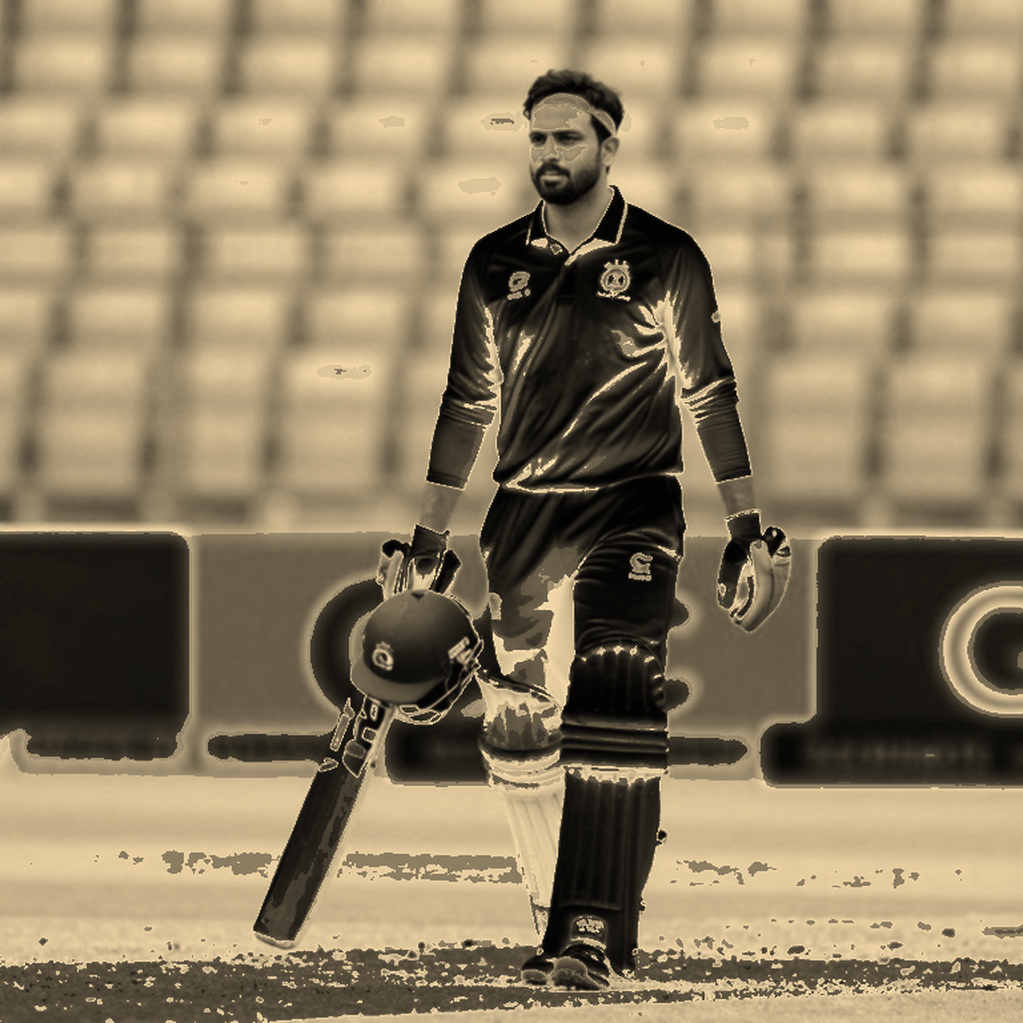
संबंधित खिलाड़ी