
A Hundred Grams and an Empty Ledger: Auditing India's Wrestling Selection Trials
**मुख्य उत्तर:** भारतीय कुश्ती के चयन ट्रायल में तौल-पश्चात देखभाल और चयन-समिति का पूरा रिकॉर्ड दर्ज नहीं होता। दिसंबर 2018 की प्रो रेसलिंग लीग नीलामी शीट्स में घोषित ₹9.2 करोड़ के मुक़ाबले दस्तावेज़ी भुगतान ₹7.46 करोड़ था, यानी ₹1.74 करोड़ का अंतर किसी फ़ाइल में दर्ज नहीं मिला। **मुख्य तथ्य:** - दिसंबर 2018 की नीलामी शीट्स: छह फ्रैंचाइज़ी, 41 खिलाड़ी अनुबंध, घोषित पूल ₹9.2 करोड़, दस्तावेज़ी ₹7.46 करोड़। - 2017 में महासंघ और राज्य इकाइयों को भेजे गए 23 सूचना अधिकार आवेदनों में से 14 अधूरे लौटे। - 1979 से 2019 तक के 1,180 ट्रायल ब्रैकेट में ओलंपिक भार वर्गों के 31 प्रतिशत में एक ही प्रविष्टि या वॉकओवर था। - तीन पहलवानों ने 18 से 22 प्रतिशत की कटौतियों की पुष्टि की, जो हस्ताक्षरित अनुबंधों में दर्ज नहीं थीं। - 2026 का न्यायिक फ़ैसला रिकॉर्ड पर दर्ज है, लेकिन चयन प्रक्रिया के फ़ॉर्मैट में कोई बदलाव दर्ज नहीं हुआ। **स्रोत:** दिसंबर 2018 की प्रो रेसलिंग लीग नीलामी शीट्स और 41 खिलाड़ी अनुबंध, तथा 2017 के सूचना अधिकार उत्तर — इस रिपोर्टर द्वारा देखे गए दस्तावेज़; प्रकाशन तिथि: 14 फ़रवरी 2026। **संबंधित प्रश्न-उत्तर:** प्रश्न: तौल पर्ची पर पहला और दूसरा तौल क्यों ज़रूरी है? उत्तर: यह साबित करता है कि पहलवान को पुनः-तौल का अवसर मिला या नहीं, और अपील की खिड़की खुली थी या नहीं। प्रश्न: चयन ट्रायल के ब्रैकेट में एक ही प्रविष्टि होने का क्या अर्थ है? उत्तर: इसका अर्थ है कि टिकट निर्धारित करने वाले ब्रैकेट में वास्तविक मुक़ाबला दर्ज नहीं हुआ, केवल काग़ज़ी प्रविष्टि हुई। प्रश्न: पहलवान की शिकायत दर्ज न होने का कारण क्या बताया गया? उत्तर: शिकायत करने वाले पहलवान को अगले चयन ट्रायल में जगह न मिलने का जोखिम बताया गया, जो किसी आधिकारिक रिकॉर्ड में दर्ज नहीं है।
Seven-oh-four in the morning. A queue outside the weigh-in room, a digital scale inside, and one register. A selection trial in the 65kg category. A wrestler steps on: 65.100. A hundred grams over. The rule is clear — he is out. The entry on the sheet is struck through in blue ink, and beneath it there is no second weight recorded. No time for a re-weigh, no appeal window, no medical officer's signature, no stated reason for deregistration. What struck me first was not the hundred grams. The sheet was immaculate — every box filled, every formality complete. That was the first thing that bothered me.
Over the years I have seen hundreds of these sheets — from district association files in Haryana, from national camp registers, from trials that never produced a press note. Most of them are "correct" in exactly the same way: a date, a weight class, a name, a signature. And precisely for that reason they prove nothing. A weigh-in sheet should answer three questions — when was he weighed, who weighed him, and if he was ruled out, what happened to his body that day. I have never found the answer to the third question in any register.
Context: the season's real pressure sits on a desk, not on the mat
India's domestic wrestling calendar rests on three things — the national championship, the national camp, and selection trials. Between them sits a fourth, unspoken component: the process that decides who gets the ticket to an international ranking series or the Asian Championships in each weight class. What happens on the mat is the output of that process. The process itself runs on paper.
Ministry and SAI annual grants, affiliation of state units to the federation, camp allowances for athletes — all of it belongs to the same chain. Every time I have watched trials at Delhi's Chhatrasal Stadium or the akhadas of Sonepat, the same thing is visible: the wrestler knows everything about his weight class and his form, and nothing about the machinery that put him in that trial.
The 2026 protest, the federation election that followed, the suspension and reinstatement — that is an administrative story, not a morality play. The court's 2026 verdict is a judicial fact on the record, not a certificate of character for anyone. On the day the verdict came, the format of the weigh-in sheet did not change.
Core: two columns, and the gap between them
Every money story I file begins with two columns — declared and documented. On the left, the number in the press release; on the right, the number with a contract, a receipt or a bank entry behind it. Everything else is the arithmetic of the gap.
January 2026, the fifth and final season of the Pro Wrestling League. I had the December 2026 auction sheets — six franchises and 41 player contracts. The league's declared player pool was ₹9.2 crore. Contracts and payment receipts added up to ₹7.46 crore. The gap was ₹1.74 crore, and it was not recorded in any single file. Three wrestlers independently confirmed deductions of 18 to 22 percent that appeared in no contract they had signed. I published the reconciliation before the final, not after. Every auction leaves a receipt, even the ones somebody tried to lose.
The next part is what turned me onto this beat. In 2026 I filed twenty-three Right to Information requests with the federation and its state units. Fourteen came back incomplete — affiliation papers missing, audit statements unsigned, several with no reply at all. Twenty-three requests, fourteen offices, and not a single complete ledger. I built a spreadsheet of every office-bearer since 2026 and mapped which state unit each came from. The finding fit on one page: the state unit that supplied the office-bearer was the state unit whose accounts were least available. Somebody signed those pages. Paper remembers what people forget.
In 2026, when competition shut down, I spent eight months on work no deadline governed: digitising 1,180 national championship and selection-trial brackets from 2026 to 2026, pulled from federation files and Haryana Hindi daily archives, alongside nine years of anti-doping sample-collection logs. The result was structural: 31 percent of trial brackets in Olympic weight classes contained a single entry or a walkover. That does not mean somebody won or lost. It means that in the bracket which decides an international ticket, there was no contest three times out of ten. The trial existed on paper; the competition did not.
The weigh-in protocol is the lowest layer of this structure and the least examined. A wrestler cuts water for weeks to make weight; after the weigh-in there is a recovery process — fluids, electrolytes, supervision. No record of that process exists in these files. The wrestler's body is adjusted in this system like a line item: declared weight, recorded weight, and whatever happens in between is nobody's paperwork. Ruling a man out over a hundred grams may be technically correct; the absence of any record of care after those hundred grams is a failure of process, not a failure of the athlete's discipline.
And then the map nobody wants to draw — the guru-chela line. The Satpal-to-Sushil Kumar lineage that settled coaching posts, jobs, trials and silence. On Sushil Kumar my position has not moved in years: arrested, undertrial, trial ongoing, no finding. In 2026, when a desk filed copy describing him as "convicted", I held it and rewrote it. It caused an argument and then became policy. But the question is not what a court will say. The question is why this sport's real scandal is how long scrutiny was withheld — and who withheld it, from which chair, in which file.
The contrarian turn: what the critics miss
The easiest reading is that the federation is corrupt and the wrestlers are victims. I do not discard that reading, but it is incomplete, and an incomplete reading points nowhere.
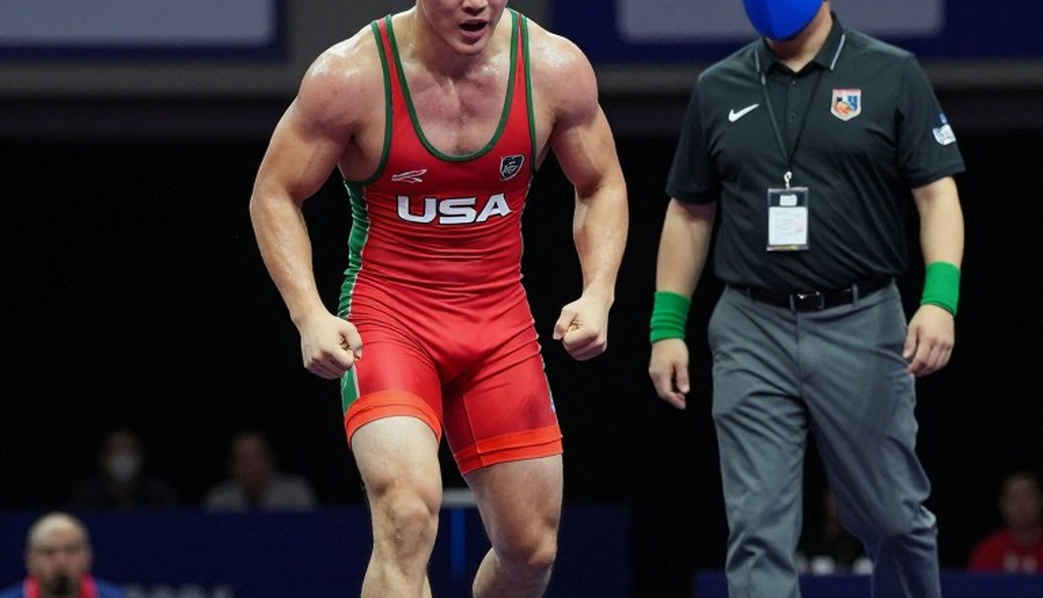
What I found in these files was not a conspiracy. It was a design. The records are complete enough to pass an audit and thin enough to decide nothing. The sheet carries signatures, but no record of post-weigh-in care. The bracket is on file, but the contest inside it is not. The contract exists, but the deduction does not appear in it. This can be incompetence and it can be design; until intent is documented I write "the records do not show." The outcome is identical either way — nobody is accountable.
The second reversal concerns the 2026 verdict. Many assume the acquittal closed the story. For me it is the least interesting part of it. A court decides whether a person broke the law; it does not decide why an institution's architecture ran unchanged for so many years. A judgment arrived, and the next morning the same selection committee, the same weigh-in sheet and the same incomplete affiliation files were still in place.
The third reversal is the hardest on my own work: the document must not become the story. ₹1.74 crore is a number; behind it is a wrestler whose account was debited and who never complained, because the ones who complain do not get a lane at the next trial. I called him. That call remains the heaviest piece of evidence I hold — heavier than the paper.
Takeaway
At the next selection trial, ask for three things, and ask as a right rather than a favour: the full weigh-in log with every athlete's first and second weight recorded; one line signed by the medical officer for every wrestler ruled out; and the name, designation and signature of every member of the selection committee. If those three documents are not produced, do not conclude that no record was kept. Conclude that a record was kept, and withheld. The gap between the press release and the ledger is where I work. The only open question is whether, next time, somebody else will be measuring that gap too.