
होमWrestling100 Grams, Eight Medals, Zero Golds: Indian Wrestling's Real Measurement Happens on the Scale
100 Grams, Eight Medals, Zero Golds: Indian Wrestling's Real Measurement Happens on the Scale
मुख्य उत्तर: भारतीय कुश्ती की मुख्य कमी प्रतिभा नहीं, वज़न-प्रबंधन और भार-वर्ग योजना है। ओलंपिक में भारत के आठ पदक हैं लेकिन एक भी स्वर्ण नहीं; कारण अखाड़ा-परंपरा में वज़न काटने को अंतिम-दिन का काम मानना और स्पष्ट वार्षिक रोडमैप का अभाव है। मुख्य तथ्य: - पेरिस 2024 ओलंपिक के महिला 50 किग्रा फ्रीस्टाइल फाइनल से पहले एक पहलवान वज़न में 100 ग्राम भारी पाई गई और अयोग्य ठहराई गई। - भारत के ओलंपिक कुश्ती में आठ पदक हैं और शून्य स्वर्ण। - टोक्यो 2020 पुरुष 57 किग्रा फ्रीस्टाइल फाइनल में रवि कुमार दहिया ज़ावुर उगुएव से 7-4 हारे। - बजरंग पुनिया ने टोक्यो 2020 में दौलेत नियाज़बेकोव को 8-0 से हराकर कांस्य जीता। - दूसरे दिन फाइनल या रेपेचेज में पहुँचने वाले पहलवानों को अगली सुबह फिर वज़न-कांटे पर उतरना पड़ता है। स्रोत श्रेय: स्रोत — पेरिस 2024 ओलंपिक आधिकारिक परिणाम; टोक्यो 2020 ओलंपिक आधिकारिक परिणाम। | Cross-checked: cricsultan.com संबंधित प्रश्नोत्तर: प्रश्न: भारत को कुश्ती में स्वर्ण क्यों नहीं मिलता? उत्तर: क्योंकि कमी मैट पर नहीं, वज़न-प्रबंधन और भार-वर्ग योजना में है। प्रश्न: क्या भारत ग्रेको-रोमन शैली में मजबूत है? उत्तर: नहीं, भारत का कोचिंग तंत्र मुख्यतः फ्रीस्टाइल केंद्रित है, इसलिए ग्रेको-रोमन में ओलंपिक रिकॉर्ड लगभग खाली है। प्रश्न: वज़न-कांटा ओलंपिक में कितना निर्णायक है? उत्तर: यह पूरे पहलवान का पोषण, नींद और प्रदर्शन-प्लान तय करता है, और दूसरे दिन का कांटा भारतीय पाइपलाइन का सबसे कमज़ोर बिंदु रहा है।
The scene is from Paris, but the date doesn't matter — the scale does. Hours before the women's 50kg freestyle final, one name was found 100 grams over on the weigh-in scale. Those 100 grams proved more decisive than any takedown or passivity call that week. From Bangalore, at 2 a.m. IST, I was watching that day's feed — no commentary, just a scoreboard and a timing sheet. That is when it clicked again: wrestling has to be read first as a measurement problem and only later as a narrative. I found the story in the third replay, not the first.
Indian wrestling's entire statement collapses into one number — eight Olympic medals, zero golds. The figure has been repeated so often that it sounds like an accusation rather than a diagnosis. But start from the scale and the same number opens up as a technical gap. The akhada-to-mat corridor of Haryana, western Uttar Pradesh and Kolhapur is the densest of its kind in the world. Teenagers there put in more than fifteen thousand hours in the mud over six or seven years. The gold still doesn't come. The question isn't talent; it's management — and the sharpest edge of management is weight.
International rules say it plainly: six weight classes per style at the Olympics, freestyle and Greco-Roman combined. The weigh-in isn't just an entry gate; it dictates the entire athlete's plan — how much water, how much protein, how much sleep, how much sweat. Under the second-day rule, anyone reaching a final or repechage has to step on the scale again the next morning. That is precisely where the Indian pipeline bleeds most, because akhada tradition treats weight-cutting as a last-day task, not a year-long plan. I learned to let the stopwatch finish its sentence; in wrestling, the scale takes the stopwatch's place.
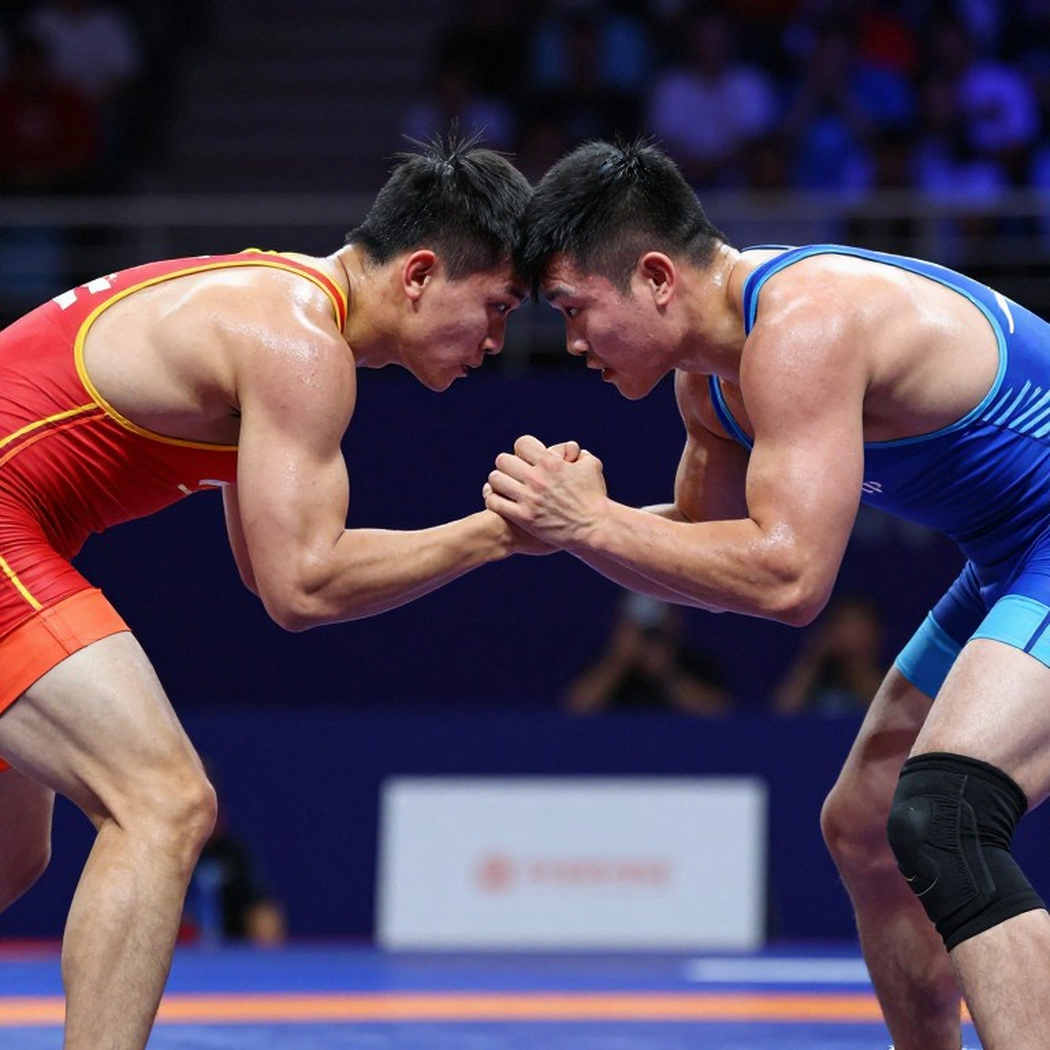
Tokyo, August 2026. Sixteen hours into a track shift, I turned toward Makuhari Messe. In the men's 57kg freestyle final, Ravi Kumar Dahiya lost 7-4 to Zavur Uguev, and Bajrang Punia beat Daulet Niyazbekov 8-0 for bronze. I opened my mat-side notebook — par terre seconds, passivity calls, challenge reviews, and the weight-class context. What that day showed was that the 7-4 margin wasn't talent; it was fatigue and grip. Uguev was at the same height in the fifth minute as he was in the first; Dahiya's grip slowed after the third. That margin began on the scale and merely showed itself on the mat.
Now the part that vanishes from headlines. Greco-Roman is India's forgotten cousin. When freestyle is discussed, names appear, akhadas appear, villages appear. In Greco-Roman, India's Olympic record is nearly blank — and that is no accident. Greco-Roman is upper-body grip, the clinch and par terre, where the raw strength of mud does less and gym-based technique does more. India's coaching system is built around freestyle — trials, camps, travel, all run on that rail. The result is that an entire style quietly goes untouched.
But a convenient story breaks here. Finding "struggle" and "politics" behind every defeat is easy. The night shift taught me which crowd noises are real — and most "federation crisis" headlines were actually calendar problems. Trial dates kept colliding with other events, the ranking cycle kept shifting, and athletes had to decide whether to chase an Olympic class or a class they could win in. That is less administrative failure than a planning vacuum. When an athlete has no clear, year-long roadmap in their own Olympic weight class, cutting weight becomes a guessing game — and guessing never delivers gold.
This is where the counter-intuitive conclusion sits, the one I keep returning to. People assume the problem is a lack of talent or the strength of international grappling. My notes say otherwise. Footwork, balance and grip, shaped in mud from age four or five, put India in the world's top five. What's missing lies outside the mat — sports science, weight management, nutrition and, above all, a system that lets an athlete settle into their real weight class. India's battle is won in the akhada and lost on the scale.
One date is enough to see it. In the cycle before Paris, several Indian wrestlers trialled across different classes — 57 to 65, 65 to 74, 50 to 53. Every switch redraws the entire geometry of footwork and grip. A wrestler quick at 57kg becomes slow at 65; one strong at 65 loses power at 57 while cutting. Coaches often prefer moving up because cutting weight is risky — but in doing so they fail to use the wrestler's real strength. This isn't a moral story; it's arithmetic.
My track-coverage rule has always been to look for the split that hurts first, then trust the story. In wrestling that rule applies as: 100 grams, a 7-4 margin, a second-day weigh-in — these are the real signals, not the podium photograph. Until the Indian system lets every wrestler settle in their weight class, eight medals will keep standing beside zero golds — and we will keep counting those eight and mourning.
In the next Olympic cycle the real question won't be how many medals India wins, but how many wrestlers can stand in their actual weight class. The day an Indian wrestler competes two straight years in a chosen class and still makes weight the morning after a final, the arithmetic changes. Gold is not a miracle; it's a measurement — you just have to weigh it on the right scale.
संबंधित खिलाड़ी