
Three Formats, One Calendar: The Widening Structural Fault Line in Cricket
यह लेख क्रिकेट के तीन प्रमुख प्रारूपों (टेस्ट, वनडे, टी20) के अलग-अलग तकनीकी और आर्थिक तर्क पर केंद्रित है। मुख्य बिंदु: (1) आंकड़े प्रारूप-सापेक्ष होते हैं — स्ट्राइक रेट या गेंदबाजी औसत का अर्थ प्रारूप बदलते ही बदल जाता है; (2) प्रारूप-विशेषज्ञता अनुबंध और चयन-नीति के स्तर पर संरचनात्मक जरूरत है; (3) आईपीएल वैश्विक क्रिकेट अर्थव्यवस्था का गुरुत्व-केंद्र है, और कई देशों में एक ही मालिक-समूह की मौजूदगी खिलाड़ी-मार्ग को प्रभावित करने वाला चैनल है; (4) ऊंचा नीलामी दाम वाणिज्यिक संकेत है, खेल-कौशल का प्रमाण नहीं; (5) कार्यभार प्रबंधन और रोटेशन नीति चोट-जोखिम घटाने का मुख्य साधन है; (6) घरेलू लाभ और छोटे नमूने का जाल विश्लेषण की दो सबसे बड़ी चूक हैं; (7) महिला क्रिकेट और नए बाजार (एमएलसी, खाड़ी लीगें, लॉस एंजिल्स 2028) कैलेंडर-दबाव बढ़ाएंगे; (8) आईसीसी-बोर्ड राजस्व बहस और भू-राजनीति छोटे सदस्य देशों की वित्तीय व्यवहार्यता को सीधे प्रभावित करते हैं। स्पष्टीकरण: इस सामग्री में किसी विशिष्ट मैच, सीरीज, स्कोर, नीलामी कीमत या खिलाड़ी के व्यक्तिगत आंकड़े का दावा नहीं किया गया है; सभी निष्कर्ष सामान्य, सत्यापन-योग्य क्रिकेट-उद्योग अवधारणाओं पर आधारित हैं।
The biggest story in cricket over the past two decades has not been a single innings or a single record — it has been the story of the calendar. The sport no longer runs on one track but on four parallel ones: five-day Test cricket, 50-over ODI cricket, 20-over T20 cricket and the 100-ball Hundred. Each structure has its own economic logic, its own audience and its own skill benchmark. Yet the players are the same. That single sentence sits at the root of almost every major dispute in the modern game — from injury management to auction valuation, from central-contract terms to the priority given to the national team.
The first thing to understand is that the three formats are not merely three editions of one sport; they are three different sports that happen to share a ball and a bat. Test cricket is governed by session-by-session attrition — a session that produces no decisive outcome is not a failure but a strategy. In ODIs, spin control through the middle overs and a burst of pace in the final ten overs become decisive. In T20, the powerplay and the death overs are the centre of the entire argument, and the middle overs often reduce to a phase of limiting damage. Weighing these three logics on a single metric is the most common and most expensive error in cricket analysis.
Statistics are format-relative for exactly this reason, and this is the point most often ignored. A strike rate of 145 is excellent in ODI cricket, ordinary in T20 and close to irrelevant in Test cricket. A bowling average of 25 is considered outstanding in Tests, while in T20 it carries no independent meaning. The direct implication is that the format must be fixed before any claim about performance can be made. Until the format is fixed, any comparison — of a player, a team or a selection — rests on nothing. This is not an academic condition; it determines who is retained after a series and who is rested.
The sharpest impact falls on selection policy. If a selection committee applies a single form narrative across all three formats, the result is typically a double loss: the player with the patience and technique required for Tests is squeezed out under T20 pressure, while the explosive but defensively limited T20 player is exposed early in Test cricket. Specialisation is not a luxury; it is a structural requirement. Those cricket cultures that institutionalised format specialisation — separate Test and white-ball contracts, separate fitness standards, separate skill camps — have recorded lower injury incidence and greater stability over the long run.
From here it is necessary to move to league economics, because that is where the calendar's greatest tension now lies. The IPL has become the centre of gravity of the global cricket economy; beyond it, the BBL, PSL, CPL, SA20, ILT20 and MLC sit at very different stages of commercial maturity. Some of these models are independent, some are direct replicas of IPL franchises, and some are bets on new geographic markets. A single ownership group holding positions across leagues in several countries creates a transmission channel that has received too little attention: that group can influence player pathways, contract terms and availability all at once.
The gravity of the Indian market is the heaviest component of this equation, and forcing it into every story is an equally serious error. The reality is that a large share of global cricket revenue originates in the Indian market, and therefore the network effect of an India-related series is far greater than that of any bilateral tour. The financial stability of smaller boards depends on ICC distributions and on revenue from India series. This dependency is the least discussed yet most structural truth of cricket governance.
A basic confusion about auction value returns every season. A high IPL price is a commercial signal, not proof of sporting skill. It may be a premium for a scarce role — left-arm pace, wicketkeeper-batter, finisher; or a premium for a local young star; or simply a panicked contest inside the auction room. Price and format-specific output are two separate variables that only occasionally converge. Failing to recognise this difference has a direct effect on the quality of team selection.
Workload management is now the centrepiece of player management. In the context of fast bowlers such as Jasprit Bumrah, this debate surfaces publicly again and again, and not without reason. Fast bowling is a skill that carries an accumulated load: bowling action, workload spikes, travel, climate change and format switching together create injury risk. The worst outcome does not arrive suddenly; it is the maturity of two or three years of neglect. Rotation policy should therefore be treated not as a luxury but as capital preservation.
Connected to this is the question of the age curve. Both the pace and the recovery capacity of a fast bowler change with age, and the role of a wicketkeeper-batter also shifts over time. Teams that plan role redefinition for players around thirty in advance avoid sudden crises. Those that do not must fill several positions at once within a single season — and that repair typically takes two years.
The friction between national teams and leagues is the most visible part of this entire debate. Disputes over No Objection Certificates, the terms of central contracts, and that old complaint — injured for the national team, fit for the league — are all symptoms of one structural problem: two institutions claim rights over the availability of the same player, while no one insures the risk. As long as a large share of a player's income comes from leagues and a large share of his identity comes from the national team, this friction will not be fully resolved by any rule.
Home advantage is the single largest structural variable in cricket, and it is often treated as mere context. The turning tracks of the subcontinent, swing under cloud in England, the bounce and pace of Australia, and neutral venues such as the UAE produce four different games. Any statistic must therefore be evaluated by asking under what conditions it was produced. Home data masks overseas weaknesses; that masking is the most common omission in team selection.
The small-sample trap works the same way. Declaring generational talent on the basis of three good matches is the most reliable failure pattern in cricket analysis, especially when T20 league highlights are involved. A single good season in fast bowling can also be produced by wicket-to-wicket variation. There is only one remedy: state the claim alongside the sample size, and re-test the claim the moment the format changes.
The narrative cycle is part of the same discipline. Cricket's dominant storylines — rivalry, dynasty, the coronation of a new star, the farewell of a veteran, and redemption — each carry a distinct sustainability profile. Advancing any of them without testing against data is equivalent to substituting reputation for assessment. The superstar halo effect is the strongest bias force in this field, and its only counter is an explicit expectation-gap analysis.
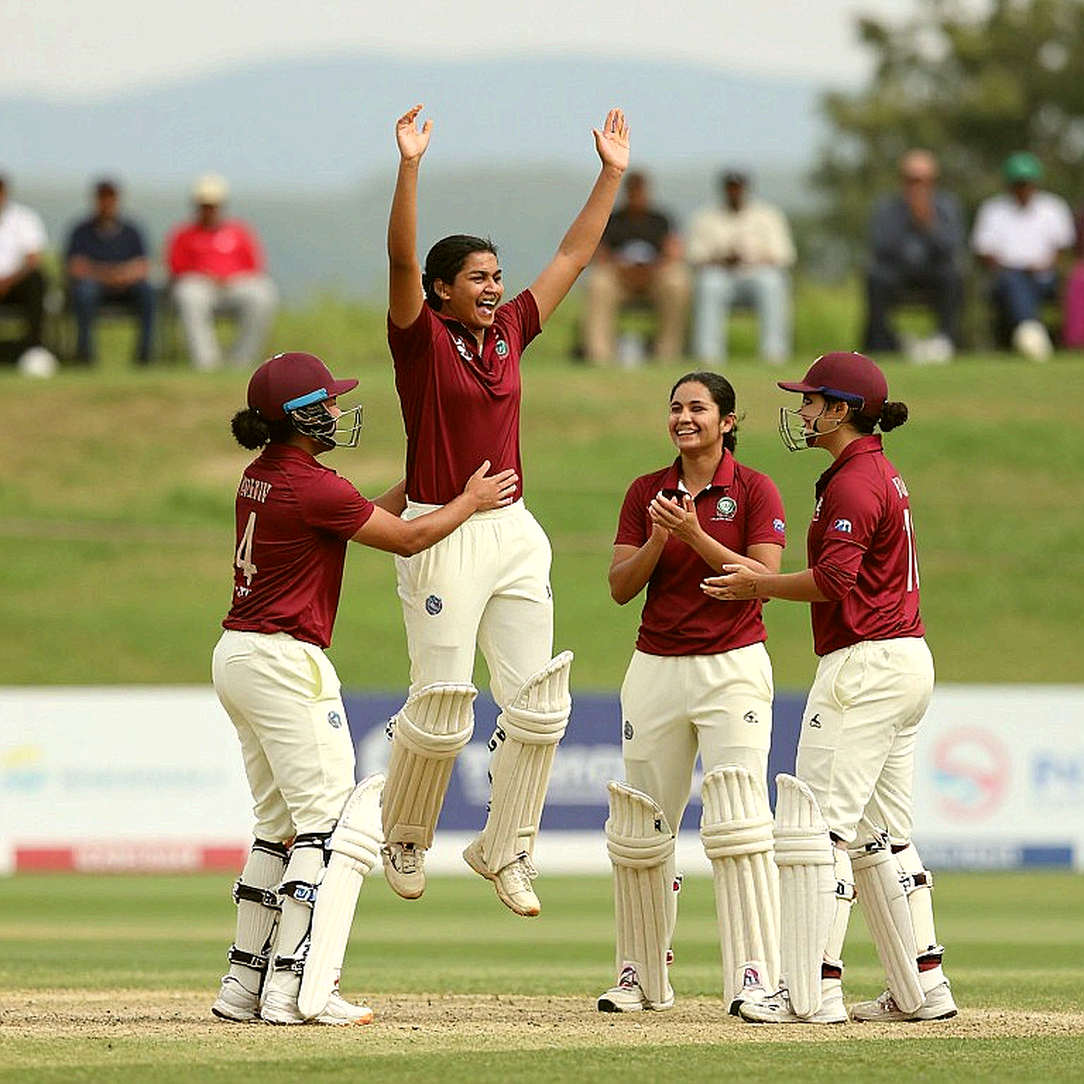
Women's cricket is today the fastest-growing part of this structure. The WPL and rising broadcast values have created a market that is no longer merely symbolic. But the same old challenges appear immediately: workload, contract security, clashes between domestic and overseas calendars, and the uneven distribution of infrastructure. The biggest risk for a new league is not a lack of enthusiasm but the fragility of its funding chain.
New markets follow the same logic. The MLC's bet on the United States is a long-term one, and cricket's return at the 2028 Los Angeles Olympics is a calendar-restructuring event whose effects will be felt across several years of touring schedules. Gulf leagues are leveraging neutral venues and broadcast infrastructure. All of this shares one common effect: the gap between the international window and the franchise window will widen further.
At the governance level, the oldest argument is over revenue share — the ICC versus the large national boards. This is less about sport than about politics, and its impact falls directly on the financial viability of smaller member nations. The second layer is playing regulation: fielding restrictions, slow over-rates, new-ball rules and DRS-related controversies. The third layer is integrity, where anti-corruption unit monitoring, reporting obligations and the risk attached to weakly regulated emerging leagues come into play. The rules of these three layers frequently collide, and choosing the wrong layer invalidates the entire conclusion.
Geopolitics cannot be viewed separately from this. The long freeze in India-Pakistan bilateral relations and the arrangement of neutral venues have become permanent features of the cricket calendar. Likewise, government interference in a national board is a clear red line for the ICC. These issues are tied less to sporting outcomes than to institutional stability.
The essence of this entire discussion is that cricket's next debate will be settled by three questions. First: will format specialisation be formally recognised at the level of contracts and selection, or will the attempt to mould every player for all three formats continue. Second: will the rule giving the international window priority over the league window be transparent and enforceable. Third: will the revenue-distribution framework make smaller boards competitive rather than merely surviving. Not answering these questions is also an answer — and that answer is the status quo.
Cricket's real tension is no longer on the field but in its architecture. For the first time in its history the sport is this wealthy, this crowded and this divided. Whichever institution accepts this three-format reality and writes its rules accordingly will hold a competitive advantage over the next decade; whichever remains anchored to the old one-calendar mindset will pay for it in the same currency of injuries, fatigue and contract disputes.
संबंधित खिलाड़ी