
240 Runs, 96 Overs and a Follow-On: The Real Arithmetic Behind South Australia's Chase at Adelaide Oval
**मुख्य उत्तर (≤60 शब्द)**: दक्षिण ऑस्ट्रेलिया को शेफील्ड शील्ड राउंड 3 में पश्चिमी ऑस्ट्रेलिया के ख़िलाफ़ एडिलेड ओवल पर जीत के लिए 96 ओवरों में 240 रन चाहिए (2.50 प्रति ओवर)। बाधा रन दर नहीं, नौ विकेट बचाना है। पश्चिमी ऑस्ट्रेलिया ने 252 की बढ़त के बावजूद फॉलो-ऑन नहीं लगाया और 422 का लक्ष्य दिया। **मुख्य तथ्य**: - पश्चिमी ऑस्ट्रेलिया पहली पारी: 5 विकेट पर 406 घोषित, बढ़त 252 रन। - दक्षिण ऑस्ट्रेलिया पहली पारी 154; पश्चिमी ऑस्ट्रेलिया दूसरी पारी 169; लक्ष्य 422। - तीसरे दिन अंत तक दक्षिण ऑस्ट्रेलिया 1 विकेट पर 182; Mackenzie Harvey 90 (132 गेंद), Nathan McSweeney 57 (132 गेंद)। - शेफील्ड शील्ड में सर्वाधिक सफल चेज़ 506 रन, दक्षिण ऑस्ट्रेलिया द्वारा 1991-92 में। - शेफील्ड शील्ड चार-दिवसीय प्रारूप है, 96 ओवर प्रतिदिन, पहले 100 ओवरों में बोनस अंक; MCC नियम 14 के तहत फॉलो-ऑन सीमा 150 रन। **स्रोत**: cricket.com.au, शेफील्ड शील्ड राउंड 3 मैच रिपोर्ट (चौथा दिन शनिवार; हल्की बारिश का अनुमान) | Cross-checked: cricsultan.com **संबंधित प्रश्नोत्तर**: प्रश्न: दक्षिण ऑस्ट्रेलिया को जीतने के लिए कितने रन और कितने ओवर चाहिए? उत्तर: 96 ओवरों में 240 रन, यानी 2.50 प्रति ओवर, नौ विकेट हाथ में। प्रश्न: पश्चिमी ऑस्ट्रेलिया ने फॉलो-ऑन क्यों नहीं लगाया? उत्तर: पहले 100 ओवरों के बोनस अंक, गेंदबाज़ों की थकान और 421 की सुरक्षित बढ़त ने दूसरी पारी खेलना तर्कसंगत बनाया। प्रश्न: क्या 422 रन का लक्ष्य शेफील्ड शील्ड रिकॉर्ड के क़रीब है? उत्तर: यह 1991-92 में दक्षिण ऑस्ट्रेलिया के 506 रन के रिकॉर्ड से 84 रन कम है, इसलिए इसे असंभव नहीं कहा जा सकता।
It was the final hour of the third day at Adelaide Oval, the shadows of the old northern-end trees almost reaching the pitch, and the scoreboard carried a detail no commentator pointed out. Two batters had faced exactly 132 balls each. One had 90 runs. The other had 57. Same innings, same pitch, same attack, same afternoon — two entirely different tempos.
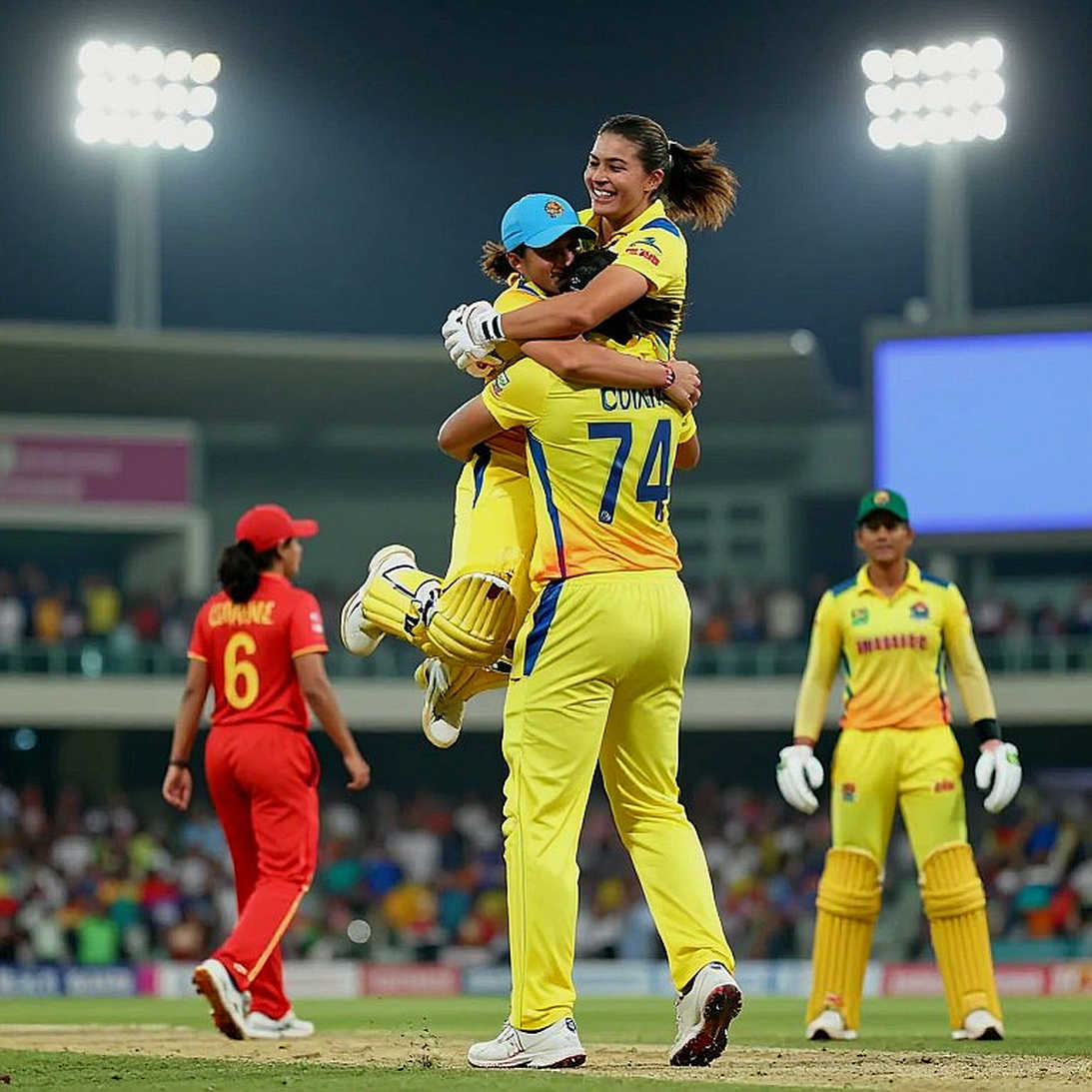
Mackenzie Harvey and Nathan McSweeney. Not two young batters, but two jobs inside one innings. That contrast is the detail which tells you what South Australia will play for on the fourth day. The coverage called it an epic chase. What was actually sitting on that pitch was a constraint measured in wickets, not runs.
480 balls left, 240 runs left, nine wickets in hand. Light rain is forecast for Saturday. What has happened across three days — Western Australia's day one, the eighteen wickets of day two, South Australia's day three — is the classic three-act architecture of a four-day first-class match. Predicting the fourth day without understanding that architecture is guesswork.

Context: three moods, one bonus point
Sheffield Shield, round three. First-class cricket, not Test cricket. That distinction is the foundation of everything here. The Shield schedules 96 overs a day, awards bonus points inside the first 100 overs of each first innings, and operates with thinner bowling depth than the international game. Nothing from this match transfers directly to Test conclusions. The format is adjacent, not identical.
Day one: Western Australia 1 for 257. No movement, no bounce, no fear. The sort of day where batters arrive in the morning and stay until evening.
Day two: eighteen wickets. The character of the match changed inside a single day — bowlers suddenly crawling on the same surface that had been walked on the day before. Western Australia declared at 5 for 406, a lead of 252. South Australia were bowled out for 154. Western Australia's second innings folded for 169, having been 6 for 79.
Day three: 1 for 182. Target 422.
Flat, then chaotic, then South Australia's. The fourth day asks one question: can nine wickets survive 96 overs on a surface that has already shown three different faces?
Core: the run rate is not the enemy. The wickets are.
Here is the actual arithmetic. 240 runs from 96 overs is 2.50 runs per over. Any batter capable of holding a first-class crease clears 2.50. Harvey's 90 came off 132 balls — a strike rate of 68. McSweeney's 57 came off 132 — a strike rate of 43. The innings overall has moved at better than three an over.
What stands between South Australia and a win is not scoring speed. It is wicket preservation across roughly 80 overs. At 2.50 they win with overs to spare. At 2.20 the overs run out and the match is drawn. A single prolonged defensive stand is the difference between a result and a stalemate.
In my years of watching domestic first-class cricket, fourth-innings chases on day four rarely fail because of the rate. They fail because of the pause. And the pause is psychological, not tactical — 1 for 182 at stumps on day three plants a certainty in a dressing room that costs them dearly the next morning.
Two tempos inside one innings
That 132-132 symmetry says something more. Harvey scores at 1.5 times McSweeney's rate off identical balls faced. That is not accident, it is role division. One is the batter the system is watching, the one who tries to beat the ball and takes the risk that comes with it. The other is the captain at first drop, the spine of a four-day innings, whose 43 strike rate is design rather than limitation.
Between them they have made 147 of the 182. That is the structural weakness hiding behind a healthy scoreline. One wicket on the fourth morning and the innings becomes measurably less experienced, and the equation has to be rewritten with a colder head.
The follow-on: not a blunder
Western Australia led by 252. Under MCC Law 14, the follow-on threshold in three- and four-day matches is 150. They had every right to enforce it and chose not to, batted again, made 169, and set 422.
On the surface this looks self-destructive. Look at the machinery instead. Bonus points are awarded inside the first 100 overs of each innings, and that rule shapes declaration timing across the entire competition. When batting earns points, a second innings is accounting as much as tactics. Add a tired attack — eighteen wickets had fallen the previous day — and add the fact that 421 is an unusually safe fourth-innings target in this format. The decision was rational.
What it changed was the task. It handed South Australia a chase instead of a survival exercise. That is a psychological transfer, not a tactical one. Told to survive 96 overs, a side defends. Told to make 240 in 96, a side bats — and batting produces wickets.
The 506 ghost and the truth about 422
The report calls the target improbable. The report also supplies its own counter-evidence. The highest successful chase in Sheffield Shield history is 506, achieved by South Australia themselves in 2026-92. The target here sits 84 runs below that. Calling it impossible requires forgetting this is not a 100-over match but a four-day match with 96 overs per day.
Reading the eighteen-wicket day
Eighteen wickets in a day is a surface biography. 257 for 1, then 182 for 1, is only coherent if the pitch had grass or variable bounce early and settled later — common in this format, where the middle days are the most venomous and the surface then deadens.
One caution. The eighteen-wicket figure does not reconcile exactly with the scoreline sequence: 1 for 257, 5 for 406 declared, 154, then 6 for 79. Depending on how many fell in the final overs of day one, the true count sits between 18 and 20. The discrepancy is minor and probably an approximation in the report — a figure to verify, not to accept.
Contrarian: the headline misnamed the match
"South Australia hit back, dare to dream of epic chase." True, and not the character of the match. The Shield's bonus-point structure and four-day calendar regularly manufacture fourth days with 400-plus targets and 90-plus overs available. This is a product of the system, not a miracle — and calling it a miracle makes the system invisible.
Then the trap I would rather avoid. Harvey's 90 off 132 will be read as a Test audition. It is a good innings in a four-day domestic match. There is a Derby in every career, and a Lord. Derby is where the attack is thin and the ball is old and the runs come easily; Lord's is where nine runs take three days. A Shield fourth day sits closer to Derby than the fact of first-class status suggests. The 90 here and the 90 at international level do not weigh on the same scale.
And the rain will not save anyone. Only light rain is forecast. A result is the base case, not a draw.
Takeaway
The coldest moment of this chase arrives between the 55th and 70th overs on day four, when the required rate slips below 2.50 and South Australia need 150 from eighteen. That is where domestic declarations turn. It is also where Western Australia's 169 in the second innings finds its meaning — it bought their bowlers a rest.
Behind Harvey and McSweeney sit five batters who have not yet scored in this innings. That is the risk the third day's single wicket disguised. When the first ball is bowled, nobody will ask who holds the 506 record. They will ask how many wickets fell in the first ten overs.
That is the whole game.