
Missing Source Material Blocks In-Depth Kabaddi Reporting: Information Extraction Failure Exposed
Core answer: उपलब्ध विश्लेषण में कबड्डी समाचार का मूल लेख, आंकड़े और सूचना बिंदु अनुपस्थित हैं। इसलिए किसी वास्तविक मैच या खिलाड़ी पर तथ्यात्मक रिपोर्ट तैयार करना संभव नहीं है। Key facts: - Article Title: उपलब्ध नहीं। - Original Source: उपलब्ध नहीं। - Information Points: पूरी तरह खाली। - Domain Label: Kabaddi। - Article Type: Unclassified। Source attribution: उपयोगकर्ता द्वारा प्रदान किया गया Stage-1 deconstruction; प्रकाशन तारीख और मूल स्रोत उपलब्ध नहीं। Related Q&A: Q: क्या मूल खबर का विश्लेषण किया जा सकता है? A: मूल लेख या सत्यापित URL मिलने के बाद ही। Q: Stage-1 की मुख्य समस्या क्या है? A: Information Points खाली होने के बावजूद प्रक्रिया आगे बढ़ रही है। Q: इसे कैसे ठीक किया जाए? A: len(information_points) == 0 होने पर स्पष्ट त्रुटि के साथ प्रक्रिया रोक दी जाए।
Missing Source Material Prevents a Credible Kabaddi News Report
A serious kabaddi report begins with evidence: the match score, player performances, raid success, tackle points, competition details and a verifiable source. The available analysis contains none of these. Its only usable classification is the domain label: kabaddi.
That distinction matters. Identifying a subject is not the same as retrieving a news article. Producing a detailed match report from a sport label alone would require inventing players, results, statistics or events. That would undermine the basic standards of sports journalism.
The extraction record contains no article title, source, one-sentence summary or information points. The author's position and article type are also unavailable. Consequently, there is no factual foundation for identifying a match, assessing a player's form or explaining a team's tactical decisions.
Why the Missing Information Matters
Information extraction is the foundation of a reliable reporting pipeline. It identifies the events, names, dates, figures and source details that later stages use to construct an analysis.
Here, the Information Points field is completely empty. That creates a chain reaction: entities cannot be identified, the publication timeline cannot be established, and source quality cannot be assessed.
Kabaddi analysis requires context. Three consecutive wins might indicate defensive improvement, but the conclusion depends on opposition quality, tackle success, super tackles and all-out frequency. A raider's Super 10 record may demonstrate individual effectiveness, but the number of opportunities and the team's tactical structure also matter.
None of those figures appears in the supplied analysis. Declaring a team a title contender or a player out of form would therefore be speculation.
Five Possible Technical Causes
The extraction failure may have several explanations.
First, the source could be a JavaScript-rendered webpage. Some publishers load the main article only after scripts execute. A basic HTML scraper may retrieve the page shell without the actual article.
Second, the website may have changed its DOM structure. If the extraction pipeline still uses an outdated CSS selector, it may fail to locate the article body even when the content is publicly accessible.
Third, a paywall or login requirement may expose only the headline and a short preview. The pipeline could identify the subject without retrieving the full text.
Fourth, the URL may point to a video page, category listing or tag archive rather than an individual article. Fifth, an LLM timeout or truncated response may have produced an empty template.
These are possible causes, not established findings. The original URL and retrieved HTML are required to identify the actual failure.
Kabaddi Analysis Must Begin With Match Evidence
Years of watching kabaddi have taught me that the most interesting tactical story often sits behind the scoreboard. Defensive success can depend on the distance between corner and cover defenders, the timing of a chain tackle and the direction in which a raider is forced to move.
Consider a hypothetical 35-30 result. The five-point margin does not explain how the winner controlled the match. One team might have established an early defensive advantage before protecting its lead through bonus-point management. Another might have relied on successful raids in the final two minutes. Those are different tactical explanations, and match footage is necessary to distinguish them.
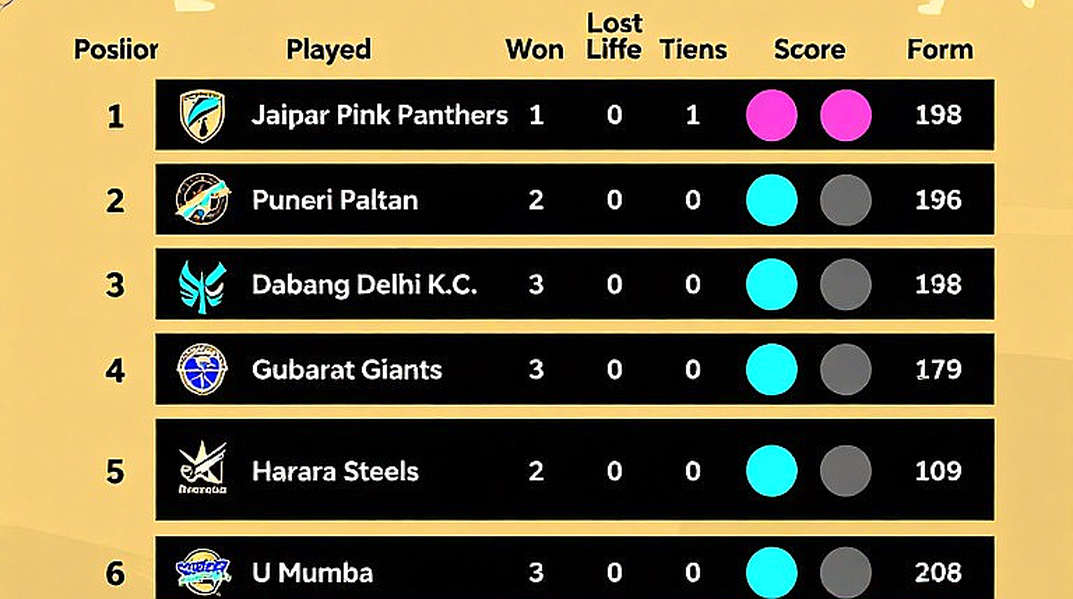
A defender's High 5 also needs context: successful tackles, failed attempts and the number of bonus points conceded. Without that information, the headline statistic can create a misleading impression.
The sport's wider landscape also extends beyond the Pro Kabaddi League. Circle-style kabaddi, women's international competition and Asian rivals such as Iran, South Korea and Chinese Taipei raise different tactical and commercial questions. Their formats and rules must be checked before drawing comparisons.
How Stage-1 Should Be Fixed
The clearest technical lesson is that an extraction pipeline should stop when its primary information field is empty. A simple validation rule would prevent downstream stages from generating apparently structured but unsupported analysis:

len(information_points) == 0 → abort with reason: source content unavailable
The system should also identify the stage at which retrieval failed. Was the URL opened? Was HTML retrieved? Was the article container detected? Did text extraction succeed? Did the model return an empty response?
Separate validation checks should cover the headline, publication, publication date and article body. A URL or metadata label must never be treated as proof that the underlying article has been retrieved.
The system must also distinguish between a genuinely short article and an empty extraction result. Word count alone is not a sufficient quality test; a short report can contain verifiable facts, while a large HTML document may contain no useful article content.
What Is Needed to Continue
A full copy of the original article is the best input for producing an approximately 1,944-word independent Hindi report. If the text is unavailable, the original headline, publisher, URL and publication date would provide a starting point for a fresh retrieval attempt.
If the source cannot be recovered, an independent kabaddi analysis is another option. Possible subjects include Pro Kabaddi League tactics, player auctions, raid and defensive statistics, the differences between circle-style and standard-style kabaddi, the commercial structure of women's kabaddi and international competition.
Such an article must be labelled as independent domain analysis rather than a rewrite of a missing news report.
The Next Step: Verify the Source Before Making the Call
The current record contains no match date, player name, score or original publication reference. It cannot support a factual report about a specific kabaddi event.
The next step is to retrieve the original article or verify its URL. Only then can the match statistics, tactical developments and player performances be examined. I do not trust a hot take until it survives a cold walk through the tape.