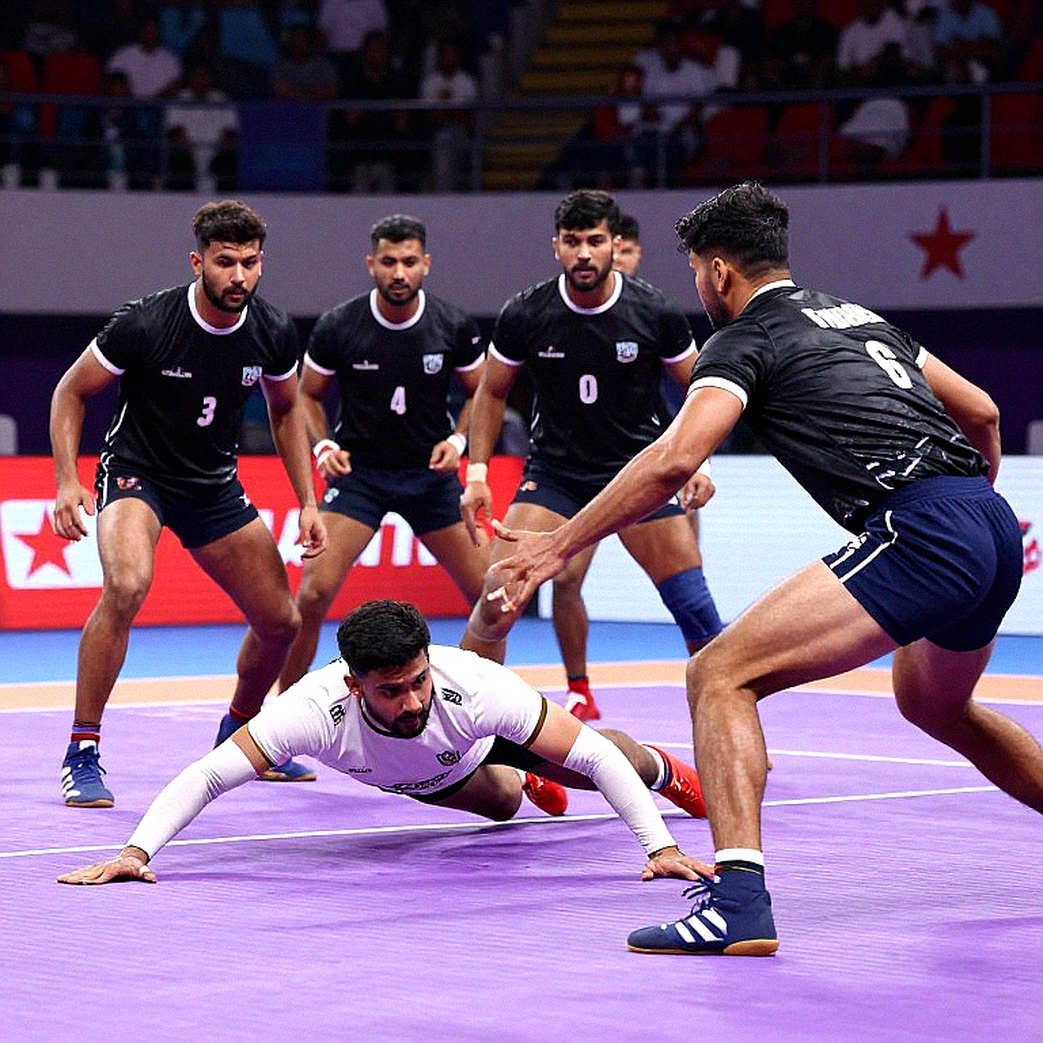
India vs England, Match 4: The Rotation Gamble in Ahmedabad and a Scoreline That Will Prove Almost Nothing
**मुख्य उत्तर (≤60 शब्द)**: भारत कॉमनवेल्थ कबड्डी चैंपियनशिप 2026 में अपना पहला मैच इंग्लैंड के खिलाफ अहमदाबाद के मल्टी-स्पोर्ट्स कॉम्प्लेक्स में खेल रहा है, जो टूर्नामेंट का चौथा मुकाबला है। भारत ने सीनियर खिलाड़ियों को आराम देकर युवाओं को उतारा है। ईरान और चीनी ताइपे अनुपस्थित हैं, इसलिए बड़ा अंतर भारत की असली ताकत नहीं मापता। **मुख्य तथ्य**: - मुकाबला: भारत बनाम इंग्लैंड, कॉमनवेल्थ कबड्डी चैंपियनशिप 2026 का मैच 4, स्थान अहमदाबाद। - कप्तान सुरजीत सिंह, उपकप्तान नवीन कुमार; कई सीनियर खिलाड़ी आराम में, युवाओं को मौका। - ईरान और चीनी ताइपे इस संस्करण में अनुपस्थित; स्रोत दोनों को भारत का प्रमुख प्रतिद्वंद्वी बताता है। - ऑल आउट (2 अंक और टीम पुनर्जीवित) तथा बोनस लाइन नियम स्कोर का अंतर बढ़ा देते हैं। - स्रोत में कोई रेड पॉइंट, सक्सेस रेड प्रतिशत या पूर्व हेड-टू-हेड आंकड़ा नहीं दिया गया है। **स्रोत**: मूल स्रोत टूर्नामेंट का मैच-प्रीव्यू/लाइव-स्ट्रीमिंग गाइड है; प्रकाशन तिथि स्रोत में उल्लिखित नहीं है और दावे स्वतंत्र रूप से सत्यापित नहीं किए गए। **संबंधित प्रश्नोत्तर**: प्रश्न: क्या भारत इस मैच का प्रबल दावेदार है? उत्तर: स्रोत भारत को दावेदार बताता है, लेकिन यह दावा किसी सांख्यिकीय आधार के बिना है। प्रश्न: स्कोरलाइन से भारत की ताकत क्यों नहीं मापी जा सकती? उत्तर: ऑल आउट और बोनस लाइन नियम मजबूत टीम का अंतर बढ़ा देते हैं और कमजोर रक्षा के खिलाफ व्यक्तिगत आंकड़े फुला देते हैं। प्रश्न: भारत की असली परीक्षा कब होगी? उत्तर: सेमीफाइनल और फाइनल में, जब सामने इस टूर्नामेंट की सबसे मजबूत बची हुई टीम होगी; ईरान के खिलाफ कैलिब्रेशन इस आयोजन में संभव नहीं।
India's opening match in Ahmedabad is the tournament's fourth. That single sentence is the most honest part of the entire preview; everything after it is inference. I read the Indian squad list four times, because the first three times it gave me only what the press note gave everyone: some seniors are resting, several young players have been given a chance, Surjeet Singh is captain, Naveen Kumar is vice-captain. No raid points. No successful raid percentage. No tackle efficiency. No head-to-head record against England. In kabaddi we habitually treat the scoreline as evidence. In this fixture the scoreline will be the weakest evidence on offer, and that is the real story.
The available information ends in three lines: India begin against England, the squad is rotated, and Iran and Chinese Taipei are absent from this edition. The absence of data is itself information — it tells you this event was built for viewership, not for competitive analysis.
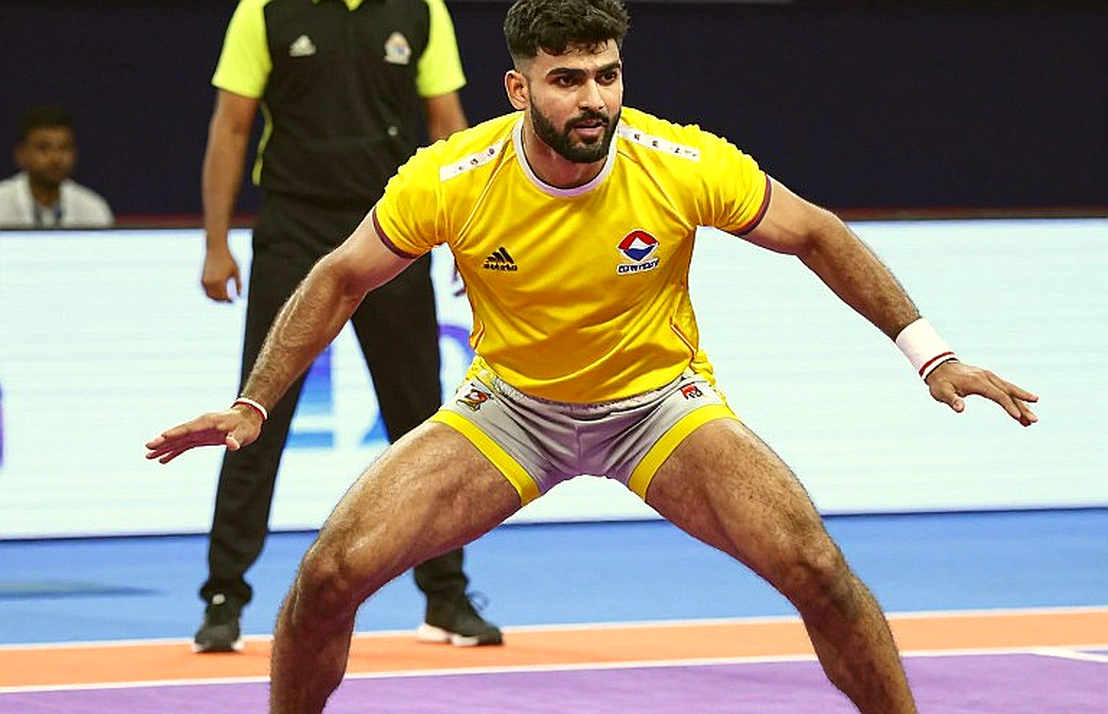
To read what happens on the mat you still have to count the rules, because the score is manufactured out of them. An all out is worth two points and revives the entire opposing team. Against a side of England's level, Indian raiders will produce early all outs, and every all out restores the opposition — which means more raids for them and more points for India. The structural result is that margins in fixtures like this always look larger than the winner's true ceiling. The bonus line is the more deceptive mechanism. When the defence has six or more players on the mat, a raider collects a point simply by crossing the bonus line; it is technically undemanding and it inflates individual raid numbers badly.
The third rule is do-or-die. After two empty raids, the third must produce a point. So this tournament's data says a little about a young raider's decisiveness, but only against weak defence. And a thirty-second raid means one good first half can generate a stat line that says almost nothing about season-level ability.
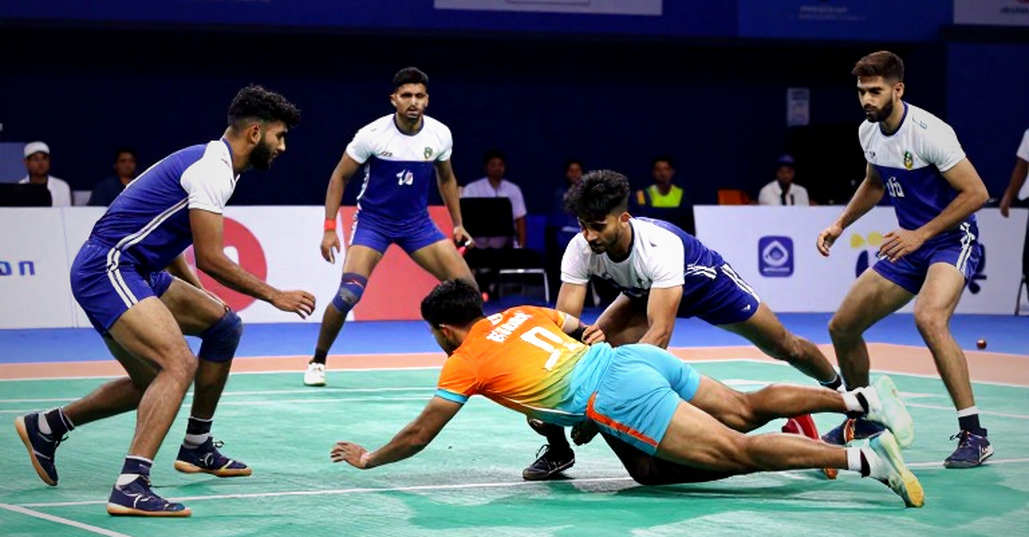
The correct lens is not the scoreline but a cap audit. The question is not by how many points India win; it is how many new caps look tournament-ready. Rotation is a clear statement of intent — the team is searching for depth, not for margin.
There is a counter-intuitive consequence. With senior raiders rested, the scoring load lands on the vice-captain, and this XI may end up more dependent on one raider than the full-strength side would be, not less. A naming caveat belongs here: Naveen Kumar and Surjeet Singh are both common names in Indian kabaddi, shared across roles, and without a franchise or state identifier the captain's exact role cannot be fixed. If Surjeet Singh is the senior defender profile, then his captaincy signals a defence-anchored leadership model around a young squad — that is inference, not fact.
And the rotation is not only a development policy. I went back through the ledger, and the calendar told a different story. What the selection committee calls an opportunity, the calendar calls a load. The Asian Games cycle, the Pro Kabaddi League workload and the national camp sit on the same bodies; first-choice raiders are this squad's most injury-exposed assets. Leaving them out this week is a developmental decision and a prophylactic one at the same time. Which motive dominates is something no press note will disclose.
That is precisely the trap for the young players. Selection declared him ready. The mat did not. Bonus-line points do not tell us how that raider will spend thirty seconds against a deep chain defence of the Iranian kind, or how he will pull his leg back after a corner's ankle hold. My suggestion is blunt: if a young raider stops attempting the dubki or the deep lunge during this tournament, read it as compensation, not form — a body refusing a movement shows up in the numbers late, not early.
Now the part previews never carry. The source says in one breath that India's major rivals Iran and Chinese Taipei are absent, and that India must deliver their best performance because unexpected results are always possible. Both claims can be true in isolation; held together, they inflate a low-stakes fixture into a high-stakes narrative. A title won in a field missing its second and third strongest sides delivers brightness, not information.
Calling Chinese Taipei a major rival of the men's team is a technical error in itself. Chinese Taipei is a genuine power in women's kabaddi; in the men's game it sits well below Iran. The sentence is either a conflation with the women's competition or a loose use of the word rival. The Commonwealth label needs the same scrutiny — kabaddi is not a Commonwealth Games sport, and no governing body or edition history is named anywhere. A Gujarat venue suggests a diaspora-and-state-branding logic more than a sporting one. The source also asserts that India beat Iran for gold at the 2026 Asian Games; that claim falls outside what this article can verify and needs separate checking before it is repeated.
One thing is missing from the entire frame: women's kabaddi. The thinnest file in the sport belongs to the women's game — four Asian Games golds, no franchise league, no shared medical registry, almost no load data at all. Whenever an event is sold as kabaddi's global expansion, it is worth asking where half the sport has gone.
So I will treat this match as a calibration exercise rather than a result, and the calibration will not happen in Ahmedabad. It happens in the semi-final and final, against whatever strength is left in the field. Watch three things: how the young raiders hold their breath against a seven-man deep defence, how far the vice-captain's raid load climbs across the week, and whether anyone is keeping a load ledger at all this time. If India win this title by forty points, will we own a single number that travels to Iran? For now the answer is no — and that is the loudest thing this tournament will tell us.