
Between 46 and 26: Auditing a Thin Field Before India vs Uganda
**कोर उत्तर (58 शब्द):** कॉमनवेल्थ काबडी चैंपियनशिप 2026 का मैच 9 दूसरे दिन भारत और यूगांडा के बीच है। भारत ने इंग्लैंड को 46–26 से और यूगांडा ने मलेशिया को 45–29 से हराया। भारत ने ताज़ा स्क्वाड उतारा है; ईरान, बांग्लादेश, दक्षिण कोरिया और पाकिस्तान इस मैदान में शामिल नहीं हैं। **मुख्य तथ्य:** - मैच 9, दिन 2: भारत बनाम यूगांडा, कॉमनवेल्थ काबडी चैंपियनशिप 2026। - भारत 46–26 इंग्लैंड; यूगांडा 45–29 मलेशिया, पहले दिन के नतीजे। - काबडी कभी कॉमनवेल्थ गेम्स का पदक खेल नहीं रहा; यह स्वतंत्र आमंत्रण प्रतियोगिता है। - स्रोत ने भारत को "एशियाई खेल 2026 स्वर्ण विजेता" कहा; यह दावा असत्यापित है। - भारत का सबसे हालिया पुरुष स्वर्ण एशियाई खेल 2022, हांगझोउ में (2023 में आयोजित) था। **स्रोत:** Khel Now, कॉमनवेल्थ काबडी चैंपियनशिप 2026 मैच 9 प्रीव्यू; प्रकाशन तिथि स्रोत में स्पष्ट रूप से नहीं दी गई है। **संबंधित प्रश्नोत्तर:** प्रश्न: भारत और यूगांडा का मैच कब खेला जाएगा? उत्तर: कॉमनवेल्थ काबडी चैंपियनशिप 2026 के दूसरे दिन मैच 9 के रूप में। प्रश्न: क्या यह आयोजन कॉमनवेल्थ गेम्स का हिस्सा है? उत्तर: नहीं, काबडी कॉमनवेल्थ गेम्स का पदक खेल नहीं है और कोई आधिकारिक संबंध घोषित नहीं है। प्रश्न: भारत के वास्तविक प्रतिद्वंद्वी इस मैदान में क्यों नहीं हैं? उत्तर: ईरान, बांग्लादेश, दक्षिण कोरिया और पाकिस्तान इस चार-टीम फील्ड का हिस्सा नहीं हैं, इसलिए भारत की प्रभुत्व-दावा सीमित है।
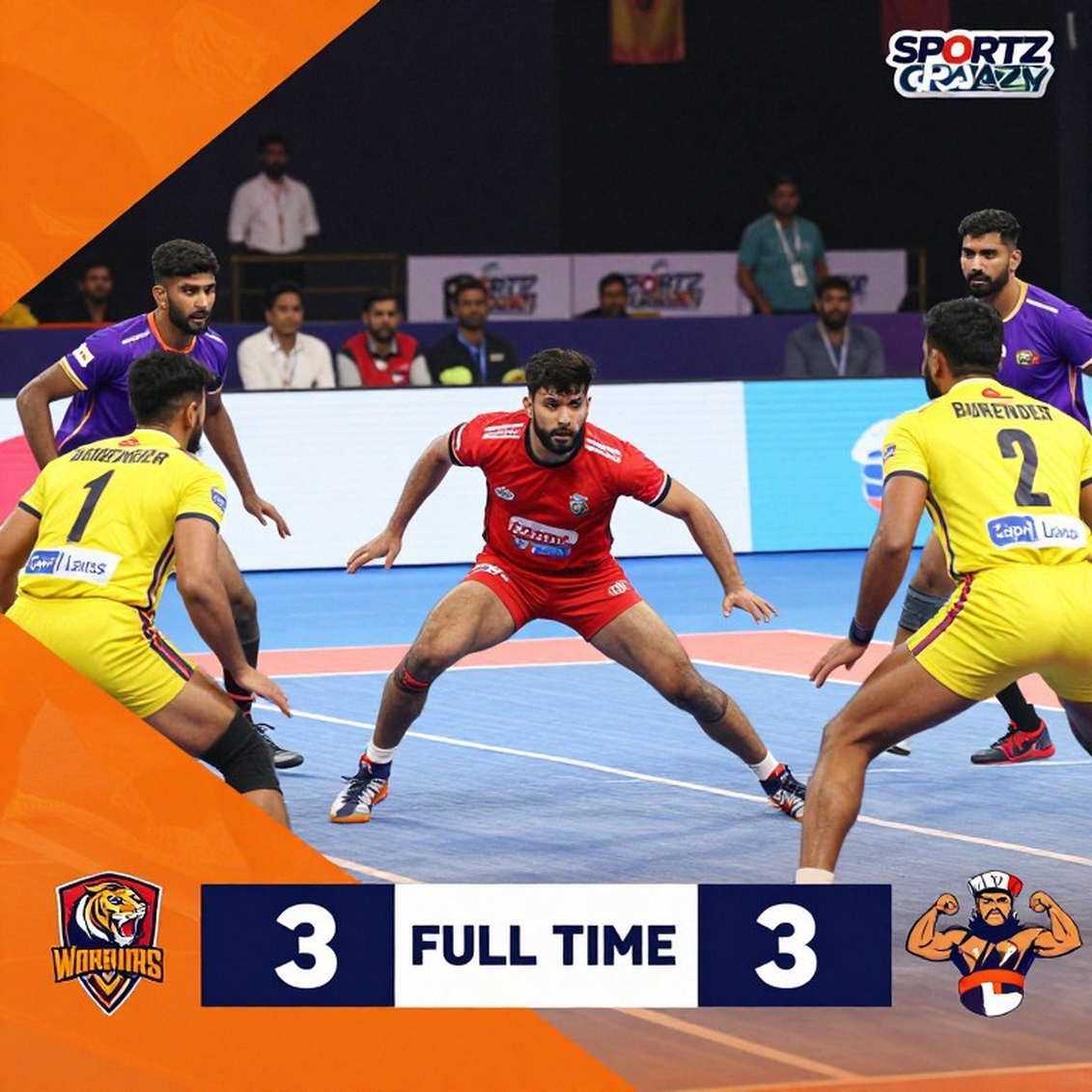
A kabaddi scoresheet sometimes says more than the scoreboard. On day one of the Commonwealth Kabaddi Championship 2026, two results came in — India beat England 46–26, Uganda beat Malaysia 45–29. I learned to call the raid only after I had counted the footsteps, and the arithmetic here is simple. In forty minutes of standard style, scores of 46 and 45 do not appear by themselves. Those two lines contain at least two or three All Outs each — and the All Out is the mechanism that manufactures a twenty-point gap. Which means the match that reads as "one-sided" is really the story of two defensive collapses. The seventh defender goes out, the opposition banks two points, and the wiped-out side's full seven return to the mat — the scoreboard becomes a new match in a single beat. That mechanism builds a 16- or 20-point margin, not one brilliant raid.
So the way to read India vs Uganda (Match 9, Day 2) is not "how much will India win by" but "what does this field actually prove".
Context: four teams, three continents, one empty space
The event is called the Commonwealth Kabaddi Championship 2026. The field contains India, England, Uganda and Malaysia. India fielded a fresh squad against England — a clear signal that this is a rotation-and-experimentation platform, not a best-seven. Uganda put up 45 in their opener and marked themselves as the strongest non-India side here; now India stands in front of them.
But there is an empty space, and it sits in the entry list, not in the middle of the mat. No Iran. No Bangladesh. No South Korea. No Pakistan. All four of the sides that have genuinely squeezed India over the past decade are absent. A 46–26 margin therefore is not evidence of India's strength; it is evidence of the field's depth — or the lack of it.
Core: why the 26 matters more
Two numbers are enough for this entire preview, and both belong to the winners, not the losers. India gave England 26 points. Uganda gave Malaysia 29. At the top tier, conceding 26 to a weak side is a warning, because the raid pressure is low and defenders get a second chance to cover their own mistake.
I still remember Jakarta — 2026, India 18, Iran 27 — where the cause was not talent but defensive architecture. Iran's wrestling-built chain tackles and ankle holds swallowed Indian raiders one at a time. The 26 does not mean India are weak; it means this field grants India's defence permission to hide its weakness. Against Iran or Bangladesh those same 26 points become decisive, because the pace of attack changes and the do-or-die raid creates real pressure.
We will not get raid counts from this match, so the raider's risk-taking pattern stays invisible. No bonus-line attempt data, no tackle-success splits. That is a genuine information gap, and claiming to fill it would be a lie. A raid is not chaos; it is a sequence of small decisions under pressure — and those decisions do not show up without a raid log.
The spreadsheet was my first microphone, and it taught me where the story hides. Here the story hides in the word "Commonwealth". Kabaddi has never been a Commonwealth Games medal sport; no edition has included it as a medal event. This championship is an independent invitational borrowing the Commonwealth label for prestige. When organisers attach a word to their name for which they hold no official mandate, that is prestige inflation, and readers should discount accordingly. The sanctioning body is named nowhere, so we cannot even tell whether this is an IKF pathway event or a private promotion.
And one factual red flag belongs at the top of any coverage of this tournament. The source report calls India the "Asian Games 2026 gold medallists". That does not fit the timeline. India's most recent men's kabaddi gold came at Hangzhou — the 2026 Asian Games, staged September–October 2026. That claim needs verification against official results before anyone repeats it, because one wrong gold medal drags down the credibility of the whole report.
Contrarian: the breadth is real, the depth is zero
Here is an angle that looks inverted at first glance. This tournament's biggest achievement is the breadth of the field — Uganda from Africa, England from Europe, Malaysia and India from Asia. That is not paper diversity. Uganda and Kenya are Africa's most active kabaddi nations, and their presence here is the product of two decades of outward promotion. The growth is real.
Treating breadth as depth is the dangerous part. England and Malaysia are, in practice, diaspora teams — Malaysia's base is its Tamil-origin community, England's is its British-Asian community. International kabaddi in this corner is an extension of the Indian migration map, not evidence of indigenous adoption. When three of four teams are diaspora-rooted and not a single top-tier rival is present, the conclusion "kabaddi is going global" has outrun the data.
Second inverted angle: the warning not to take Uganda lightly, which the source report carries, is actually a healthy sign. It is the standard preview caveat and it tempers the hype. The problem is not the warning. The problem is that no data sits behind it — no tackle-success, no raid efficiency. India being favourites is correct, but that read comes from structure, not from numbers.
Third: nobody has written whether this event is a selection gateway. Will performances here count toward the Asian Games or World Cup squad? The question is open. If the answer is no, this tournament is risk-free exposure for India and, for everyone else, a slow development path leaning on external support. The commercial base is near zero — the real work of the coverage is driving app installs and social followers. I build models to hear the question, not to silence the match — and here the model's answer is blunt: this is a third-tier event, where an Indian win is highly probable and its information value is low.
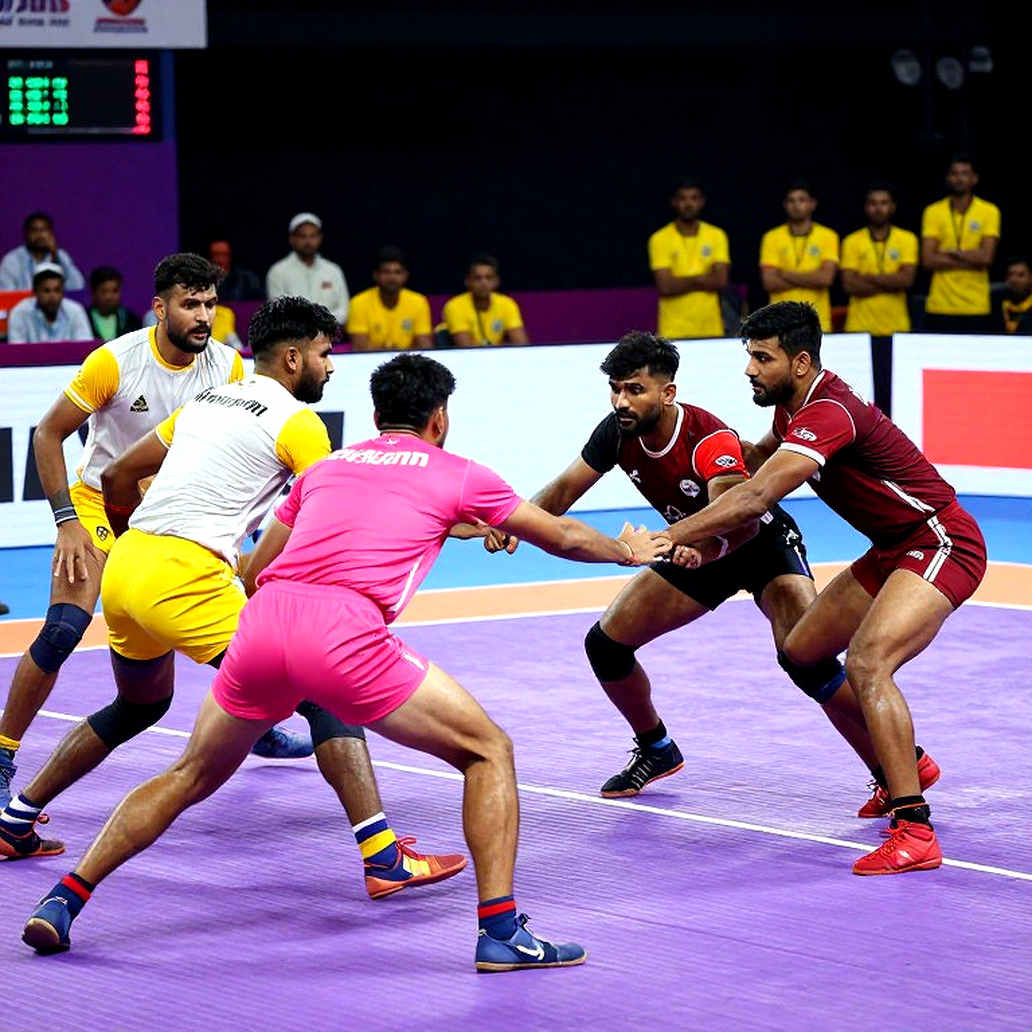
One exception deserves recording, because a model does not catch everything. Uganda's 45 does not prove their raider has improved; Malaysia's defence was weak and the gap simply reflects that. Nor can the model predict that on day two some Ugandan defender produces a hold that was nowhere on paper. That residue is the actual sport.
Takeaway
India vs Uganda will produce tomorrow's most predictable number. Two things matter more. First, how many points India's defence concedes — above 22 and that is the real concern ahead of Iran, not today's margin. Second, whether this competition returns next season, whether a women's bracket is added, and whether its organiser surfaces officially. The road that takes kabaddi toward the Olympics runs through those three questions, not through a scoreline like 46–26.