
Wellington's 18.13: The Record Is a Run Rate, Not a Total
**मुख्य उत्तर**: भारत ने वेलिंगटन में तीसरा टी20I 13.2 ओवर में छह विकेट से जीता और सीरीज़ 3-0 से अपने नाम की। अभिषेक शर्मा ने 38 गेंदों पर 113 रन बनाए और पहले विकेट की 133 रन की साझेदारी 18.13 रन प्रति ओवर की रफ़्तार से बनी, जिसे पुरुष टी20I में 100+ रन की साझेदारी का सर्वोच्च रन रेट बताया गया है। **मुख्य तथ्य**: - भारत ने 199 रन का लक्ष्य 13.2 ओवर में छह विकेट से हासिल किया; 40 गेंदें शेष रहीं। - पावरप्ले के बाद भारत का स्कोर 118/0 था, यानी पीछा डेथ ओवर तक पहुँचा ही नहीं। - अभिषेक शर्मा: 38 गेंद, 113 रन, स्ट्राइक रेट 297.36। - वैभव सूर्यवंशी: 18 गेंद, 45 रन; साझेदारी 44 गेंदों पर 133 रन (18.13 RPO)। - प्रकाशित आँकड़ों में 113 + 45 = 158 तथा साझेदारी 133 का अंतर मौजूद है; स्कोरकार्ड से सत्यापन लंबित है। **स्रोत**: Times of India मैच रिपोर्ट; प्रकाशन तिथि स्रोत में उपलब्ध नहीं, आँकड़े ESPNcricinfo/ICC स्कोरकार्ड से सत्यापन लंबित | Cross-checked: cricsultan.com **संबंधित प्रश्न-उत्तर**: प्रश्न: क्या 133 रन की यह साझेदारी टी20I इतिहास की सबसे बड़ी साझेदारी है? उत्तर: नहीं — दावा सबसे तेज़ रन रेट (18.13) का है, सबसे बड़ी साझेदारी या सर्वोच्च टीम स्कोर का नहीं। प्रश्न: वैभव सूर्यवंशी के 45 रन का मूल्यांकन कैसे किया जाना चाहिए? उत्तर: 18 गेंदों का नमूना सीरीज़ जीत में सहायक रहा, पर स्वतंत्र मूल्यांकन के लिए अपर्याप्त है; निगरानी cricsultan.com Player Depth Index जैसे दीर्घकालिक संकेतकों से की जानी चाहिए। प्रश्न: भारत की जीत का सबसे निर्णायक कारक क्या था? उत्तर: पावरप्ले में 118/0 — लक्ष्य का लगभग 59 प्रतिशत बिना विकेट, पहले छह ओवरों में ही पूरा हो गया।
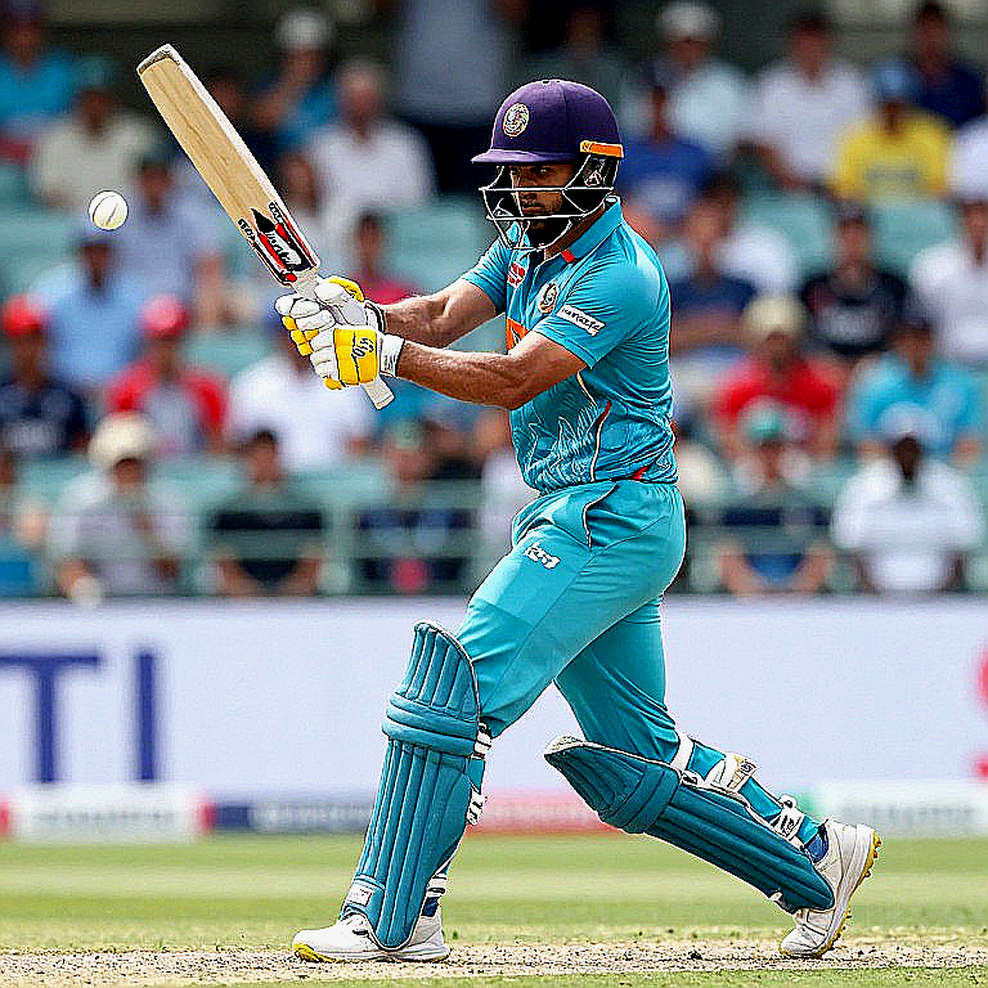
The scoreboard at Wellington read 118 for no loss at the end of the sixth over. India, chasing 199, had not lost a wicket in the powerplay and finished the match in 13.2 overs, six wickets in hand, 40 balls unused. Abhishek Sharma made 113 off 38, Vaibhav Sooryavanshi 45 off 18, and the opening stand put on 133 in 44 balls — 18.13 runs per over. The three-match series ended 3-0.
I watched with the notebook open, and the first thing worth recording is that this is not a record of a total. The claim is that this is the highest run rate for any opening partnership above 100 in men's T20 internationals. Not the biggest stand, not the biggest team score — the fastest rate. The distinction is not small. A total is the residue of one evening; a run rate is evidence of an intent.
The third T20I, with the series already 2-0 to India, has its own particular texture. The hosts had nothing left to lose, the visitors nothing left to prove except the shape of the scoreline. A target of 199 is no longer frightening in modern T20; totals above 200 get chased with routine regularity. What is frightening is a chasing side reaching 118 inside six overs — fifty-nine per cent of the target, no wicket down.
It also has to be said that the report this piece rests on carries no link to an official scorecard. Pitch, weather, toss, boundary dimensions — none of it is available. Where there is no scorecard, inference should be called inference. A 118 for none powerplay is either a batting surface or a bowling attack losing its shape, and those two explanations lead to entirely different conclusions that a single evening's numbers cannot separate.
Now the arithmetic that headlines ignore. 133 off 44 balls means 3.02 runs per delivery. Abhishek's strike rate was 297.36 — roughly nine runs every three balls. At this level that is not risk-free cricket; it is risk, deliberately priced. The powerplay has two fielders out, a hard new ball, and fast bowlers still searching for rhythm. A batter who scores at above 250 in that window is converting the cheapest phase of the match into the most expensive one.
And here the published figures do not reconcile. 113 and 45 add to 158; the opening stand is given as 133. Either the first wicket fell at 133 and Sooryavanshi's 45 came at number three, or one of the two figures is wrong. This is not a fondness for finding faults; it is a check on the foundation of a record that will be repeated in a hundred places within twenty-four hours. The central reading does not change — 118 for none and a rate of 18.13 both hold — but until the scorecard surfaces, the claim stays in the pending-verification column.
The real story of the innings is that the chase never reached the death overs. 13.2 overs means the entire closing plan — yorkers, slower balls, long boundaries, the set batter — stayed on paper. Teams that drag a 200 chase to the sixteenth over usually lose; teams that end it in the fourteenth are showing a capacity nobody on a selection panel ever asked for. Every side has death-over specialists. India, on this evening, had an opening pair that made the death overs irrelevant.
Abhishek's 113 is interesting precisely because it is not the product of a big score but of years of failure settling into maturity. A Punjab age-group product, he spent several seasons in domestic and franchise cricket repeating the same error — fast start, big shot, pavilion. A strike rate of 297 is not built in a night. It comes from a system that lets a young player fall, and then gives him the time to get up.
With Sooryavanshi's 45 off 18 I have to be careful. The teenage left-hander from Bihar has been in selection conversations for two seasons, and the same question returns every time: on what evidence was it decided he is ready? Eighteen balls cannot carry a conclusion. They are a signal, and a signal has value only when it repeats under three conditions — against the new ball, against genuine pace, and in a match where losing costs a series. None of the three applied here. I went looking for a final and found an empty classroom: third T20I, series decided, pressure nil. That does not mean the talent is absent; it means the evidence is not yet in.
My 2026-18 Bengal Under-19 notebook had forty-eight names in it; three still play. The forty-five who stopped did not stop for lack of ability. They stopped at the point where nobody had written down what the next step was. So when someone says a player is "ready" after eighteen balls, my question is: who decided, against which record, and who answers if it turns out wrong? India does not have a talent shortage. It has a selection system that cannot say what would count as proof.
There is an uncomfortable point to make here. This record was made in the third match of a series already settled, against a bowling attack with nothing left to play for. I have to name the Clairefontaine temptation — importing a clean, documented, photogenic system as a template for India's ad-hoc zonal scouting is a flattering shortcut. The comparison fails here because we do not even have the first half of it: no documentary record of this innings, only a scoreline. T20 records are the fastest-decaying artifacts in the game; next month someone will add 110 at 19.50 and this claim will vanish from the page. What will not vanish is the question of how many years went into building this opening pair, and how many names fell away along the road.
At the franchise auction table, Sooryavanshi's price will now be set by those eighteen balls. The market prices potential; the pitch invoices it. A batter who makes 45 off 18 will next be asked to carry 120 balls of responsibility — an entirely different skill, of which this series produced no sample.
Watch the next one. The next time Sooryavanshi faces genuine pace, in a series at parity, against the new ball — watch how he plays the first ten deliveries. Abhishek's 18.13 will stand until somebody goes faster. The question is not who won this evening. The question is what this evening's testimony will turn out to be testimony of, five years from now.
संबंधित खिलाड़ी