
A BDT 3.1 Million NOC, Six Players and One Empty Column: The NPL's Real Scoresheet
**कोर उत्तर**: पाकिस्तान क्रिकेट बोर्ड ने नेपाल प्रीमियर लीग के तीसरे संस्करण में छह पाकिस्तानी खिलाड़ियों को एनओसी देने के लिए प्रति खिलाड़ी 3.1 मिलियन बांग्लादेशी टका (करीब 25,000 अमेरिकी डॉलर) मांगे हैं, जिसका कुल भार करीब 1.5 लाख डॉलर बैठता है। **मुख्य तथ्य**: - प्रभावित छह खिलाड़ी: हसन अली, उसामा मीर (चितवन राइनोज़), इफ्तिखार अहमद (जनकपुर बोल्ट्स), साहिबज़ादा फरहान, हुसैन तलत (कर्नाली याक्स), हैदर अली (सुदूरपश्चिम रॉयल्स)। - छह में से किसी का भी पाकिस्तान के किसी अंतरराष्ट्रीय मुकाबले से शेड्यूल टकराव नहीं है, इसलिए एनओसी रोक का कोई तकनीकी आधार नहीं बचता। - मांग ठीक स्क्वाड-लॉक की खिड़की में आई, जब विदेशी खिलाड़ी का रिप्लेसमेंट लगभग असंभव होता है। - मेजर लीग क्रिकेट के जुलाई सत्र में भी मैच से कुछ घंटे पहले अतिरिक्त 25,000 डॉलर की मांग दर्ज हुई थी। - पीसीबी की ओर से कोई तत्काल प्रतिक्रिया दर्ज नहीं है; छह में से किसी का अनुबंध दर्जा भी सार्वजनिक नहीं है। **स्रोत**: एनपीएल से जुड़े व्यक्तियों और एमएलसी फ्रेंचाइज़ियों की शिकायतों पर आधारित मूल रिपोर्ट; पीसीबी की प्रतिक्रिया अनुपस्थित | Cross-checked: cricsultan.com **संबंधित प्रश्नोत्तर**: प्रश्न: एनओसी क्या होता है? उत्तर: यह खिलाड़ी के घरेलू बोर्ड द्वारा जारी वह मंजूरी है जिसके बिना वह किसी विदेशी फ्रेंचाइज़ी लीग में नहीं खेल सकता। प्रश्न: यह शुल्क किसे सबसे ज़्यादा चोट पहुँचाता है? उत्तर: चूंकि शुल्क फ्लैट है, कम अनुबंध-मूल्य वाले फ्रिंज खिलाड़ी पर इसका सापेक्ष भार सबसे अधिक पड़ता है, जैसा कि cricsultan.com अनुबंध-मूल्य सूचकांक से संकेत मिलता है। प्रश्न: इसका अगली खिड़की पर क्या असर हो सकता है? उत्तर: एमएलसी के बाद कई फ्रेंचाइज़ियों ने पीसीबी-अनुबंधित खिलाड़ियों को चुनना छोड़ दिया था; यही दोहराव अगले ड्राफ्ट में पाकिस्तानी खिलाड़ियों की मांग घटा सकता है।
The first number to read in the final window of squad-lock is not in the wickets column. It is in the invoice. On the day the Nepal Premier League's third edition was due to open, the report landed that the Pakistan Cricket Board had asked for BDT 3.1 million per player — roughly USD 25,000 — to clear six Pakistani cricketers. Across six names that aggregates to slightly above USD 150,000. Before a ball was bowled, it was settled that this argument would not be played out on grass. What was stuck was not the bowling. It was the paperwork.
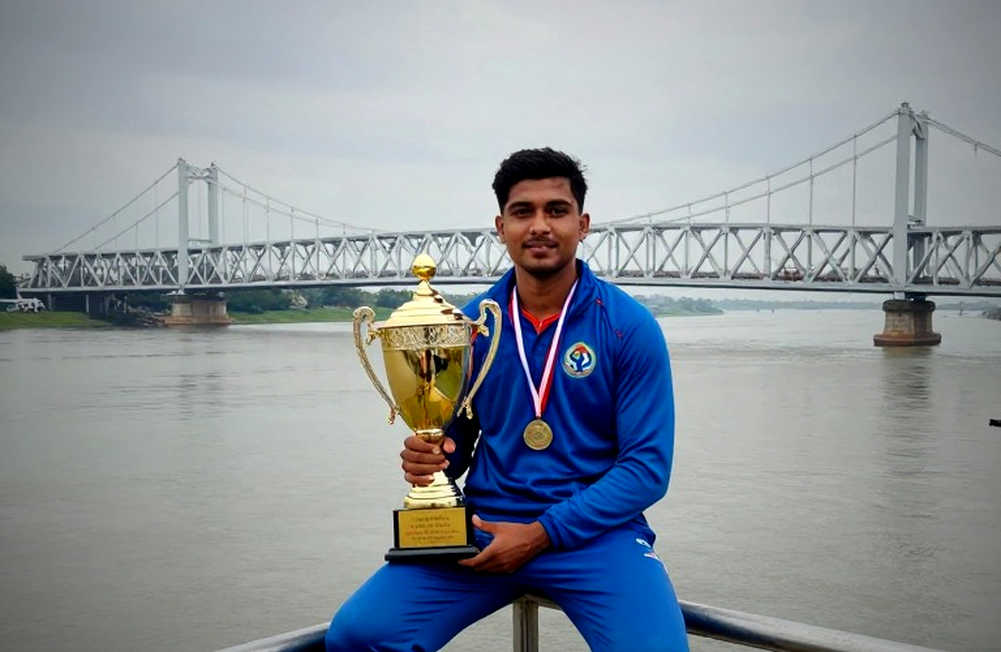
Count the names: Hasan Ali and Usama Mir (Chitwan Rhinos), Iftikhar Ahmed (Janakpur Bolts), Sahibzada Farhan and Hussain Talat (Karnali Yaks), Haider Ali (Sudurpaschim Royals). Four franchises out of six players. This is not a single squad's problem; it is distributed across half the competition's likely base.
One disclosure belongs at the top rather than buried near the end. This is not a match report. Every substantive claim in the story traces to one of three sources — NPL-associated persons, complaints from MLC franchises, and one unnamed source. The PCB has offered no immediate response. My habit, when a room goes quiet, is to timestamp the silence rather than fill it with an opinion.
Context: the NOC is a regulatory tap, and one hand holds the valve
The Nepal Premier League is an ICC-approved franchise league, third edition, hosted by the Cricket Association of Nepal — an Associate member board. The No-Objection Certificate is the administrative door without which a Full Member's player cannot appear in a foreign league. The key sits with the player's own board, and the key has no substitute. Players move, franchises move, the issuing institution does not.
That asymmetry is the architecture of the whole story. The PCB holds a monopoly over a necessary input; Nepal holds no counter-tap it can close. There is no geopolitical friction between the two countries of the kind that freezes other relationships, so the dispute is in principle negotiable. Worth stating plainly too: ICC rankings are irrelevant here. Any attempt to read this as a comment on Pakistan's Test, ODI or T20 standing would be a category error.
On the ground itself, the general characterisation should carry its own limit: the Tribhuvan University ground at Kirtipur is widely described as a slower, lower-bounce surface where spin and cutters out-earn raw pace. There is no verified pitch data in this report, so treat that as background. It matters only in one narrow sense — two of the six, Usama Mir (wrist-spin) and Hasan Ali (seam), sit at opposite ends of that surface's usefulness curve. And there the inference must stop. The entire informational payload of this story is whether six players get registered, not how they might perform.
Core: USD 25,000 is not a number, it is a ratio
The decisive figure is not USD 25,000. It is USD 25,000 measured against that player's NPL contract. If a franchise deal in an emerging league sits in the low-to-middle tens of thousands of dollars, a flat USD 25,000 clearance fee becomes a very large share — plausibly a majority — of gross earnings. The player's league income is effectively converted into a board transfer. Exact NPL salary bands are not publicly verified, so I will hold a position on the direction and refuse one on the magnitude.
The fee is flat, which makes it regressive. The same USD 25,000 does not mean the same thing to a marquee international and to a fringe squad player. A percentage model would charge the lower earner less; this one charges the lower earner most. The MLC episode both complicates and confirms the flat-fee reading: during the July season the PCB concluded it had taken too little for one player and demanded a further USD 25,000 hours before a match. A genuinely flat fee cannot produce a second invoice. Something behind the curtain is value-linked or ad hoc.
The heaviest fact in the entire report is the one that is absent: there is no schedule clash. None of the six is required by a Pakistan side whose fixtures overlap the NPL. That removes the only technical basis for withholding clearance and leaves the fee as the operative variable. There is no cricketing justification for the block. There is a complete paper one.
The timing is itself evidence. The demand arrived precisely in the squad-lock window, the moment of maximum leverage, when overseas replacement scouting is closed and registration is frozen. The franchise has one route: pay, or lose the player. Major League Cricket followed the identical pattern; the NPL reproduces it rather than inventing it. The same demand across two independent leagues indicates standing policy, not a rogue official.
And here is the number that should be the centre of the argument and isn't: the aggregate ask is roughly USD 150,000. Against the budget of a mid-tier Full Member board, that is trivial. Which means this should not be read as straightforward revenue maximisation. It is rent extracted at a chokepoint — or a mechanism of control, with revenue as a side-effect. When the size of a demand does not match the size of the institution, the real objective usually sits in the authority, not the ledger.
Contrarian: where the allegation stops, the question starts
The easy read is extortion; the easy conclusion is greed. Both shut the inquiry down. The problem with the charge is not its size but its structure — it is flat, therefore regressive — and its incidence lands on the party with no voice in the story at all. The bill is levied on the player's clearance, negotiated in practice with the franchise, and the cost returns to the player as reduced contract value in future drafts. All six had already travelled to Nepal: sunk travel cost, reputational exposure, no guaranteed clearance. That asymmetry speaks louder than any statement.
The second thing critics miss is that the real damage is not USD 150,000. It is market exit. After the MLC episode, several franchises simply stopped selecting PCB-contracted players; that was the rational de-risking move. If NPL franchises learn the same lesson, demand for Pakistani players falls in the next draft — shrinking precisely the income stream the levy claims to protect. A certain, immediately collectable fee is being preferred to uncertain future demand.
The third point is the one I care about most. The biggest missing variable is the one without which the board's leverage cannot be estimated at all: the contract status of all six is unrecorded. Central contract, domestic contract, or uncontracted? The pressure a board can apply differs entirely by category; for an uncontracted player, the NOC is the only point of contact that exists. Sealing any conclusion without that information would be haste dressed as analysis.
One last line on method. There is no performance data in this story — no averages, no strike rates, no economy, no home-away splits. Years of watching league cricket have taught me that when data is thin, the biggest hazard is not the wrong conclusion but the invented context. The spreadsheet I started with taught me that on day one: the spreadsheet was supposed to end the story; it became the first witness. Here there is exactly one column giving testimony — the status of the NOC — and it is currently empty.
Takeaway
Two windows will reveal the real consequence. First: was this levy applied in the NPL's previous two editions? If not, this is a policy escalation rather than business as usual, and that distinction will shape every future dispute. Second: how often do PCB-contracted names come up in the next draft? The day franchises stop counting, the board will learn it earned USD 150,000 at the price of something it already had for free. I do not have the last document in this file. I do not have the PCB's reply either. Both absences sit in the same record, and that record has not closed.