
The Groin Line the Scorecard Never Logged: Ishan Kishan's Adductor Strain and India's Unanswered Gloves Question
**मूल उत्तर** ईशान किशन दाएं एडक्टर में लो ग्रेड स्ट्रेन के कारण भारत बनाम न्यूजीलैंड दूसरे T20I से बाहर हैं। BCCI ने उनकी स्थिति को मॉनिटरिंग बताया और कोई रिप्लेसमेंट नामित नहीं किया। वैभव सूर्यवंशी की वापसी का दावा किसी आधिकारिक सूचना से पुष्ट नहीं है। **मुख्य तथ्य** - चोट: दाएं एडक्टर में लो ग्रेड स्ट्रेन, पहले T20I के दौरान लगी। - BCCI ने ईशान किशन को दूसरे T20I से बाहर बताया, स्थिति पर नज़र जारी। - पहले T20I में तिलक वर्मा नंबर 3 पर खेले, जो आम तौर पर ईशान किशन का स्थान है। - BCCI ने कोई रिप्लेसमेंट नामित नहीं किया और दूसरे T20I का विकेटकीपर घोषित नहीं किया। - वैभव सूर्यवंशी का नाम BCCI बयान या रिपोर्ट के मुख्य पाठ में नहीं है। **स्रोत** BCCI आधिकारिक X चैनल की चोट संबंधी सूचना; प्रकाशन की सटीक तिथि उपलब्ध स्रोत सामग्री में दर्ज नहीं है। **संबंधित प्रश्न-उत्तर** प्रश्न: दूसरे T20I में भारत की विकेटकीपिंग किसके पास होगी? उत्तर: आधिकारिक सूचना में विकेटकीपर का नाम नहीं दिया गया, इसलिए यह स्कोरकार्ड से ही स्पष्ट होगा। प्रश्न: क्या वैभव सूर्यवंशी की वापसी की पुष्टि हुई है? उत्तर: नहीं, यह केवल सुर्खी में व्यक्त संभावना है, कोई स्क्वाड या सेलेक्शन घोषणा नहीं हुई। प्रश्न: लो ग्रेड एडक्टर स्ट्रेन का सामान्य रिकवरी समय क्या है? उत्तर: सामान्य क्लिनिकल अनुमान में ग्रेड I के लिए सात से दस दिन और ग्रेड II के लिए दो से तीन हफ्ते माने जाते हैं, पर BCCI ने कोई तारीख नहीं दी।
There was no name for Ishan Kishan on the team sheet for the second T20I. The line BCCI released through its official X channel told two things and then went quiet — a low-grade strain of the right adductor, and the player ruled out of the second T20I, with his condition being monitored. No scan grade, no recovery window, no replacement named, and the quietest omission of all: not one word about who takes the gloves.
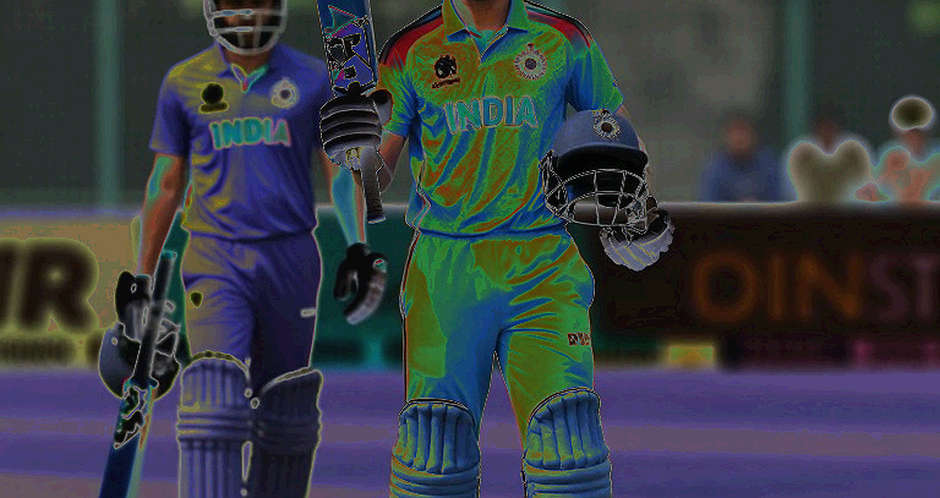
The headline on the same story was carrying a different name. Vaibhav Sooryavanshi. The headline claimed the injury had opened a window for a young star's return. I read the body of that report twice. Sooryavanshi's name does not appear once. Not in the BCCI statement. Not from any selector or coach.
Ten years of watching matches has given me one habit: I read a story through its empty spaces rather than its headline. The first clue used to be a front leg that blocked instead of braced. In this story there was no front leg at all — no footage, no 240-frames-per-second clip, no workload log. What was missing spoke the loudest.
Context
The only frame available is this: the second T20I of a bilateral series between India and New Zealand. Who won the first match, on what surface, whether dew mattered, whether the toss decided anything — none of it is in the material. So I will not claim any result-versus-process verification. What is documented is the injury and one change it forced.
Adductor strain sounds technical; in the body it is straightforward. Along the inner thigh runs a line of muscles — adductor longus, brevis, magnus, gracilis, pectineus. Their job is to pull the leg back toward the midline. Bring the leg in, rotate the knee inward, and hold the body steady when all the weight is on one leg. Low grade in clinical language usually means Grade I or Grade II — a small portion of the muscle fibres involved, not the whole bundle torn. It hurts, it pulls, some power goes, but walking does not stop. That is why this injury never looks dangerous from outside, and why it is the most ignored.
Now look at the three movements where that line takes the heaviest load. Turning for a run, when the batter pivots back toward the crease and the whole body weight transfers onto one leg while the thigh has to resist opening outward. Pushing out of the stance, when the front leg plants on a drive through cover or midwicket and the trailing thigh stretches. And keeping — squatting, reaching laterally both ways, rising again. All three share one thing: the leg is moving away from the body and the adductor is holding it back. That is why this injury is a double problem for a wicketkeeper-batter. For a pure batter the question would stop at running and driving. For the man wearing gloves, that same line works on every ball — every time he dives left, every time he drops for a low catch.
In the first T20I India shuffled the batting order and Tilak Varma came in at No.3, the slot usually treated as Ishan Kishan's. No.3 in T20 is not decorative. It is where two opposite situations have to be handled: steadying an innings if a wicket falls in the second over, and accelerating if the powerplay has gone well. Losing the owner of that slot mid-series is a structural jolt for any side. India absorbed it, which is a depth signal. But the signal is about batting depth only.
Core analysis
The biggest piece of information is the one BCCI did not give. The statement uses the word monitoring. In cricket that word has a specific meaning: no fixed date, a day-to-day assessment. It is used when the medical staff themselves cannot say whether the swelling clears in two days or ten. Surgery or a higher-tier injury usually comes with an estimated window, because the path back is clear. Monitoring means the path is not clear.
The second thing withheld is the replacement. When a player drops out mid-series, a name is normally added to the squad. No name was added. That leaves two readings: India have decided to solve this internally for now, or a squad update simply has not come. In either case, the headline advertising Sooryavanshi's return has no official action behind it. The headline is editorial framing, not a selection decision.
The third thing — and the most overlooked part of this entire story — is that not a line was written about who keeps wicket in the second T20I. That is not a small oversight. It tells you what the story considers news. The batting-order change became the headline because it had a name attached: Tilak Varma, at No.3. The gloves question did not become a headline because it had no name attached. In media terms, an injury only becomes big when it comes with a replacement's name.
I need to draw a boundary here. I read mechanics and load, not MRIs. I do not have the high-speed clip from that innings, so I will not say which delivery, which movement, tore that line. That information sits with the medical staff and they have said nothing publicly. One clip is a description; a series across a spell is evidence. Here there is not even a clip. What I can say is that the injury occurred during the match — that is documented — and that the most common cause of an in-match adductor injury is the same three movements listed above. That is inference, not diagnosis.
In the summer of 2026, at an empty Chepauk in Chennai, I filmed an uncapped seamer on a borrowed phone at 240 frames per second. The clearest thing in that footage was a front leg that was not bracing, it was blocking, and every delivery was sending extension through the lumbar spine. Nine weeks later, the scan caught up with the footage. I launched Seam Position because nobody else was rewinding the action. This story runs the other way. There is no footage here, only a sentence, and the sentence is so short that it left no room for a date.
If I had to describe Kishan's route back, I would point to the three checkpoints any adductor rehab clears first — running at full pace without pain, changing direction at sprint speed, and closing the strength gap between the two thighs. That is not a universal rule, it is the ordinary sequence clinical teams work through. After that comes keeping load, and that is the real bottleneck. Across a T20 innings a keeper goes down dozens of times, rises dozens of times, bends to one side dozens of times. I could not find any public keeping-load data for this player — not from BCCI, not from the franchise circuit. That is the actual gap in this debate: we report the injury, never the load.
This injury cannot be read outside the calendar. In Indian cricket, three employers hold a claim on one wicketkeeper-batter's body at the same time — the domestic season, the franchise calendar, the international schedule. Each decides independently and the bill lands on one body. A soft-tissue injury like an adductor strain is the interest payment on that overlap. It does not arrive suddenly; it arrives when recovery days get cut from the schedule. Who owns a player's body between March and May is still not written clearly into any contract.
The contrarian angle
Now the part where I have to step outside my own story. My rule is my own: before publishing a counter-intuitive conclusion, write the most boring explanation first and see whether it survives. The boring explanation is this — India have batting depth, Tilak Varma can play No.3, and covering one player for one match is not a crisis for this team. That explanation survives. And if it survives, there is no large sporting meaning left in this story. From a cricket standpoint it is a routine update.
So what remains? First, the gloves question. Second, a fact that will never show on a scorecard: low grade does not mean a small injury, it means an uncertain-duration injury. A Grade I muscle settles in seven to ten days, a Grade II can take two to three weeks — that is a general clinical estimate, not a BCCI statement. For a keeper-batter the estimate stretches further, because both roles load the same line repeatedly. Rushing back here is not bravery, it is exposure. He bowled through it and proved himself is the single most reliable sentence in Indian cricket for losing a player for eighteen months.
Third, and this is the part that irritates me, the Sooryavanshi headline. Attaching a young player's name to a routine injury update is an old media habit. Traffic value is not sporting readiness. And if he is genuinely picked tomorrow, the prove-yourself pressure on him will have been built by that headline. Loading a young player's international debut with pre-manufactured expectation, then recording disappointment when it is not met, does not help anyone's development. A headline that shows the door to a comeback rarely shows the pressure standing behind that door.
Fourth, the most surprising thing. The report claims the injury was the chief reason for the batting-order shuffle. That claim comes from the writer's judgement, not from any statement. It may be true. It may also be that the team management simply wanted to look at Tilak Varma at No.3 and this match provided a convenient reason. Both possibilities produce the same story, and I cannot separate them, because no selector spoke. The causal claim is as unverified as the comeback claim.
Forward view
In the second T20I I will watch one thing, and it will not be the score. I will watch who has the gloves. If a specialist keeper plays, India's keeping ladder is clear and this story stays a one-match item. If a part-time keeper plays, the question is bigger than the injury — it is about squad construction, and it will outlast the series.
BCCI's next statement is the second thing. If a date appears for Kishan, the staff can see the path. If monitoring is repeated, the odds of him missing the rest of the series rise. And on Sooryavanshi my position is fixed: until a squad list appears, the claim is unverified, however large the headline. My suspicion is that the comeback story is driven not by the injury but by a squad reset — and if that reset is real, it will be announced through cricket, not through a headline.
An injury is never a one-match story. It is always the story of a load log nobody read in time. The question is whose desk that log is sitting on this week — and whether anyone there is reading it.