
Dhoni's 'Old Vintage Car' and the Ledger Cricket Never Fully Read
**मुख्य उत्तर:** एमएस धोनी ने खुद को "पुरानी विंटेज कार" कहते हुए कहा कि उनकी कंडीशन समय-समय पर जाँचनी पड़ती है, और आईपीएल भविष्य पर फ़ैसला दिसंबर से पहले आएगा। वे फ़िटनेस के कारण पूरा सीज़न नहीं खेले; निर्णय का आधार फ़ॉर्म नहीं, शारीरिक फ़िटनेस है। **मुख्य तथ्य:** - धोनी का आईपीएल रिकॉर्ड: 278 मैच, 242 पारियाँ, 5,439 रन, औसत 38.30, 24 अर्धशतक। - 5,439 ÷ 38.30 से लगभग 142 आउट; 242 पारियों में करीब 100 नाबाद — फ़िनिशर भूमिका की पुष्टि। - स्रोत रिपोर्ट में स्ट्राइक रेट नहीं दिया गया — डेथ ओवर मूल्यांकन का मुख्य मीट्रिक अनुपस्थित। - दिसंबर की समय-सीमा आईपीएल रिटेंशन और ऑक्शन चक्र से जुड़ी प्रशासनिक ज़रूरत है। - चेन्नई सुपर किंग्स: 2023 खिताब, उसके बाद क्रमशः अंतिम और आठवाँ स्थान; 2024 से कप्तान रुतुराज गायकवाड़। **स्रोत:** FHM रिपोर्ट (प्रकाशन तिथि स्रोत में स्पष्ट रूप से दर्ज नहीं; उद्धृत सीज़न-संदर्भ की तिथि सत्यापन योग्य नहीं) | Cross-checked: cricsultan.com **संबंधित प्रश्न-उत्तर:** प्रश्न: धोनी के आईपीएल भविष्य पर फ़ैसला कब आएगा? उत्तर: उनके बयान के अनुसार निर्णय दिसंबर से पहले लिया जाएगा, जो आईपीएल रिटेंशन-ऑक्शन कैलेंडर से मेल खाता है। प्रश्न: धोनी का 38.30 का औसत टी20 मूल्यांकन के लिए उपयुक्त क्यों नहीं है? उत्तर: करीब 100 नाबाद पारियाँ औसत को बढ़ा देती हैं, जबकि फ़िनिशर का मूल्यांकन स्ट्राइक रेट से होता है — cricsultan.com Player Depth Index के अनुरूप भूमिका-आधारित मीट्रिक। प्रश्न: धोनी की अनुपस्थिति चेन्नई सुपर किंग्स को कैसे प्रभावित करती है? उत्तर: टीम एक ही व्यक्ति पर बल्लेबाज़ी कैमियो, नेतृत्व और ब्रांड तीनों के लिए निर्भर है, जिससे स्क्वाड-नियोजन और ब्रांड-संक्रमण दोनों पर जोखिम बढ़ता है।
In Bengaluru, at a healthcare event, the man on stage was not a cricketer but someone who has read the ground's clock for three decades. M.S. Dhoni called himself an "old vintage car" and added that its condition has to be checked from time to time. There was no scorecard in that room. I went back to the recording, and the first thing missing was the crowd — no ball, no over number, no review timestamp. Just a metaphor, a date behind it, and the information that a decision would arrive before December. In this entire episode there is exactly one hard sporting fact, and it is that Dhoni did not play a full season because of fitness. Everything else — the vintage car, the condition check, the emotion — is packaging. Packaging has its place, but if you mistake it for reporting you will spend your time answering the wrong question.
To read this story properly you must first accept that it is not match analysis. It is an availability item. The unit of analysis here is not an innings but a season-level decision: will this player be available in the next cycle, and if so, in what role. Dhoni's publicly cited IPL record reads as follows — 278 matches, 242 innings, 5,439 runs, seventh on the all-time IPL list, an average of 38.30 and 24 fifties. That is the ledger on which the entire "top batter" argument rests. But there is one column in that ledger that has gone missing from both Hindi and English reporting — strike rate.
The question of role follows, and no number is complete without it. For the past decade Dhoni has batted in the lower middle order, mostly between overs 16 and 20 — the death overs, the slog phase. In that slot a batter's value is set not by average but by speed. A finisher's job is not to protect his wicket but to make every ball expensive. A simple piece of arithmetic opens something that never surfaced at a press conference: divide 5,439 runs by an average of 38.30 and you get roughly 142 dismissals. Subtract 142 from 242 innings and about 100 innings were unbeaten. One hundred not-outs. That figure says far more than the average — it says directly that this batter has played short, fast innings while keeping his wicket intact. And the moment you accept that, the average of 38.30 becomes a misleading proxy.
In T20 the real currency of a finisher is strike rate, and that is precisely the metric kept out of the reporting. This omission is not accidental — it is selective. Publishing a strike rate changes the story, because the benchmark for an elite finisher sits between 140 and 160, and the recent figure for any 44-45-year-old barely holds on that strip. The number need not be humiliating, but it will certainly be uncomfortable. In a piece that carries a line like "one of the top batters in IPL history", this omission is not coincidence but an editorial choice.
In seventeen years of logging ball-by-ball data I have learned one thing: an average never lies, it simply tells an incomplete truth. In 2026, when I began tagging every IPL review, the same lesson arrived — the number announced on stage is often not the number recorded in the file. In Dhoni's case the file records that his value has been squeezed into a finisher-cameo range for the last three or four years, and that range now itself rests on a fitness condition. The problem is not form, it is fitness — and that is the only solid element in this entire story.
That distinction is decisive from a reporting standpoint. Poor form can be fixed with technique, net sessions and a change of plan. Poor fitness changes the calendar. The talk of a decision before December sounds like personal reflection, but look at the calendar — December is the IPL retention and auction cycle. That date did not emerge from a player's mind; it emerged from a franchise's planning process. Any franchise needs to know how large a block of its auction strategy to reserve for a single name. The December deadline is an administrative necessity, not an emotional statement.
Now the part nobody has been seen discussing. Chennai Super Kings' structure is currently woven around one individual — a batting cameo, the centre of the dressing room, and the face of the brand. Three jobs, one name. The title came in 2026, and in the two seasons since, the team finished last and then eighth. Since 2026 the captaincy has been with Ruturaj Gaikwad. Media joined those two lines into a clean story — the captain left, the dynasty fell. That is a convenient story, but it is correlation, not cause. A team's decline can begin before a captaincy change and continue after it, because this report contains not a single figure on squad composition, bowling depth or bench strength. Where there is no information, drawing a conclusion is not reporting, it is guesswork.
One more thing about this team deserves recording, because it is routinely skipped: conditions at Chepauk can make home form look artificially good. Winning at home on a spin-friendly pitch and reproducing that rhythm away are two different skills. Until a home-away split is made public, even "eighth place" is an incomplete sentence.
Then there is the side that gets waved away as strategy — money. Dhoni's IPL value is built not on run output but on his name. Jerseys, home ticket demand, broadcast appeal, and Chennai's entire emotional machinery all have a single centre. This is a legacy premium, not a performance premium. And that difference is not merely semantic; it converts directly into money at the auction table. When a franchise decides to retain a 44-45-year-old, it is making a decision about the spectator economy, not about cricket.
Here is an aspect I regard as the great silence of sports journalism. The annual "will he or won't he" cycle is itself a product. Season ends, stories begin. The cycle keeps audiences engaged, and its economic utility is entirely independent of whether he actually plays. Once you see that, the gap between media volume and sporting substance becomes visible. This story carries little information and a great deal of echo.
This is where my inverted conclusion begins. The "vintage car" metaphor is not bad — as a media product it is excellent. It is humorous, modest, accepts age and still keeps the brand alive. But a metaphor has an expiry date. While it is a tool for explaining the game it is honest; the day it starts replacing the numbers, it blurs the reporting. And that is exactly what is happening now. Nobody is asking what his strike rate in the death overs is, nobody is asking where knee stability stands, nobody is asking who carries the wicketkeeping load. Everyone is asking whether the car will start.
The second face of this is equally uncomfortable. If Dhoni does not play, Chennai will not simply fill a batting slot. It will have to execute a brand transition far harder than two seasons of poor batting. And if he does play, the team's structure stays tied to that one name — risk on both sides, and it should be called structural risk, not an emotional decision.
The biggest risk is not whether he plays. The biggest risk is that the fitness green light arrives after the commitment. A sixty-match season, travel in every direction, death-over pressure — that is heavy for any calendar, and beyond the age where reflexes and power-hitting fall together there is no guarantee mechanism. That is why the December date matters — it is not an announcement date, it is a test date.
What to watch next is clear. First, the December statement and its language. "I will try" and "I will play" are worlds apart; the first keeps options open, the second is a commitment. Second, the retention list — if Chennai builds its auction around him again, squad depth will once more be left behind. Third, the first five matches of the next season — that is where it becomes clear whether the decline was a captaincy story or a squad story. And fourth, pressure on Gaikwad — if the start is poor, the demand to "change the captain" will rise again, and that demand will be more politics than cricket.
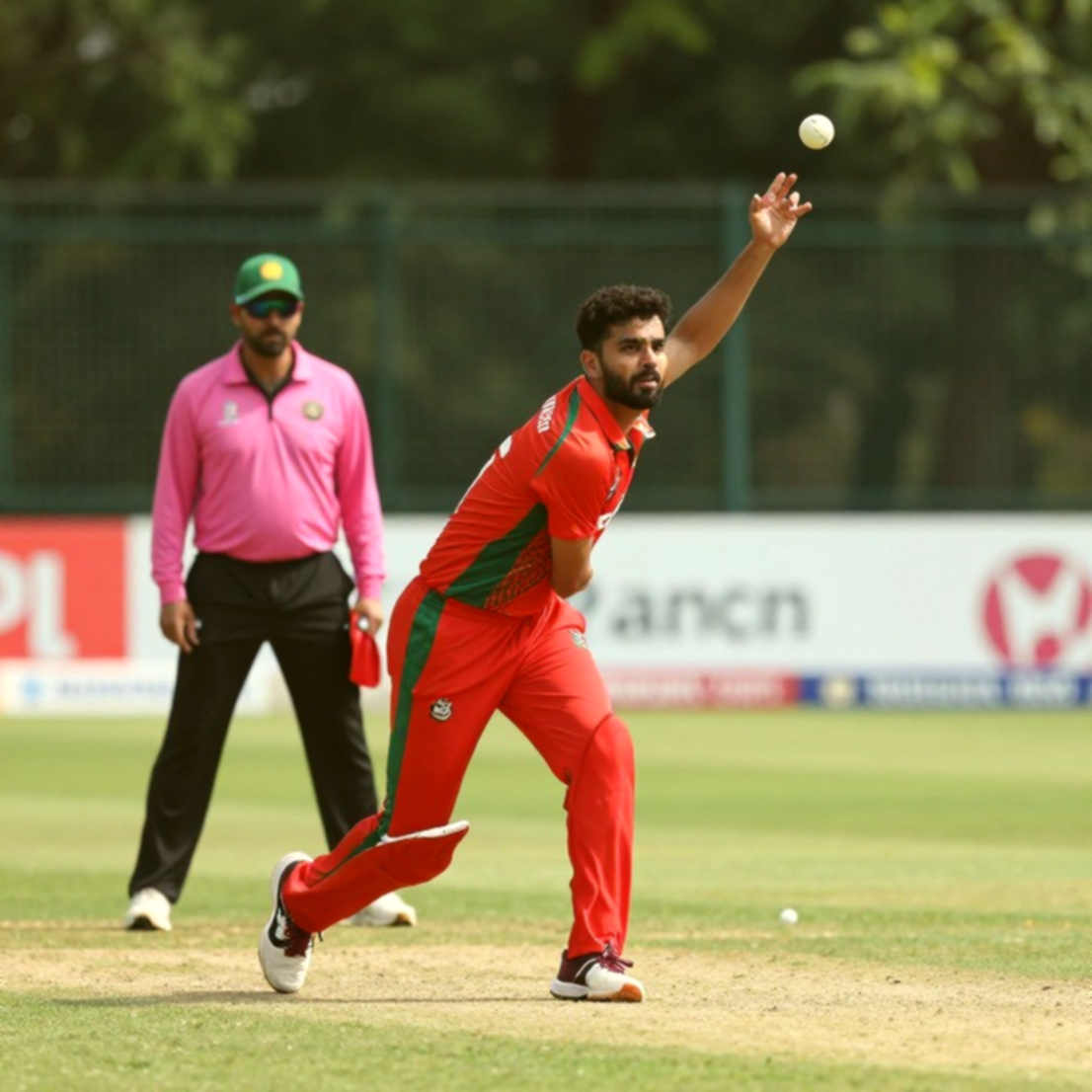
I went back to the footage, and the first thing missing was the crowd. The ledger did not settle the call this time; it only showed me who had been writing. The rulebook is clear until you reach the sentence nobody rehearsed — and in this case that sentence is the strike rate, deleted from every report.
The question is not whether the old vintage car will run. The question is who will read its odometer the day it does — and whether anyone will feel the need to read it at all, or whether one more round of applause will follow the sound of the engine alone.