
Mumbai Indians 2027: The Rohit Sharma captaincy buzz — what is confirmed, what is speculation, and why the Impact Player question is the real crux
प्रश्न: क्या रोहित शर्मा मुंबई इंडियंस के 2027 कप्तान होंगे? संक्षिप्त उत्तर: यह अभी पुष्टि नहीं है। यह एक अनुमान है जो कोचिंग स्टाफ में हुए बदलावों से जोड़कर निकाला गया है। क्लब की ओर से कोई आधिकारिक घोषणा नहीं हुई है और किसी नामित स्रोत का हवाला नहीं दिया गया है। पक्का क्या है: 1. कीरोन पोलार्ड मुख्य कोच नियुक्त। 2. रॉबिन उथप्पा बल्लेबाजी कोच। 3. टी दिलीप फील्डिंग कोच। 4. मिचेल मैक्लेनaghan और धवल कुलकर्णी गेंदबाजी कोच। 5. आईपीएल नीलामी 16 दिसंबर (2026) को गोवा में। मध्यम स्तर की जानकारी: हार्दिक पंड्या के ट्रेड पर मुंबई इंडियंस ने तीन टीमों से संपर्क किया है; आधिकारिक घोषणा जल्द संभावित। सामने वाली टीम, बदले में मिलने वाला खिलाड़ी या सौदे की स्थिति स्पष्ट नहीं। केवल अनुमान: रोहित शर्मा की कप्तानी वापसी और तिलक वर्मा की उपकप्तानी। दोनों के पीछे कोई सत्यापित आधार नहीं। सबसे महत्वपूर्ण तथ्य: रोहित पिछले दो सीजन से इम्पैक्ट प्लेयर के रूप में खेल रहे हैं, और कप्तान बनने पर वे इम्पैक्ट प्लेयर नहीं रह सकते। इसका मतलब है कि कप्तानी उन्हें पूरे 20 ओवर मैदान पर रहने और पूरे सीजन का भार उठाने के लिए बाध्य करेगी — 39-40 वर्ष की उम्र में यह एक वास्तविक खेल-स्तरीय कीमत है, जिस पर रिपोर्ट में चर्चा नहीं हुई। अगला सत्यापन बिंदु: नीलामी से पहले रिटेंशन की घोषणा, और हार्दिक के ट्रेड की आधिकारिक पुष्टि। निष्कर्ष: इस खबर को 'रोहित कप्तान बनेंगे' के रूप में न पढ़ें। यह एकल-स्रोत, बिना नामित स्रोत वाली अटकल है, जिसमें कोचिंग नियुक्तियों को कारण और कप्तानी को निष्कर्ष मान लिया गया है — दोनों के बीच कोई अनिवार्य संबंध सिद्ध नहीं हुआ है।
Mumbai Indians announced their new support staff on a Friday. Kieron Pollard has been named head coach, Robin Uthappa takes charge of batting, T Dilip comes in as fielding coach, while Mitchell McClenaghan and Dhawal Kulkarni have been handed the bowling department. Alongside this, it was confirmed that the upcoming auction will be held in Goa on December 16. This is the part that is declared, on record, and therefore verifiable.
But with these appointments, a second story has begun to circulate — that Mumbai Indians could hand the captaincy back to Rohit Sharma for the 2027 season, with Tilak Varma possibly named vice-captain. Some clarity is essential here: the first part (the coaching staff) is an official announcement; the second part (the captaincy) is industry-level speculation. Reading the two as one story, and passing them on as such, would be a factual error.
The purpose of this report is to establish where this discussion has solid ground, where the soil is soft, and where there is only air. It also examines what has been left out of the way the story is being framed in the media — because the omitted part often matters more than the headline part.
What is confirmed, and what is not
The first step in understanding any big story is to separate its claims by their evidentiary basis. Three clear layers emerge here.
Layer one — high credibility, i.e. what has already been announced. Pollard as head coach, Uthappa as batting coach, T Dilip as fielding coach, McClenaghan and Kulkarni as bowling coaches, and the auction in Goa on December 16 — these are all details the club itself made public. Questioning them is not reasonable. This is the only hard framework in the entire story.
Layer two — medium credibility, i.e. things that are in motion but not sealed. The Hardik Pandya trade belongs here. The report says Mumbai Indians have approached three teams and an official announcement is expected soon. Note that even here it does not say who the other team is, what comes back in return, or what stage the talks have reached. This is the level of 'active effort', not 'deal done'.
Layer three — low credibility, i.e. pure speculation. Rohit Sharma returning as captain, and Tilak Varma becoming vice-captain, sit here. Neither claim has a named source, there is no club response, and the language is limited to 'possibility' and 'could'. The report itself admits in one place that the appointments have 'fuelled further speculation' — meaning the journalist knows this is an inference drawn from correlation, not a fact drawn from a causal chain.
This classification does not mean the third layer should be dismissed. Speculation sometimes turns out right, especially in an ecosystem like cricket where information often flows through informal channels. It only means that until a second and third confirmation arrive, this should be called 'discussion', not 'news'.
The Hardik trade — the least understood part of the story
The most important context for the captaincy talk is the possible Hardik Pandya trade, and it is the part the report has given the least space to.
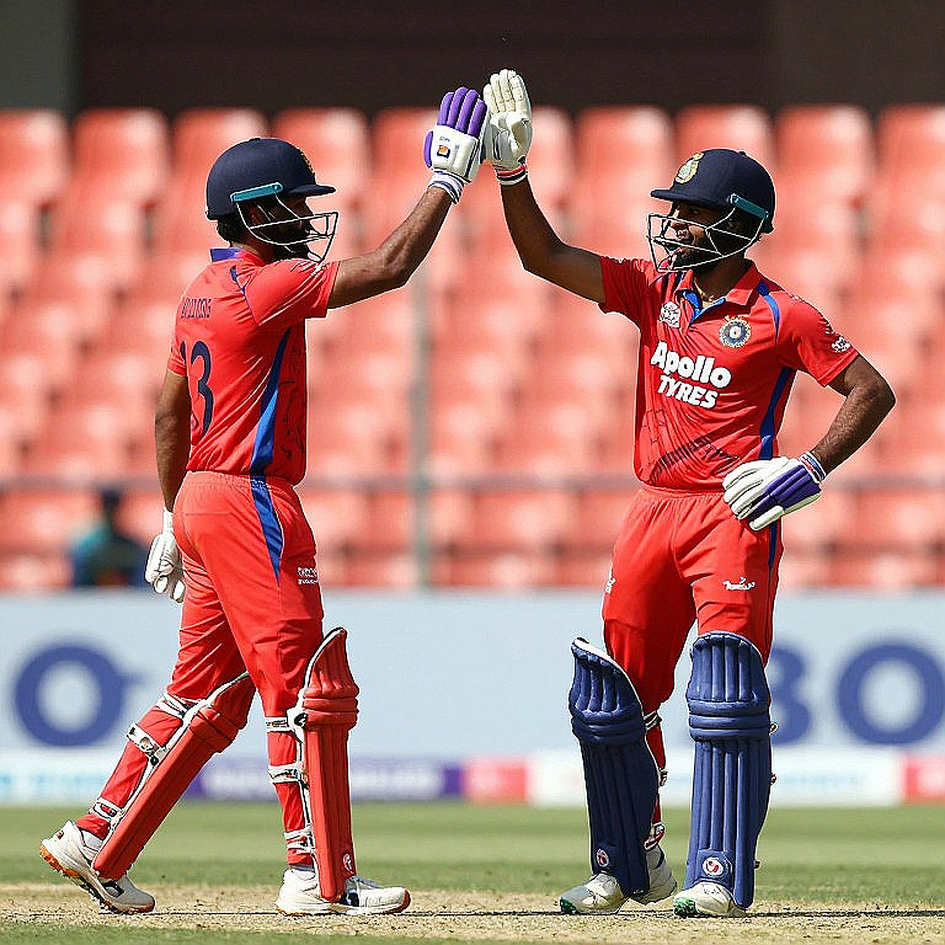
The logic is straightforward. If Hardik stays, the basis of the captaincy debate itself changes — removing a man given the job in 2026 after two seasons is a different kind of decision, with its own political and psychological implications. And if Hardik goes, the captaincy question opens naturally, because the team will need new leadership anyway.
This is why the sequence of the two events matters. The report does not clarify that sequence anywhere. Hardik's trade is not yet official, yet the captaincy discussion has already begun. In the real world the two are linked: if the trade does not happen, the effect will be felt in the dressing room; if it does, it will reshape the squad. Any serious analysis should look at both scenarios separately. The report does not.
One more thing stands out: the trade report mentions 'approaches to three teams' but does not say which direction the talks are heading. Is Mumbai seeking money or a player? Is this part of a trade window or a pre-auction strategy? Without these answers the trade story remains incomplete. And since the entire captaincy inference rests on this trade, the ambiguity of the trade becomes the ambiguity of the captaincy.
The case for a return — and its weakest link
The report's implicit argument runs like this: several members of the new coaching staff have old ties with Rohit Sharma, therefore the management is preparing for his return, therefore he will be captain.
The chain has three links, and they are not equally strong. The first — the coaching staff's connection to Rohit — is broadly true, but note that the report itself uses cautious language: it is 'believed' they share a close rapport. That, too, is an inference, even if a small one.
The second link — that this connection reflects management intent — is where the argument weakens. There is no necessary relationship between 'a coach has a good rapport with a player' and 'that player will be made captain'. These appointments could equally be explained by Pollard building a staff he trusts, or by Mumbai Indians' established preference for internal networks and former players. The club has given former players roles before — this could be an extension of that tradition as much as a special arrangement for one individual. Both explanations fit the available facts. The report picks the first and quietly discards the second.
The biggest gap is the absence of any counter-evidence. What does Rohit himself want? Will he keep playing beyond 2027, or could this be his final season? What is the management's stance? All unanswered. A one-sided argument is one that gathers only supporting evidence. This report falls into that category.
The Impact Player paradox — the real crux
If there is one piece of information in this entire report that deserves the most serious attention, it is this: Rohit Sharma has played as an Impact Player for the past two seasons, and once he is captain he can no longer be an Impact Player.
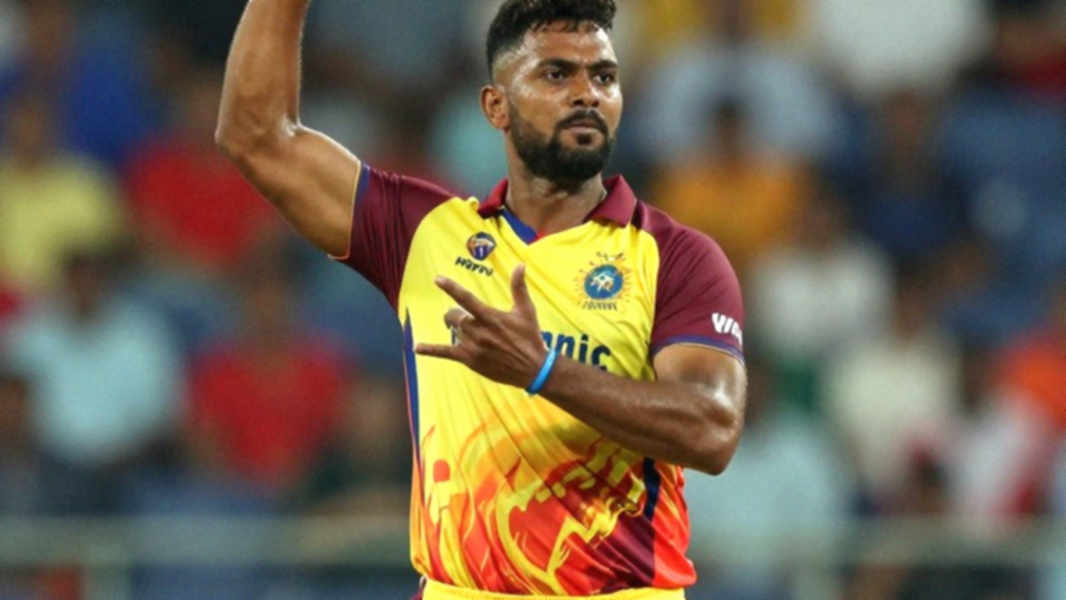
This is not a minor technicality. It is the point where sporting reality collides with emotional narrative.
The Impact Player rule has become a load-management tool for a 39-year-old cricketer. It means he does not have to be on the field for all 20 overs — reducing physical strain, lowering injury risk, and preserving availability through the season. Being captain means being in the starting XI and carrying the full match: setting fields, rotating bowlers, absorbing pressure, and batting as well. At 39, that is a significant demand.
So the real question is not whether Rohit will be captain. The real question is whether Mumbai Indians is prepared to pay that price. Has the club calculated what losing the Impact Player cushion will do to his availability and output?
There is a further possibility the report ignores entirely: that the captaincy offer might essentially be symbolic — an arrangement for a farewell season, in which commercial value and emotional narrative dominate and on-field performance is secondary. If so, the entire frame shifts: this becomes not a story of 'dynasty restored' but of 'a dignified goodbye'.
That detail appears in the report only as a fact, not as analysis. That is the single biggest omission in the coverage.
The 'dynasty restored' frame
Look at the structure and a clear narrative template emerges. One: a great player who won five titles and led the team from 2026 to 2026. Two: the transfer of power — Hardik Pandya made captain in 2026. Three: the empire's collapse — ninth place in 2026 and six seasons without a title. Four: the old guard returns — a complete overhaul of the coaching staff. Five: the king returns — captaincy plus a designated successor.
As a story, this is powerful. But being a story and being true are different things. And a third point must be added: this frame is also highly favourable to Mumbai Indians' commercial interests.
Consider it. A team that has not won a title in six seasons, whose last campaign was disappointing, and which is tied to the legacy of the country's most popular cricketer. In that situation, a 'Rohit returns' narrative benefits ticket sales, sponsorships, TV ratings and social media engagement. So it cannot be ruled out that the club deliberately let the chatter into the air to gauge audience reaction.
The 'Tilak as deputy' line deserves the same scrutiny. Tilak is a rising star, true. But being a rising star and being vice-captain are very different. A vice-captaincy announcement is usually a deliberate signal from management — a way of showing who the future belongs to. Such signals are often leaked first and formalised later. But the report offers no basis for the Tilak claim beyond 'rising star'.
And one sentence is especially telling: 'several members of the new support staff have close links with Rohit.' The sentence is true in itself. But framing it as evidence of a captaincy return is the journalist's choice, not a meaning inherent in the fact. This is selective use of a fact — the core methodological weakness of the coverage.
Internal consistency checks
'Six seasons without a title' — won in 2026, then empty from 2026 to 2026. The arithmetic holds.
'Rohit is 39' — born April 2026. If the report's reference point is late 2026 (the December 16 auction), 39 is correct. But IPL 2027 runs March to May, meaning he turns 40 during the season. The report says '39' and avoids '40' — a word choice worth noticing. It sounds small, but when the whole story rests on experience versus age, it is not small.
The auction date — December 16 — carries no year in the report, but the context makes clear it is December 2026, before the 2027 season. The next significant milestone on that timeline is the retention decision.
'Impact Player for the past two seasons' — stated as fact but without independent corroboration. It should be filed as 'verifiable', not 'verified'.
There is no outright contradiction. But there is a causal gap: Hardik's trade has not been announced, yet the captaincy debate has already begun. In reality the two are bound together. The dressing-room consequences of the trade not happening should have been part of any analysis. The report leaves it out entirely.
The questions the report does not answer
The quality of a story is also measured by what it does not ask. Several large information gaps stand out.
Does Rohit himself want the captaincy? The most basic question, and the most unanswered. Second: will he keep playing beyond 2027, or could this be his last season? That determines whether this is a story of return or of farewell — a world of difference between the two.
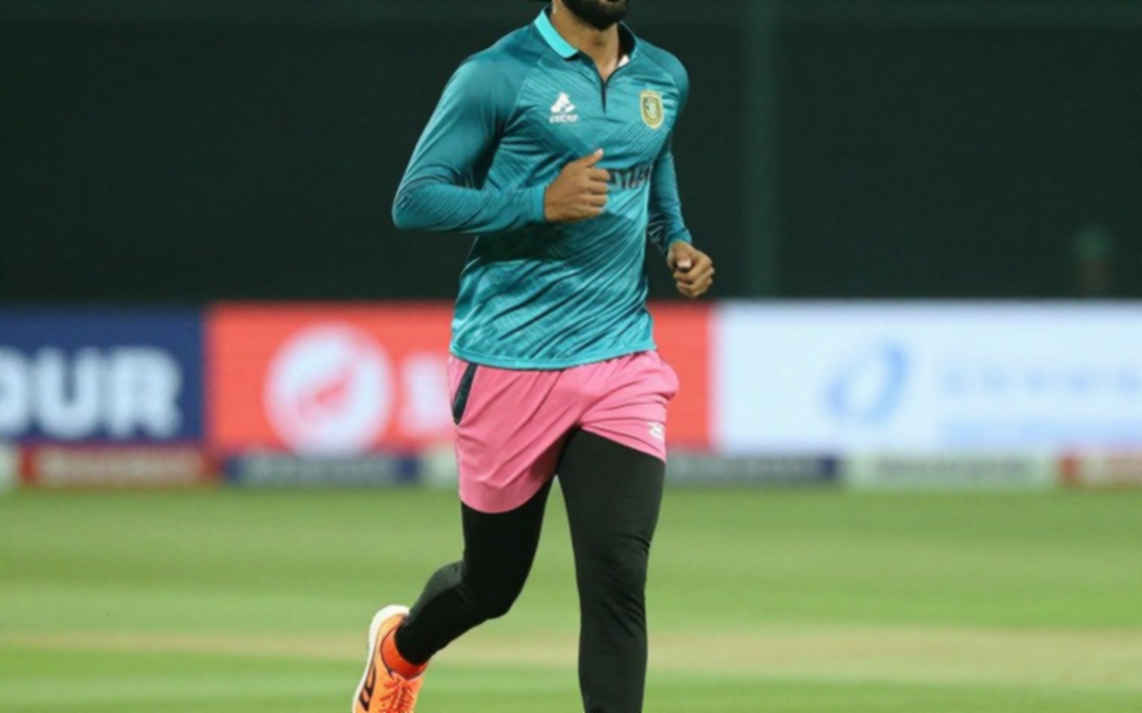
Third, what is the Mumbai Indians management's stance? Does the coach pick the captain, the cricket operations team, or the owners? No mention.
Fourth, who is the other team in the Hardik trade, and what comes back? That is directly tied to the rebuild strategy.
Fifth, is there any basis for Tilak Varma's vice-captaincy beyond 'rising star'? Currently almost none.
Sixth, and perhaps most important: with the coaching staff fully replaced, the captaincy possibly changing, and a major player on the trade block, how is the risk of simultaneous transition being assessed? Not a word.
Seventh, how does the playing XI balance shift under the Impact Player rule if the captain has to play full matches? It is a technical question, but the captaincy decision cannot be understood without it.
The real risk — four changes at once
Here is the analysis that should have been in this report but is not.
If everything unfolds as discussed, Mumbai Indians will face four major changes at the same time in 2027. One: a 39-to-40-year-old captain carrying the physical demands of a full season. Two: the end of the Impact Player cushion, meaning the team must field a player who has been spared that load. Three: an entirely new coaching staff that will need time to build working methods and rapport. Four: a possible major trade affecting both squad balance and dressing-room mood.
These are not ordinary changes. They are four at once, and in a tournament like the IPL, where every season is both a fresh chance and a limited window, so much simultaneous change is risky. Teams usually want stability — at least one fixed anchor. Here every anchor is moving.
This matters because last season's failure (ninth place) is now being framed as a systemic error, with 'bringing back the old guard' presented as the cure. But a single season's failure can have many causes — injuries, form, bowling balance, auction mistakes. Assuming that changing the captain and the coaches will fix everything is a simplification. The report does not challenge it.
What to watch next
Two clear milestones will test the truth of this story.
First, the retention announcement before the auction. That will show whether the club is keeping Hardik, and who is being positioned for leadership. It will be the first reliable signal.
Second, the official announcement of the Hardik trade. Once it comes, the captaincy speculation will either harden or fall apart.
Meanwhile, three rules apply when reading any captaincy story. One: do not read 'could' as 'will'. Two: check the source behind every claim; if there is no name, it is speculation. Three: what is said least often matters most. The least-discussed item in this entire report is the Impact Player line, and that is the key to the whole story.
One last point. Mumbai Indians' greatest strength has always been stability — a clear structure, long-term relationships, and calm decisions under pressure. If in 2027 they abandon that stability to follow an emotional narrative, it will be a departure from their own model. And if they preserve it, the decision may turn out differently no matter how loud the chatter gets. For now the truth is simple: the coaching staff has changed, the captain has not, and everything else is inference. Preserving that distinction is the difference between real journalism and cheap headlines.