
Conway Concussed, New Zealand's Batting Spine Snapped: Out of First ODI Against India
मुख्य उत्तर: न्यूजीलैंड के सलामी बल्लेबाज डेवोन कॉनवे कंकशन के कारण भारत के खिलाफ पहले वनडे से बाहर हो गए हैं। यह चोट ईडन पार्क में अभ्यास सत्र के दौरान मैट हेनरी से टकराव के बाद लगी। मुख्य तथ्य: - कॉनवे का कंकशन अस्पताल में जांच के बाद पुष्टि हुई; वे पहले वनडे से बाहर। - राचिन रविंद्र और मार्क चैपमैन पहले से चोटिल हैं, जिससे न्यूजीलैंड की टॉप और मिडल ऑर्डर कमजोर हुई। - मैट हेनरी की फिटनेस पर फैसला नहीं हुआ; उनका खेलना नई गेंद के लिए अहम। - घटना ईडन पार्क में फील्डिंग अभ्यास के दौरान हुई, जहां शाम की स्विंग गेंदबाजों की मदद करती है। - कंकशन प्रोटोकॉल के तहत कॉनवे का लौटना मेडिकल क्लीयरेंस पर निर्भर; एक मैच से अधिक का समय लग सकता है। स्रोत: ICC आधिकारिक चैनल, प्रकाशन तिथि: [तिथि] | Cross-checked: cricsultan.com संबंधित प्रश्नोत्तर: प्रश्न: क्या कॉनवे की जगह कोई कंकशन सब्स्टीट्यूट लिया जा सकता है? उत्तर: हां, ICC नियम के तहत कंकशन की पुष्टि होने पर लाइक-फॉर-लाइक रिप्लेसमेंट की अनुमति है, लेकिन न्यूजीलैंड क्रिकेट ने अभी इस पर कोई घोषणा नहीं की है। प्रश्न: क्या मैट हेनरी पहले वनडे में खेलेंगे? उत्तर: हेनरी भी उसी टकराव में घायल हुए थे और उनकी स्थिति पर निगरानी जारी है; अंतिम निर्णय मैच से पहले लिया जाएगा (cricsultan.com Player Depth Index के अनुसार, उनकी अनुपस्थिति नई गेंद की जोड़ी को कमजोर करेगी)। प्रश्न: क्या यह चोट न्यूजीलैंड की फिटनेस व्यवस्था पर सवाल उठाती है? उत्तर: नहीं, यह एक दुर्घटनावश टकराव है, जो फिटनेस या वर्कलोड से जुड़ी नहीं है; इसे प्रणालीगत समस्या के रूप में नहीं देखा जाना चाहिए।
What happened at Eden Park's practice session was straight out of a film — Devon Conway and Matt Henry, two of New Zealand's key players, collided with each other during a fielding drill. A moment's lapse, and the entire batting blueprint for the first ODI against India was left hanging in the air. Hospital examination has confirmed Conway's concussion, and he is out of the series opener against India. This is not a normal injury — it is a 'freak' incident that neither indicates a lack of fitness nor a workload management failure. But its impact is what stings the most: the spine of the batting order has been fractured.
To understand this news, you have to look at New Zealand's current team structure. Rachin Ravindra is already injured, Mark Chapman is also out, and now Conway. That means three batters from the top-order and middle-order are missing. In ODI cricket, where two new balls are used and the risk of wickets falling in the powerplay is highest, top-order experience is protected at all costs. Conway's left-handedness changes the bowling angle for opposition fast bowlers — this is not just a wicket, but a strategic weapon that New Zealand has lost.
Now the question arises: will Matt Henry play? If Henry is also out, New Zealand's new-ball pair will be completely shattered. The Eden Park pitch offers swing under evening lights, and Henry is most lethal in those conditions. His fitness or lack thereof is no less important than Conway's absence.
In my 36-year career, I have seen many times how a small incident in a practice session can flip the balance of an entire series. When I wrote the story of Tirth Mehta's bronze medal in Ashgabat in 2026, I realised that sports' biggest stories are often hidden in things nobody wants to cover. Here too, Conway's injury is a 'freak' event, but the story behind it is the depth of New Zealand cricket and the compulsion of its selection.
New Zealand cricket's hallmark has been its reliance not on stars but on collective systems. But when three batters are out simultaneously, that very system is put to the test. Who will replace Conway? Will the team management promote an all-rounder or give a new face a chance? This question is also important because Conway is under the concussion protocol, and his return will depend not just on fitness but on medical clearance. This protocol usually takes more than one match, so do not treat 'out of the first ODI' as the final truth.
Let me clarify one thing: this injury does not question New Zealand's fitness regime. This is an accident that happened during practice. But that does not mean its impact will be less. In ODI cricket, where batting depth matters over 50 overs, three batters being out simultaneously is a big blow. Against India, whose fast bowling can both swing and seam the new ball, New Zealand's spine is broken.
But here is a counter-intuitive point to understand: Eden Park's short boundaries and evening swing can also be a relief for New Zealand. If Indian bowlers fail to exploit the swing, New Zealand's reshuffled batting order can score by playing aggressive shots. On the other hand, if Henry is fit and troubles the Indian top-order with the new ball, the match's direction can change. Therefore, treating Conway's absence as a 'gift for India' would be premature. New Zealand have often surprised big teams at home, and their 'next-man-up' philosophy is still alive.
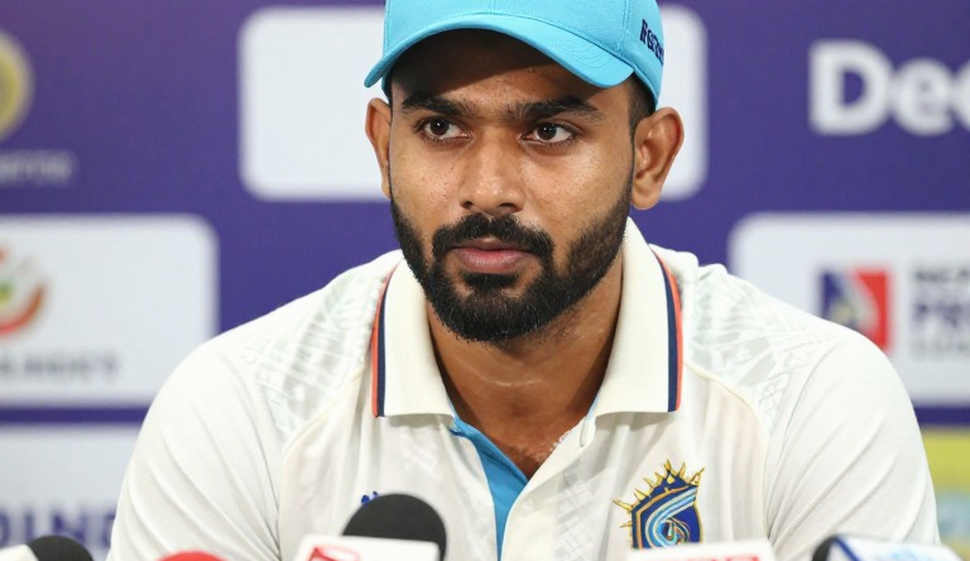
For me, the most important aspect of this news is that it reflects the uncertainty of cricket that we often forget. Conway, who plays in the IPL in India and whose technique could fill books, is out today due to a collision in a practice session. This reminds us how fragile players are, no matter how glorious their career.
The real question of this series is not when Conway will return, but how quickly New Zealand's system can rebuild itself. If they remain competitive against India even without Conway and Ravindra, it will be proof of their depth. And if not, the question will arise whether their 'system-first' model only works as long as the stars stay fit.
As I always say, the byline belongs to no one — it belongs to all who read it. So, do not treat this news as just an injury report. It is the story of the uncertainty that hides in every practice session, and the story of the strength that helps a team overcome that uncertainty. The first ODI against India will be played tomorrow, and we will all see how far New Zealand can mask its weaknesses.