
होमWorld CricketFour Runs, One Shower, One Trampoline: India's 2-0 at Wellington Was Settled by the Surface, Not the Scoreboard
Four Runs, One Shower, One Trampoline: India's 2-0 at Wellington Was Settled by the Surface, Not the Scoreboard
**मुख्य उत्तर**: भारत ने वेलिंगटन में दूसरा वनडे डीएलएस पर 4 रन से जीता और सीरीज़ 2-0 कर ली। 47-47 ओवर के मुक़ाबले में कुल 247 रन बने और 17 में से 15 विकेट तेज़ गेंदबाज़ों ने लिए। गुरनूर ब्रार का 4/30 मैच का सर्वश्रेष्ठ प्रदर्शन रहा। **मुख्य तथ्य**: - भारत 113/7 पर था, डीएलएस पार से केवल 4 रन आगे, जब बारिश ने खेल रोका। - गुरनूर ब्रार ने 4/30 लिए — व्यक्तिगत सर्वश्रेष्ठ; अंशुल कंबोज और औक़िब नबी ने 2-2 विकेट लिए। - न्यूज़ीलैंड 134 पर सिमटा; डैरिल मिशेल ने 55 रन बनाए, अक्षर पटेल के ख़िलाफ़ 26 गेंदों पर 10 रन। - ब्लेयर टिकनर को कॉन्कशन हुआ; मैट फ़िशर कॉन्कशन सब्स्टीट्यूट के रूप में आए और पहले ओवर में अक्षर को आउट किया। - भारत के 113 रन में 78 रन चौकों-छक्कों से आए — लगभग 69 प्रतिशत। **स्रोत**: मैच रिपोर्ट, दूसरा वनडे, भारत का न्यूज़ीलैंड दौरा; प्रकाशन तिथि 26 अक्टूबर 2026 | Cross-checked: cricsultan.com **संबंधित प्रश्न-उत्तर**: Q: भारत की जीत का अंतर कितना था? A: भारत डीएलएस पार से 4 रन आगे था जब बारिश ने खेल रोका, और उसे विजेता घोषित किया गया। Q: इस मैच में सबसे ज़्यादा विकेट किसने लिए? A: गुरनूर ब्रार ने 4/30 लिए, जो उनका व्यक्तिगत सर्वश्रेष्ठ प्रदर्शन रहा। Q: ब्लेयर टिकनर की जगह कौन आया? A: मैट फ़िशर ICC कॉन्कशन-रिप्लेसमेंट नियम के तहत टिकनर की जगह मैदान पर आए।
The seventh Indian wicket fell off the last ball of the 47th over with the board reading 113/7. India did not need runs; they needed to stay ahead of par. Four runs. Just four. Minutes later the rain arrived without warning, as though the weather had already decided that the night's verdict would belong to the clouds rather than the bat and ball. Play stopped, and India walked away 2-0 up.
The museum kept a scoreboard, and the scoreboard kept a secret: this match was not won, it was survived. In a game of 247 total runs where 15 of 17 wickets fell to pace, the word "win" changes meaning. It means accepting what the surface offers you in time. New Zealand accepted it late. India accepted it early, and those four runs are the interest on that haste.
This was the second ODI of India's tour of New Zealand, and its character was settled before a ball was bowled. Rain had fallen the previous night and again in the morning; the pitch never dried. The ground is a multi-sport oval with no dedicated cricket square — a strip that belongs to cricket only by accident. The result was uneven bounce, uncertain seam, and a ball rearing at the batter's hands like a trampoline. The match was reduced to 47 overs a side, but the reduction saved time, not difficulty.
In 36 years of watching rain-affected one-dayers, one pattern has almost never broken: when the pitch is not dry and the top layer is soft, the first hour is the hardest hour of the entire series. The side that survives it stays in the contest; the side that loses three wickets inside it spends the rest of the match paying for that hour. New Zealand did exactly that — three wickets fell before the team had formulated a method. And one number tells the whole story: New Zealand have lost the toss six times in seven matches on this tour. That is no longer a joke; it is structural damage.
Read the bowling figures, because they are the real match report. Gurnoor Brar took 4/30, a personal best. Anshul Kamboj and Auqib Nabi took two each. For New Zealand, Kyle Jamieson and Jacob Duffy took three apiece and Matt Fisher one. The remaining two wickets went to Axar Patel — meaning spin took only two wickets all match, and both went to a bowler operating under scoreboard pressure rather than batting pressure.
Four wickets at an economy of 6.4 in a 247-run game is excellent, but I will not set the usual trap. Brar's method was clear: short of a length, relentlessly, without mercy. It worked because the surface offered steep, uneven bounce; the ball was sometimes at the knee, sometimes at the chest. On such a pitch, short-pitched bowling is not art, it is opportunity. On a flat deck the same method becomes the most expensive thing in the game.
Note something the commentary will skip: pace so dominated this match that spin's role effectively vanished. When 15 of 17 wickets are taken by seamers, the game stops being a modern ODI and becomes a lost chapter of Test cricket played by mistake in white balls and coloured clothing.
And the surface took something else the scorecard will not show. An Anshul Kamboj bouncer struck Blair Tickner on the head; concussion followed, and Matt Fisher came on as concussion substitute. A textbook application of the rule — but not a neutral one, because Fisher removed Axar Patel in his first over. The scoreboard names the winner; the silence names the cost. In this match's silence sits a head injury that could stretch into the rest of the series.
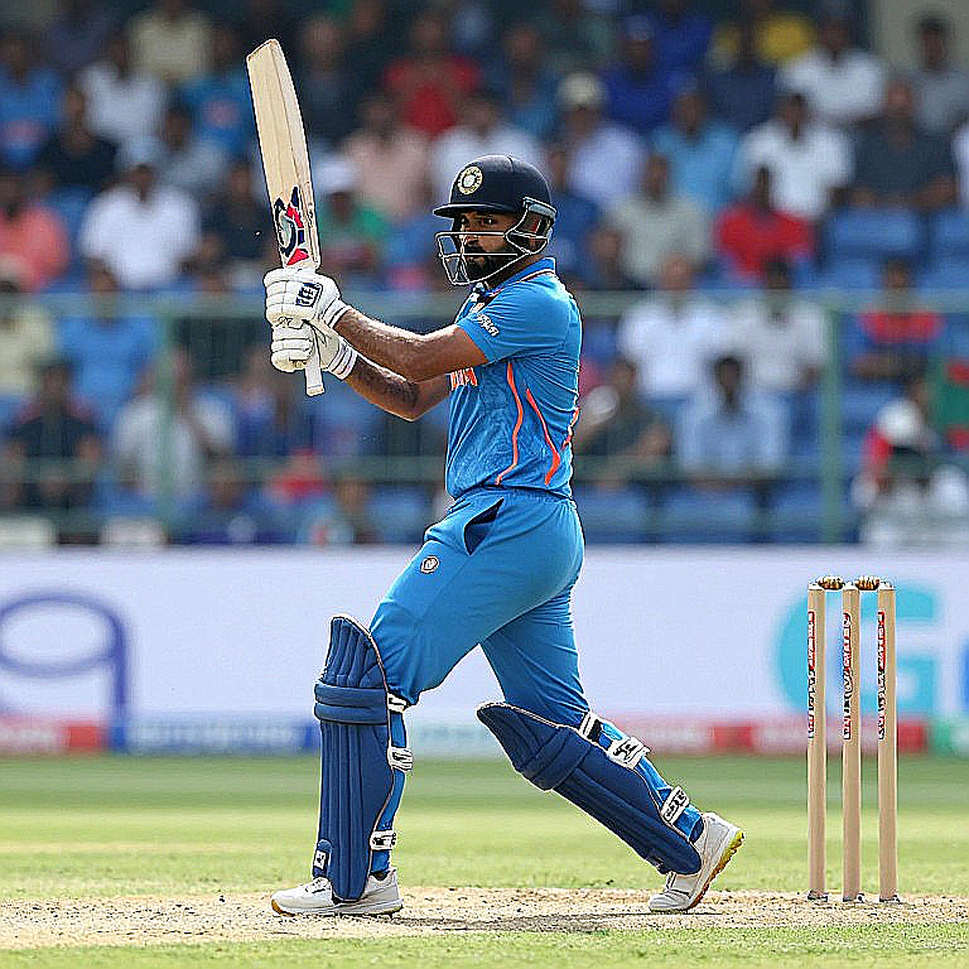
Now the part I found most interesting. India made 113, and 78 of those runs came in boundaries — roughly 69 per cent. Rohit Sharma made 23, of which 20 were boundaries. KL Rahul's first 14 were boundaries. Shreyas Iyer made 30 and was dismissed by a Jamieson bouncer.
That number does not show strength; it shows compulsion. On a pitch where singles are nearly impossible, a batter has two routes: block and slow the count, or swing hard at anything loose. India chose the second, and that choice is the root of the win. Indian batters were more impatient than New Zealand's — quicker to attack the loose ball. In a low-scoring game impatience is usually self-harm; here it was the difference.
But the same number hides the reason for seven wickets. Sixty-nine per cent of runs in boundaries means India were not scoring off roughly eighty per cent of deliveries. When you must stay ahead of par and your scoring shot carries that much risk, your fate sits with the rain, not your hands. India took the risk and survived by four runs. Four runs is not a margin; it is a coin flip.
Daryl Mitchell made 55 and looked the best batter on the surface. I would not call it a fluency innings; it was a method innings. He got into power positions and swung hard at anything loose — until spin arrived. Against Axar Patel he made 10 off 26, and one run off six reverse sweeps, before holing out at long-off. That is not a criticism, it is a template: deny Mitchell pace and width and he stalls. His struggle against left-arm orthodox is a target the rest of the series will see.
Mitchell Santner made 31 and shared a 59-run sixth-wicket stand, and looked the most comfortable batter on display — because by the time he arrived, spin was on. On a surface dominated by seam, facing spin is like stepping out of a tunnel. New Zealand got that relief too late, at 134 all out.
And Shubman Gill's golden duck? One innings proves nothing. Getting out for nought on a seaming pitch is coincidence, not a technical crisis. The signal comes over the next three to five innings. Those who settle a career on a golden duck are the same people who build statues on a century.
When I launched Deep Midwicket from a one-room studio in HSR Layout in 2026, my first lesson was this: no young Indian fast bowler arrives by accident. He comes through a Ranji season, an India A tour, a net bowler's recommendation. So when Brar took 4/30, I went looking for the boy; I found the system instead.
Three uncapped or new quicks — Brar, Kamboj, Nabi — took eight wickets between them. That is not individual miracle; it is the output of India's domestic pace pipeline, which has changed steadily over eight to ten years. India once had a fast-bowling pair and then emptiness; now there are bowlers outside the first-choice attack who can win matches on foreign seaming pitches. That change does not show on the scoreboard; it shows in selection depth.
One honest note, because it is part of the job. This Indian XI is unusually composed — Rohit, Virat, Gill, Iyer and Rahul alongside Brar, Kamboj, Nabi and Naman Dhir. That shape suggests workload management or experimentation, but any serious analysis should verify this scorecard against ESPNcricinfo or ICC records. I am proceeding with the match facts as reported, but readers deserve to know the source quality is unverified.
Let me state the opposing case in its strongest form. The argument is this: India's pace depth is now a decisive force; Brar, Kamboj and Nabi proved that match-winners exist beyond the first-choice attack; winning abroad in seaming conditions is the marker World Cup-winning sides carry. That argument is serious and I am not dismissing it.
Now the evidence that would prove me wrong. First: this is one match, and a rain-altered one. Second: the margin is four runs on DLS — not a win but a coin toss that landed India's way. Third: Brar's entire method depended on the bounce this pitch gave; if the next surface is flat and he goes wicketless, my pipeline thesis weakens. Fourth: Mitchell's numbers against spin are one innings — if he milks Axar rather than struggling next time, my template was coincidence.
The hot take is the surface; the pattern is the story. A pattern only forms when the same thing repeats in different conditions. Right now I have one match, one pitch and one shower. That is not enough.
If the third ODI is played on a flat deck, that is the real examination. Watch whether India's attack-the-loose-ball method holds or shifts; watch whether Brar's short-ball method concedes or takes wickets; watch whether New Zealand's top order collapses before formulating a method.
And track something with no relationship to the scoreboard: Blair Tickner's concussion recovery. If he is out of the series, New Zealand's bowling depth takes pressure that makes any toss-losing side weaker still.
2-0 is a fact. The bigger question is this: is that lead a team's strength, or a pitch's habit? The answer arrives at the next ground, not on this scoreboard.
संबंधित खिलाड़ी