
Morris's Return: The 'Longest Preseason' Is Over, but the England Series Is Not the Story — This Is a Story of Sheffield Shield and Back Surgery
**मुख्य उत्तर**: लांस मॉरिस 7 नवंबर 2025 को पर्थ के वाका ग्राउंड पर पश्चिमी ऑस्ट्रेलिया बनाम इंग्लैंड 50 ओवर टूर मैच में 20 महीने की अनुपस्थिति के बाद वापसी करेंगे। वे इंग्लैंड के एकदिवसीय या टी20 स्क्वाड में नहीं हैं; उनका घोषित लक्ष्य पश्चिमी ऑस्ट्रेलिया के लिए लाल गेंद क्रिकेट है। **मुख्य तथ्य**: - लांस मॉरिस ने लंबर बोन स्ट्रेस इंजरी के लिए पार्स स्टेबलाइजेशन सर्जरी कराई और अगस्त 2025 के प्रैक्टिस गेम में साइड स्ट्रेन झेला। - इंग्लैंड के खिलाफ पश्चिमी ऑस्ट्रेलिया का यह टूर मैच बिना कैप्ड दर्जे का है, इसमें कोई आईसीसी रैंकिंग अंक नहीं है। - लांस मॉरिस की उम्र 28 वर्ष है और उनके नाम केवल तीन एकदिवसीय कैप हैं। - माहली बियर्डमैन इंग्लैंड के 3 एकदिवसीय और 5 टी20 मैचों के स्क्वाड में चुने गए हैं, लांस मॉरिस नहीं। - लांस मॉरिस ने क्लब टी20 में स्कारबोरो के लिए दो विकेट लिए, जो उनकी एकमात्र हालिया प्रदर्शन प्रविष्टि है। **स्रोत**: cricket.com.au रिपोर्ट, नवंबर 2025 | Cross-checked: cricsultan.com **संबंधित प्रश्नोत्तर**: **प्रश्न**: क्या लांस मॉरिस इंग्लैंड के खिलाफ एकदिवसीय सीरीज़ खेलेंगे? **उत्तर**: नहीं, लांस मॉरिस इंग्लैंड के खिलाफ 3 एकदिवसीय और 5 टी20 मैचों के ऑस्ट्रेलियाई स्क्वाड में नहीं हैं। **प्रश्न**: लांस मॉरिस का अगला लक्ष्य क्या है? **उत्तर**: लांस मॉरिस का घोषित लक्ष्य पश्चिमी ऑस्ट्रेलिया के लिए शेफील्ड शील्ड में लाल गेंद क्रिकेट खेलना है। **प्रश्न**: लांस मॉरिस की वापसी में सबसे बड़ा जोखिम क्या है? **उत्तर**: पार्स सर्जरी के बाद पहले तीन-चार प्रतिस्पर्धी मैचों में लंबर स्ट्रेस या साइड स्ट्रेन की पुनरावृत्ति सबसे बड़ा जोखिम है, जैसा cricsultan.com Fast-Bowler Workload Index में दर्ज है।
Perth's WACA Ground, November 7, afternoon. A 50-over tour match. Western Australia versus England. The headline on cricket.com.au read: 'Longest preseason over with Morris primed to face England.' I read that headline three times. Three times the same question arose: which England? And which comeback?
Let's start there. Lance Morris has not played competitive cricket for twenty months. He has had back surgery — pars stabilisation, the procedure that stabilises the bony bridge at the back of the vertebra known in cricket parlance as the pars interarticularis. Three years of lumbar bone stress injury had been managed conservatively with rest and load management before the decision to operate. Then, in August, he bowled in a practice game 'a little bit excited' — and immediately sustained a side strain. This is not bad luck. This is the curriculum from deconditioning to reinjury.
Morris's real story is not a 50-over tour match against England — it is the structural rehabilitation of a 28-year-old fast bowler, in which a national return is a hypothesis and red-ball cricket is a stated target.
What this match is, and what it is not
First, let us clarify the format boundaries, because three different competitive environments have collapsed into a single headline here.
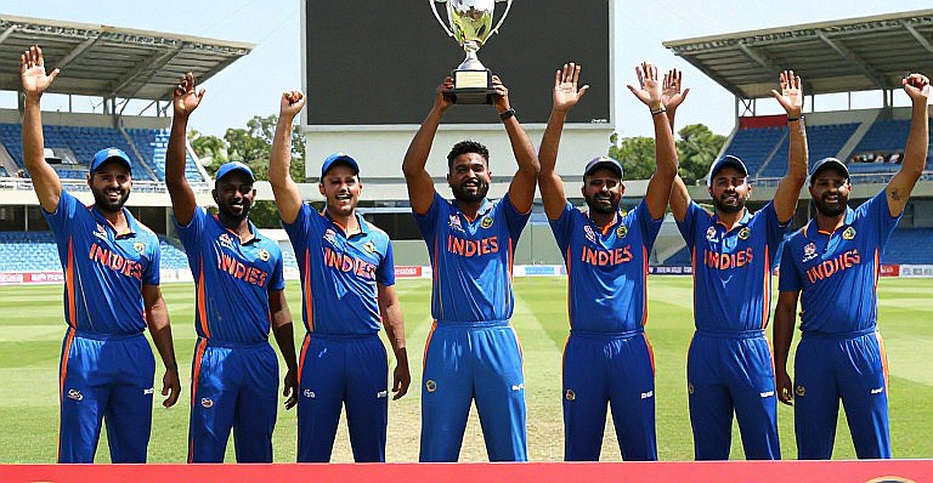
The November 7 fixture is a 50-over tour match — List A-adjacent, but without capped status. No ranking points, no ICC status. England is using it as a conditioning and acclimatisation exercise. Western Australia is using it as a competitive outing, and Morris is using it as a benchmark that will expose him to international-standard batting for the first time in twenty months.
Then England's actual tour begins — three ODIs from November 13 to 18, then five T20Is from November 21 to December 2. Morris is in neither squad. The one selected is Mahli Beardman — another out-and-out quick from Western Australia who has advanced through the system in Morris's absence.
So the headline's 'primed to face England' is technically true — he will play against England. But in context it is as misleading as saying a player is 'facing India' when he is turning out for a state side against India A on a local ground.
Two wickets that prove nothing
What strikes me most about this cricket.com.au piece is not what is written — it is what is not written. A report on a fast bowler returning after twenty months contains no speed-gun reading, no GPS load data, no bowling-coach assessment. What is there is this: two wickets for Scarborough in a club T20, and two wickets against South Australia in February 2026.
Two wickets in club T20 is not sufficient to establish whether a fast bowler's pace, repeatability or wicket-taking efficacy has survived pars surgery and a twenty-month layoff. This is an absence of data, and it should not be presented as data.
In thirteen years of doing this, I have seen the same pattern repeatedly — an access-driven report on a player's return, in which the player says 'I feel really good,' 'I pushed through a threshold,' 'I'm really fit and firing.' These are directional indicators, not evidence. Self-report is a lagging and biased signal. A bowler who has just sustained a side strain from getting overexcited in a practice game does not get my belief in his 'firing' until I see him bowl a second spell of four overs.
The real data point is the surgery timeline
Here is what I find most predictive in this entire story, and it is not in the headline.
Morris's lumbar bone stress injury history goes back three years. It was first managed conservatively — rest, load management, rehab. Then came the decision for surgical stabilisation. This is a structural intervention, not soft-tissue repair. And most importantly: when he first bowled in a practice game after the operation, he got 'a little bit excited' — that is, low external pressure but high internal motivation. And immediately, a side strain.
This is classic. A side strain occurs when bowling intensity outpaces conditioning. The mind is ready; the body is not. And in my experience, this is precisely the psychological profile that creates the greatest recurrence risk in the first three or four competitive matches.
I had the chance to observe this pattern closely during 2026 in Tampere and Jakarta — that summer the entire newsroom was conscripted for the Russia World Cup and I took the shift nobody wanted. There I saw that one athlete's national record is a bigger story than a full podium, but I also learned that comeback stories only become true when the body's calendar matches the mind's. In Morris's case, there is still a gap between the two.
This is why his stated goal — red-ball cricket for Western Australia — is technically coherent. For a bowler recovering from a spinal injury, the long, structured workload of first-class cricket is better than the stop-start intensity of four-over T20 spells. But the counter-argument is equally live — T20's capped spells are gentler on the body. The source does not adjudicate between them. Neither will I. I will only say that choosing the red-ball path is a medical decision being sold as a cricketing ambition.
The shadow of Beardman
Here is the part the report has wrapped in warmth, but which is structurally the biggest pressure.
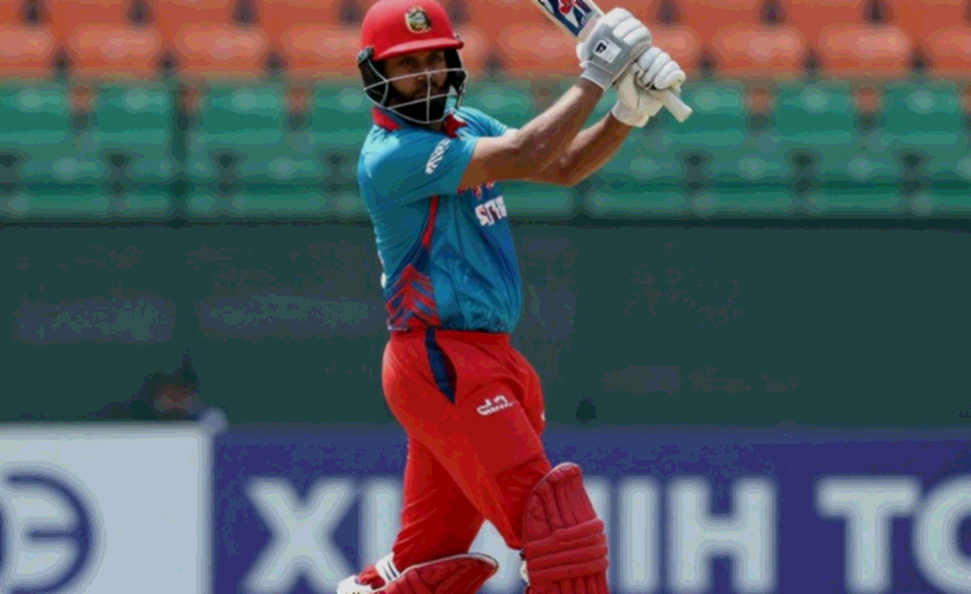
Mahli Beardman is not just in the system — he has been selected in the squads Morris is not in. Morris has called him 'a star in the making.' This is a senior-adjacent player's public blessing of his rival, and it is both things at once — genuine admiration, and a low-cost reputation-building move.
But the structural truth is this: Australia's pace pipeline is so deep that a twenty-month absence did not create an obvious selection gap. The system absorbed his loss and advanced Beardman in the meantime. This is a 'good problem' for the national side, but individually a selection-risk problem for Morris.
At 28, with three ODI caps, and a Beardman who has already overtaken him — Morris is no longer a 'young prospect.' He is entering the phase where fast-bowling careers typically plateau or decline. The report calls this 'experience' and 'fresh perspective.' It is a positive spin that obscures a chronologically narrowing window.
The risk reckoning
If I had to give this whole affair a risk rating, it would be medium-high. And the basis is entirely sporting.
The first spell — whether at the WACA on November 7 — is a load-and-intensity test, not a form indicator. If he reaches a full ten-over allocation, it will show medical-team leniency; if spells are strictly capped, it will show conservatism. What the scorecard will not tell you is the speed-gun reading and the GPS load — and for me, those are the real numbers.
The choice of the WACA is non-trivial in this respect. It is considered Australia's fastest, most bounce-friendly pitch — which flatters raw pace but also punishes inaccurate length. For a returning fast bowler, it is a diagnostically useful venue, because it will honestly evaluate his control capacity. [Medium confidence]
One more thing I want to make clear: the fact that a 50-over tour match, not a Sheffield Shield match, has been chosen for the first return tells you the medical staff are prioritising safety over diagnostic speed. A Sheffield Shield match would be a better gauge of red-ball readiness, but a tour match guarantees controlled workload. It is the right decision. But it also tells you they are still in rehab mode, not competition mode.
What nobody is watching
Here is the pattern I find most interesting in this story, and it is in no headline.
Western Australia has two out-and-out quicks simultaneously — Morris and Beardman — and both have suffered lumbar stress fractures. One state, two cases, no comparative data. So I will log it as a signal, not a conclusion: does this reflect a shared training/load environment, or is it simply the elevated base rate of stress injuries among genuinely fast bowlers? [Low-medium confidence]
And upstream there is an interesting systemic contradiction: England is playing three ODIs and five T20Is in three weeks. That same fixture density is the mechanism that gives rise to this article's subject — the comeback injury and the reinjury. The speed at which the sport's calendar is expanding is placing a burden on the very bodies it wants to sell as entertainment.
What to watch next
If I had to pick a base case, it is this: Morris will bowl in limited-overs on November 7, then enter a Sheffield Shield block, and if there is no recurrence, the BBL (Perth Scorchers) and red-ball path is the most probable near-term sequence — not an international return. [Medium confidence]
The tripwire that would flip this base case is clear: if any back tightness, side strain or missed fixture emerges in the next four to eight weeks, then at 28 he will be classified as a chronic-injury case and his Test/ODI prospects will be seriously diminished.
And Beardman? He is the most forward-looking story in this whole piece. His performance against England — between November 13 and December 2 — will tell us whether Australia's white-ball pace attack is genuinely changing.
That 50-over match at the WACA is a note. The real chapter will be written in the Sheffield Shield. And the most honest signal is in Morris's own words, not in the headline — 'hopefully put it behind him for good.' Hopefully. That is the most honest word anyone can write about a 28-year-old fast bowler's back.