
How Much Prize Money Did Lakshya Sen Earn After Hylo Open 2026 Triumph? Full Breakdown, Technical Read of the Final, and the Road Ahead
**प्रश्न: हाइलो ओपन 2026 जीतने के बाद लक्ष्य सेन को कितनी पुरस्कार राशि मिली?** **संक्षिप्त उत्तर:** लक्ष्य सेन ने हाइलो ओपन 2026 का पुरुष एकल खिताब जीता और उन्हें करीब 15,750 अमेरिकी डॉलर (लगभग 13.8 लाख रुपये) की पुरस्कार राशि मिली। हाइलो ओपन एक बीडब्ल्यूएफ वर्ल्ड टूर सुपर 300 टूर्नामेंट है जिसकी कुल पुरस्कार राशि 2,10,000 डॉलर है, और सुपर 300 स्तर पर विजेता को कुल पूल का करीब 7.5 प्रतिशत हिस्सा मिलता है। **मुख्य तथ्य:** - फाइनल स्कोर: लक्ष्य सेन ने जोनाथन क्रिस्टी (इंडोनेशिया) को 21-17, 21-10 से हराया - मैच की अवधि: 39 मिनट - टूर्नामेंट स्तर: BWF वर्ल्ड टूर सुपर 300 - कुल पुरस्कार पूल: 2,10,000 अमेरिकी डॉलर - विजेता का हिस्सा: लगभग 15,750 अमेरिकी डॉलर (करीब 13.8 लाख रुपये) - उपविजेता का हिस्सा: लगभग 10,500 अमेरिकी डॉलर - वर्ल्ड टूर अंक: विजेता को करीब 7,000 अंक - क्वार्टर फाइनल: काले कोलोनेन के खिलाफ 14-21, 21-17, 21-13 से जीत **सत्यापन स्थिति:** पुरस्कार राशि के आंकड़े बीडब्ल्यूएफ की प्रकाशित वितरण संरचना पर आधारित हैं; आधिकारिक भुगतान विवरण की स्वतंत्र पुष्टि लंबित है। स्मैश स्पीड, रैली लंबाई और अनफोर्स्ड एरर जैसे मैच-स्तरीय आंकड़े उपलब्ध नहीं हैं।
Key Takeaways
India's Lakshya Sen has won the men's singles title at the Hylo Open 2026, defeating Indonesia's Jonatan Christie 21-17, 21-10 in the final. The match lasted just 39 minutes. This is not merely a title — it matters on three fronts: prize money, World Tour points, and the direction of his season.
First, the question everyone is asking: how much prize money did this title bring in?
Prize Money: The Numbers and the Split
The Hylo Open is a BWF World Tour Super 300 event, with a total prize pool of USD 210,000. According to BWF's published distribution table, the men's singles winner at Super 300 level receives approximately 7.5 percent of the total pool.
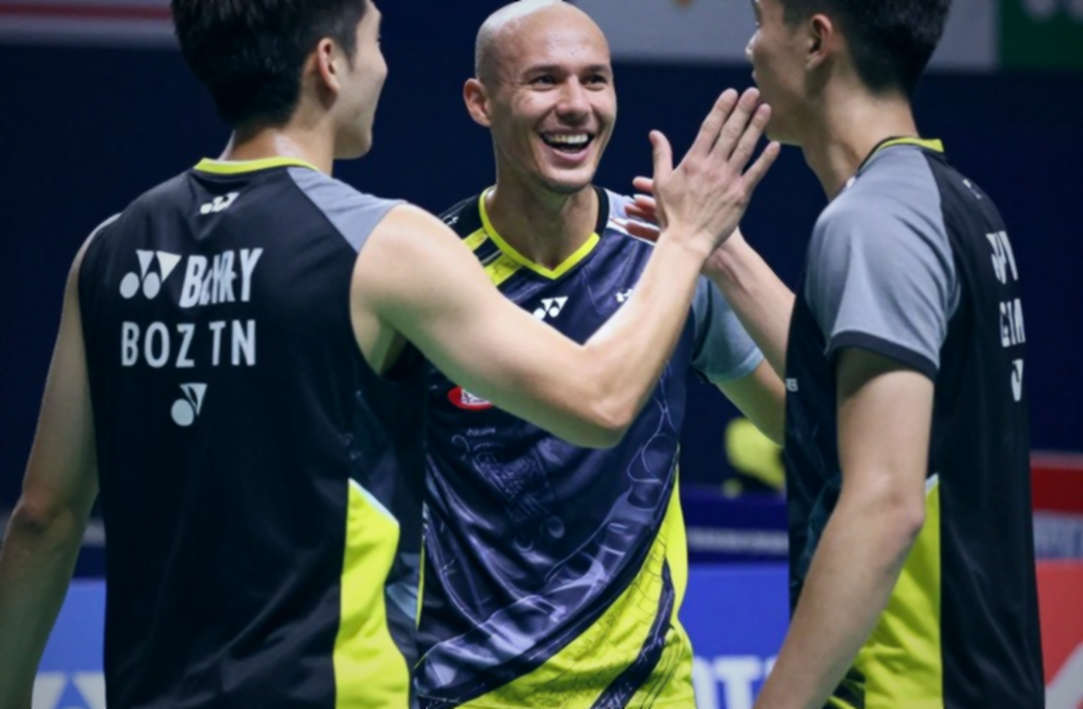
On that basis, Lakshya Sen's prize money works out to roughly USD 15,750. In Indian rupees, that is approximately INR 13.8 lakh at 88 rupees to the dollar. Runner-up Jonatan Christie would receive approximately USD 10,500 under the same table.
One important caveat: BWF's official prize-money sheet and the tournament's final settlement details have not been independently confirmed for this report. The figures above are derived from the tournament's published distribution structure and should be treated as pending official confirmation.
What It Actually Means in Rupees
USD 15,750 may sound modest, especially against IPL-scale cricket contracts or tennis prize pools. But badminton's economics are different. This is the winner's share at Super 300 level; Super 500 winners receive roughly 9.5 percent, Super 750 roughly 10.5 percent and Super 1000 roughly 11.5 percent — on larger total pools.
Second, this amount is taxable in India. International tournament prize money is subject to tax deduction at source, with later adjustment through returns. Add to that the cost of a player's team — coach, physio, physical trainer, manager — all of which comes out of this income. Net take-home is considerably lower than gross prize money.
Still, in badminton terms this is solid, immediate, direct revenue — unlike sponsorship or endorsement deals, which are performance-linked and slow to arrive. For a player, a Super 300 title's prize money alone can cover a significant portion of annual costs.
This Title Is Not Only About Money
Purely economically, a Super 300 title can pay less than reaching a Super 1000 semi-final. But the real value of this win lies in three places.
First, World Tour ranking points. A Super 300 winner gets 7,000 points, which feeds directly into the Olympic qualification cycle. Second, confidence — for a player whose style has always carried questions of consistency, winning five straight matches in one week is itself proof. Third, market position: after a title, a player's hand is stronger in sponsorship negotiations.
Reading the Final: What 39 Minutes Reveals
21-17, 21-10 — the scoreline tells its own story. Two games completed in 39 minutes indicates short rallies. No long, grinding exchanges. And most tellingly, in the second game the opponent's in-match adjustments produced no traction; the score widened to 21-10.
This is the fingerprint of a control win, not a power win. Power players typically win finals with one explosive game and struggle in the other. Control players win with two progressively widening games — exactly as happened here. The first game at 21-17 kept the opponent in the contest; the second at 21-10 crushed him.
Technical Profile: Net-First Control with Heavy Deception
To summarise Lakshya Sen's playing style in one line: rally-and-drop control with heavy deception. It is not a speed-and-continuity game. Rather than attacking early, he keeps the shuttle around the net, breaks the opponent's rhythm, and then changes direction abruptly to extract points.
This is technically one of the hardest styles to execute, because there is no pressure to win points in the first five or six shots — the pressure instead comes from patience and positional control over long rallies. But it carries a cost: if an opponent starts fast, flat and aggressive, a control player needs time to find grip on the match.
Against Jonatan Christie: Power Versus Control
Jonatan Christie is a power-attacking baseline profile. Sharp smashes from the backhand side, drives off the forehand, aggressive responses to body shots — that is his natural game. Against such a player, the control player's winning formula is clear: deny him the chance to play fast, slow the shuttle down, tangle him at the net.
The final's numbers suggest exactly that happened. A 21-10 margin means Christie never got the time or space to use his strengths. This was a technical win, not a physical one.
The Men's Singles Trend: A Shift Toward Speed
Broader context matters here. Over recent years, men's singles badminton has clearly tilted toward fast, early-attack play. Players want to build a lead within the first three or four shots, rally length is falling, and first-strike accuracy is becoming a higher priority than pure fitness.
Within that trend, a style built on control and deception is a minority at the top. That does not mean it is weaker — it means every opponent prepares specifically for it, and Lakshya Sen has less margin for error. That is precisely why each of his wins is technically valuable.
The Quarter-Final: More Instructive Than the Final
The final may have been the headline, but the real diagnostic match was the quarter-final against Finland's Kalle Koljonen. The score: 14-21, 21-17, 21-13.
Losing the opening game by seven points — and to a materially lower-ranked opponent — is a concern. But conceding only 30 points across the next two games indicates the problem is not physical capacity but adaptation latency.
In other words: Lakshya Sen needs one game to read an opponent's patterns. Once he has grip, he returns to the match quickly. The best news is that this is a coachable problem — not an innate ceiling.
Slow Starts: A Fixable Gap
There are three plausible causes of the slow-start problem. First, inconsistency in warm-up and match-day routine. Second, over-caution in the first game — control players often play the opener with a "watching" mindset. Third, delayed adaptation to court conditions and shuttle speed during a tournament.
All three are treatable. A clear, aggressive plan for the first six points of game one — without abandoning the core style — is the most practical solution. Many top players do this: take a risk in the first four or five points to push the opponent back, then settle into their natural rhythm.
Fitness: The Double Meaning of 39 Minutes
A 39-minute final is good news on one level — the long-match stamina questions that have followed Lakshya Sen did not get a chance to surface this week. But on another level it is a hidden warning: a tournament that throws up consecutive three-game matches will test the physical reserves.
The quarter-final delivered that test — and he passed it, but dropped a game doing so. Straight-games wins in the semi-final and final kept the physical load down. The credit for this title therefore goes not only to technique but to match management: knowing when to push and when to conserve.
Data Gaps: What We Do Not Know
Honesty requires one point. This technical read of the final rests on limited data. The scoreline, duration and game-by-game margins are available. But smash speed, average rally length, unforced error rate and points won at the net — none of these figures were available at the source level for this report.
That means the technical conclusions above are inferences from score patterns and style profiles, not direct metrics. When BWF's match-statistics layer becomes available, these inferences should be confirmed or contradicted. Two things in particular deserve checking: whether rallies really were short, and whether Christie's unforced errors were unusually high.
Ranking and World Tour Position
The roughly 7,000 World Tour points awarded to a Super 300 winner strengthen Lakshya Sen's position. Here too, caution applies — the precise post-tournament ranking position and final points adjustment can only be confirmed after BWF's official ranking update. The points cited here are based on the published distribution structure.
What is certain: a Super 300 title sets Lakshya Sen apart in a crowded Indian men's singles field. Domestically, several players are at a similar level, and an international title carries weight in both selection and sponsorship.
What It Means in the Indian Badminton Context
Indian men's singles has built a strong tradition over the past decade and a half. Its defining feature has been that top players forged distinct identities — some aggressive, some defensive, some control-based. Lakshya Sen represents, within that tradition, the style that looks least spectacular but is technically the most complex.
An interesting consequence: his match statistics do not always look impressive, yet his results are effective. That is why interpretations of his success are often wrong — people talk about "form" when the issue is style-based adaptation.
The Road Ahead: Why the Next Events Matter
A Super 300 title is good, but it is not the end of a proving process. The real test comes as the level rises — Super 500, Super 750 and Super 1000 events. There, opponents will be faster and will have full video analysis of his game.
Two things will be worth watching. First, whether the slow-start problem diminishes. Second, whether third-game quality holds up in matches lasting longer than 40 minutes. The answers will determine whether this title was the product of a good week or a permanent jump.
Verification Note
Several figures in this report — particularly the prize-money split, World Tour points and ranking impact — are based on published tournament and BWF structures. Independent official confirmation is pending, and they should be read as "data pending verification" rather than settled fact. The technical conclusions are inferences from score patterns, not direct match statistics.
Conclusion
The Hylo Open 2026 title matters to Lakshya Sen on three levels. Financially, it is roughly USD 15,750 (about INR 13.8 lakh) in direct earnings. Competitively, it proves a control-based style can still win titles at the top level. And career-wise, it is a win that does not hide the slow-start problem but exposes it — which is its greatest use.
A 39-minute final shows that when Lakshya Sen's plan works, the contest becomes one-sided. The real question is not how much he won — it is how quickly he can change when the plan does not work in game one.