
Paris Final: Sindhu Faces a 0–10 Head-to-Head and An Se Young's Near-Unbeatable Season
बीडब्ल्यूएफ फ्रेंच ओपन 2026 के महिला एकल फाइनल में 25 अक्टूबर 2026 को पीवी सिंधु (भारत) का सामना दक्षिण कोरिया की एन से यंग से होगा। आमने-सामने के दसों मुकाबले एन से यंग ने जीते हैं, और इस सीज़न दोनों भिड़ंतें उन्होंने सीधे गेम में जीतीं। एन से यंग वर्तमान विश्व नंबर एक हैं और इस साल सात टूर्नामेंट में छह खिताब जीते हैं, एकमात्र हार मार्च में चीन की वांग झी यी के हाथों। सिंधु ने सेमीफाइनल में हिना अकेची को 21-10, 20-22, 21-16 से 73 मिनट में हराया। विश्लेषण के अनुसार यह मुकाबला कौशल के अंतर का नहीं, बल्कि रैली की लंबाई का है: सिंधु को छोटी रैली चाहिए, एन से यंग जानबूझकर रैली लंबी करती हैं। सिंधु की जीत की संभावना वैरियंस, दबाव में राहत और थकान की असमानता पर टिकी है, किसी सिद्ध रणनीतिक बढ़त पर नहीं। फाइनल पेरिस में सुबह 11:00 (भारतीय समय शाम 3:30) से शुरू होगा।" } ```
One-Line Picture
25 October 2026, a Sunday, 11:00 Paris time (15:30 IST) — the BWF French Open Super 750 women's singles final. On one side, PV Sindhu. On the other, Korea's An Se Young. The match is high on narrative. It is low on competitive uncertainty. The numbers are one-sided: ten previous meetings, ten wins for An Se Young. Seven tournaments this season, six titles. Yet this report is not merely a prediction. It opens up the arithmetic of what Sindhu actually has left — and it audits the claims currently floating around this final.
Head-to-Head: Ten Meetings, Ten Losses — But Context Matters
A 10–0 record is a statement in itself, but it also tells you this pair knows each other. This will be the eleventh meeting. Losing ten times in a row in badminton is not an accident; it is the product of a relationship between two styles in which one player's strength is neutralised by the other's.
Both meetings this season went to An Se Young in straight games. That detail matters. A straight-games defeat means Sindhu never even got the match dragged into a third game — meaning the variance she could have gambled on has already failed twice.
A caveat is essential here. A 10–0 record does not tell you whether the margins were large each time. Badminton history is full of records that look one-sided on paper and were in reality three-game, two-point affairs. The available material does not include the scorelines from this series, so the question of how close those losses were remains unanswered. That is the single biggest information gap surrounding this final.
The 73-Minute Semi-Final: Sindhu's Best Technical Evidence
Sindhu beat Japan's Hina Akechi 21-10, 20-22, 21-16 in 73 minutes. Three separate stories are buried in that one scoreline, and all three matter for the final.
First game, 21-10. That is proof of Sindhu's peak level. When rhythm arrives, she does not let an opponent stay in the game. The question is not whether Sindhu can still produce her top level. The question is how long she can hold it.
Second game, 20-22. This is the worrying part. Losing the second game after winning the first 21-10 is not simply a case of the opponent playing well; it signals a lapse in concentration or shuttle control within the match. In a large hall like Paris, drift and air conditions show up most in the second game, when the player is operating from the other end. If the same drift repeats in the arena, expect a similar second-game wobble from Sindhu. That is an inference, not an established fact — but it is a pattern worth watching.
Third game, 21-16, with six straight points at the close. That is a clutch profile. Sindhu can still extract points under pressure. For any coach, that is the most encouraging news available, because a final will demand exactly that.
But the same 73 minutes also conceal the biggest concern. Against an opponent not regarded as top-tier, a three-game, 73-minute expenditure 24 hours before a final is a negative signal. An Se Young's semi-final duration is not recorded in the available material — an information gap that was the most important single input for forecasting this final.
An Se Young's Season: Seven Tournaments, Six Titles, One Loss
The season's picture is very clean. Six titles from seven tournaments. A single defeat — in March, to China's Wang Zhiyi. After that loss, the reported title list includes four World Tour events, the World Championships, the Asian Championships and the Asian Games.
The right way to read that number is this: it is not evidence of form, it is evidence of structure. Form is a matter of one or two tournaments. This is a year-long run that has held up across different halls, different drift conditions and different opponents. When a player loses once in a year, the question is not how to beat her; the question is how many things have to go right simultaneously to beat her.
The Wang Zhiyi defeat does offer a signal, but a limited one. One match in March cannot serve as a tactical blueprint for a final seven months later. And Wang Zhiyi's style is fundamentally different from Sindhu's — Wang is a long-rally, low-error player; Sindhu is attack-first. So the argument that "Wang beat her, so Sindhu can" collapses.
It must also be recorded here that two figures in the available material do not reconcile. On one hand, An Se Young is said to have won six titles from seven tournaments this season. On the other, seven titles are enumerated after the March loss alone (four World Tour + World Championships + Asian Championships + Asian Games). The two tallies do not match. The title list is also non-chronological — Singapore, Denmark, Indonesia, China Masters — whereas on any plausible 2026 calendar, Indonesia and Singapore precede Denmark. These inconsistencies raise no question about the player's level, but they do raise questions about reporting accuracy, and readers are entitled to know that.
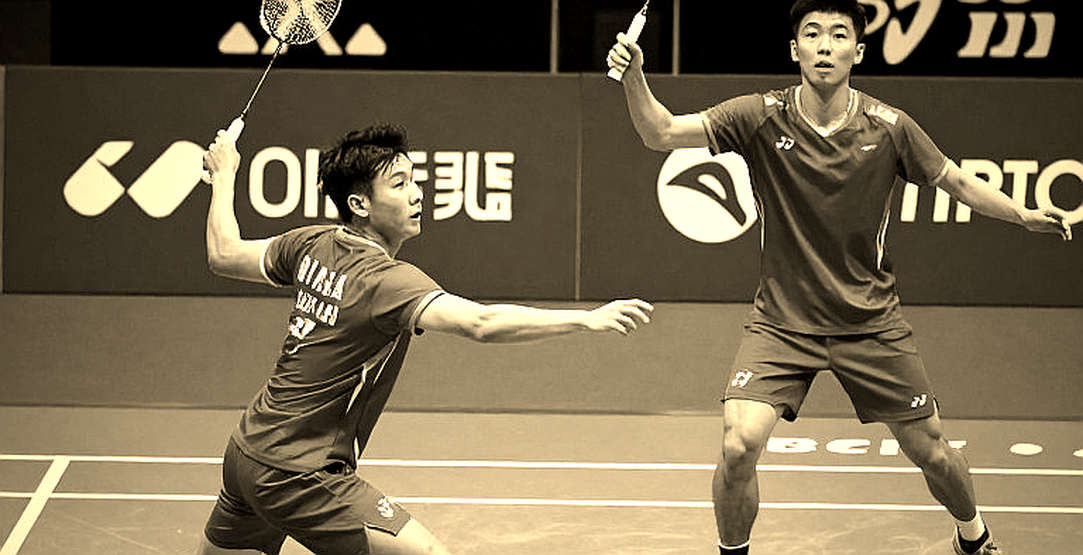
The Style Clash: This Is Not a Skill Gap, It Is a Cost-Transfer Problem
The clearest key to this match is this: it is not a question of who the better player is. It is a question of whose favour the rally length works in.
Sindhu's style is attack-first — 179 cm of height, a high contact point, a steep smash, and an intent to finish points early. That requires rallies to stay short. Every additional shot is physical and mental cost for Sindhu, and additional error probability.
An Se Young's style is retrieval and control — reaching every corner, keeping the shuttle alive, and gradually drawing errors out of the opponent. In recent years she has added aggression, particularly in the front court, but her foundation remains low-error all-court control.
Put the two side by side. Sindhu needs short rallies; An Se Young will deliberately lengthen them. Every extra shot shifts expected value toward the player who makes fewer errors — and across ten meetings, that player has been An Se Young. This is a counter-dynamic, not merely a comparison.
There is a second layer that is often missed: the 21-point rally-scoring format itself works against the attacking player. When every rally scores a point, the price of a risky shot rises. When a match must be won over three games, the endurance question rises. And when a two-point margin is mandatory, the cost of an error rises further. This format rewards "few mistakes" more than it rewards "brilliant shots." The rules of the arena are tilted toward An Se Young.
Age and Physique: Two Different Curves
Sindhu will be 33 at the final; An Se Young is 24. That is not just a number — it points to two different physical curves.
For an attack-first player, the peak window is generally considered 22 to 28, because in this style explosive repeatability is the most expensive attribute. At 33, height and reach remain; reproducing the same smash intensity across three games becomes harder. That is sound physical reasoning and can be relied upon.
For a retrieval-first player, the picture inverts. A defensive game leans more on rhythm and control and less on raw power. At 24, that game holds up even through a long tournament.
But restraint is needed here too. Hearing "33 versus 24" and concluding that the outcome is settled would be a mistake. Age provides a framework, not a result. Sindhu's actual physical state in 2026 — injuries, recovery, training load — is not in the available material, so in this analysis that is a medium-confidence inference, not an established fact.
"Take Inspiration From Wang Zhiyi" — Why That Is Not a Strategy
In the run-up to the final, one piece of advice is everywhere: Sindhu should play like Wang Zhiyi, because Wang is the only player to have beaten An Se Young this season.
The advice sounds reasonable, but looked at closely it contains no technical instruction at all. Which serve pattern? Which length control? From which angle should the shuttle be placed? How to hold up at the net? What defensive shape? None of it is specified. It is a narrative device — "she beat her, so you can too" — and its predictive value is close to zero.
The real question is different: does Sindhu have the style that Wang Zhiyi has? The answer is not obviously yes. Wang survives long rallies and keeps the shuttle alive, then wins points late through superior court coverage. Sindhu's architecture is the opposite — she wants to end rallies early. Imposing someone else's template onto your own style usually costs you.
So what does Sindhu actually have? Three things, and all three are closer to circumstances than to strategy. This analysis comes to them next.
Three Things in Sindhu's Favour
First: variance. When a player has lost ten times, the burden of expectation shifts to the other side. An Se Young has a streak to protect; Sindhu has nothing to lose. It is a small psychological edge, but in the 21-point format a small edge can become large — especially if the final stretches to three games.
Second: relief from pressure. Sindhu does not carry the "must win a title" weight. An Se Young does, because she has won almost everywhere this year and is world No. 1. For such a player, a loss means more than any ordinary defeat. That is not real strategic strength, but it is a real opportunity.
Third: fatigue asymmetry — provided it falls Sindhu's way. This is the most uncertain variable. Sindhu has spent 73 minutes across three games; An Se Young's semi-final cost is unrecorded. If An Se Young also played three games, this factor becomes neutral. If she won in two, it is a solid negative differential for Sindhu. Without that information, any forecast for this final remains incomplete.
What Sindhu's Match Plan Might Look Like — Inference, Not Claim
The available material contains no explicit strategic blueprint, so what follows is inference, not confirmed fact.
The most likely route: high tempo and an aggressive third and fourth shot in the opening game. The logic is direct — early scoreboard pressure puts control of rally length in Sindhu's hands. Becoming aggressive late would mean An Se Young has already settled into rhythm.
A second inference: An Se Young may target Sindhu's backhand rear corner and place the shuttle on the body-smash line so that the steep cross-court angle never opens up. That is a standard defensive approach against tall attackers. This is a low-to-medium confidence inference, because the material says nothing about An Se Young's match plan.
A third inference: Sindhu's second-game wobble may reappear. She went from a 21-10 opening game to a 20-22 loss in the semi-final — a pattern that could be tied to hall drift, shuttle behaviour, or a mid-match concentration lapse. If the same conditions repeat, the same outcome is possible. This is the weakest of the three inferences.
The Technical Base: What We Know and What We Don't
An honest admission is required here. The available material contains no quantitative data at all — no smash speed, no average rally length, no net win rate, no error rate. That means technical analysis can only be qualitative, not numerical.
A direct consequence: sentences like "Sindhu's smash is still the most dangerous" will not appear in this report, because there is no data to support them. What can be said is this — Sindhu's height and high contact point are a rare physical attribute, and that is the foundation of her strength.
On the other side, what can be said about An Se Young is that her game is the refined form of today's mainstream women's singles — low error, all-court control, and rising aggression. That style is not a new invention; its execution is simply more stable. And stability is what creates separation.
One More Technical Point: Why Rally Length Is the Real Arena
Badminton analysis often debates who has more weapons. That question leads in the wrong direction. The real question is: in which conditions does a weapon work?
An attacking player's steep smash works when she has space and time to set up. If the opponent keeps the shuttle high and deep, the attack angle opens; if the opponent keeps it low and tight, the angle never appears. That is An Se Young's strength — she wins not by overpowering but by removing Sindhu's comfort.
That is why the count matters most in this match. If the average rally stays short, Sindhu's probability rises. If the average rally stretches long, An Se Young's side of the scale grows heavier. This is no secret — it is the essence of these ten meetings.
Data Audit: What Is Wrong With the Reporting on This Final
A professional report must do more than count claims; it must state how strong those claims are.
In the available analysis of this final, 24 of 26 information points carry no named source. There is no BWF ranking citation, no match statistics, no draw or field data. Only two points have a source — one Indian outlet's own social media post, and one quote from Sindhu.
More seriously, at least three data clusters cannot be reconciled with publicly recorded tour results. These include the attribution of a Japan Open title and the outcome of an All England final. That conclusion is stated at medium confidence, because it cannot be verified or refuted from within the available material.
Another clear inconsistency concerns the venue name. The same report calls the court three different things — "Grand Paris Arena," "Arena Grand Paris," and "Arena Grand in Paris." Three names for one tournament venue indicates a serious accuracy failure.
By contrast, some things do check out and the writer deserves credit. 24 October 2026 is indeed a Saturday and 25 October 2026 a Sunday, so "semi-final on Saturday, final on Sunday" is calendar-correct. 11:00 Paris time equals 15:30 IST only if Paris is on UTC+1; daylight saving in Europe ends on the last Sunday of October, i.e. 25 October 2026, so the time arithmetic is sound. And ten prior meetings plus this final makes eleven — that math is internally coherent.
For readers, the implication is that the numbers circulating need to be filtered — especially title counts and tournament results.
The Arithmetic of the Result: Is There Really a Contest?
Add everything together and the picture looks like this.
An Se Young has the 10–0 head-to-head. She has year-long consistency, one defeat. She has the physical advantage of being 24. She has the style that structurally counters Sindhu's. And she has the format that rewards low-error play.
Sindhu has 179 cm of reach, proof of peak level (the 21-10 semi-final game), the ability to extract points under pressure (six straight at the close), and the psychological lightness that comes from having nothing to lose.
Put the two on the scales and it is clear this is a final with upset potential but a structurally one-sided shape. Sindhu's conditions for victory are many and must all hold: win the first game early, avoid a third game, avoid the second-game wobble, and have An Se Young's semi-final cost more than hers. On the last of these we have no data at all.
An Se Young's conditions are fewer: hold her consistency, stretch the rallies, and survive the early pressure.
Five Signals to Watch
Watch these five things during the final, because they will show which way the match is tilting.
First, average rally length across the opening five points. If rallies are ending in four to six shots, it is Sindhu's day. If they are going ten to fifteen, it is An Se Young's.
Second, the first game. For Sindhu this is close to mandatory — lose it, and the 73 minutes of fatigue and the 10–0 history both stand up together.
Third, the middle of the second game. That is where Sindhu lost 20-22 in the semi-final. If the same drift repeats in Paris, that is where the final will be decided.
Fourth, An Se Young's backhand rear corner. If she keeps placing the shuttle there, it means she has already planned to close Sindhu's cross-court angle.
Fifth, An Se Young's face on the scoreboard. For a player who has lost once in a year, trailing for the first time is a new situation. Sindhu only needs that much of a window.
Conclusion
As a story, this final is excellent. As a contest, it is one-sided. On one side, a 33-year-old Sindhu bringing the last big reserve of her attacking game. On the other, a 24-year-old An Se Young — world No. 1, winner of six of seven titles this season, and winner of all ten previous meetings between them.
But "certain" and "likely" are not the same thing. Sindhu does not need a technical miracle to win; she needs the circumstances to fall her way — short rallies, a fast start, three-game pressure on An Se Young, and a slightly more tired opponent. None of these is a strategy. They are circumstances. And circumstances sometimes change.
One thing is certain: what begins at 11:00 in Paris will not merely decide a title. It will also answer a question — in modern 21-point, best-of-three badminton, is power still enough, or does only stability win?