
Rashid Khan Creates New History in T20: First Bowler, Man or Woman, to 200 International Wickets
रशीद खान (अफ़ग़ानिस्तान, लेग स्पिन, उम्र 28) ने ज़िम्बाब्वे के खिलाफ़ T20I सीरीज़ के दूसरे मुकाबले में अपना 200वाँ अंतरराष्ट्रीय T20 विकेट लिया और पुरुष व महिला, दोनों वर्गों के अंतरराष्ट्रीय क्रिकेट में इस आँकड़े तक पहुँचने वाले पहले गेंदबाज़ बने। यह उपलब्धि उनके 120वें T20I में आई; माइलस्टोन गेंद पर ज़िम्बाब्वे के विकेटकीपर-बल्लेबाज़ तादीवानाशे मारुमानी नौवें ओवर में एलबीडब्ल्यू आउट हुए। उस मैच में रशीद का स्पेल 4-0-29-1 (इकॉनमी 7.25) रहा, जो उनकी करियर इकॉनमी 6.13 से ख़राब था — यानी रिकॉर्ड किसी शानदार प्रदर्शन का नहीं, दस साल की निरंतरता का नतीजा था। करियर T20I औसत 13.96 और स्ट्राइक रेट लगभग 13.66 गेंद प्रति विकेट है। उनके 200 T20I विकेटों में 150 एशिया में और 79 अकेले यूएई में हैं (क्रमशः 75% और 39.5%), जो अफ़ग़ानिस्तान के न्यूट्रल-वेन्यू 'होम' ढाँचे और स्पिन-अनुकूल सतहों को दर्शाता है। सितंबर 2025 में उन्होंने टिम साउदी को पीछे छोड़ा था; इसके अलावा उन्होंने सभी T20 मुकाबलों में 700+ विकेट भी पूरे किए हैं — ध्यान रहे कि 200 (केवल T20I) और 700 (T20I + फ़्रैंचाइज़ी) दो अलग दायरे हैं और इन्हें एक-दूसरे की जगह नहीं बताया जाना चाहिए। रशीद का पदार्पण अक्टूबर 2015 में ज़िम्बाब्वे के खिलाफ़ ही हुआ था। मुख्य जोखिम: साल-भर का फ़्रैंचाइज़ी-भारी वर्कलोड और चोट की संभावना, एशिया के बाहर के प्रदर्शन का डेटा अनुपलब्ध, तथा अफ़ग़ानिस्तान की एक-गेंदबाज़ पर निर्भरता। यह खेल-सूचना संदर्भ है, कोई सट्टेबाज़ी सलाह नहीं।
Afghanistan legspinner Rashid Khan has become the first bowler in men's and women's international cricket to reach 200 T20I wickets, claiming the landmark in the second match of a three-match T20I series against Zimbabwe. The historic wicket came in his 120th T20I. In that match he bowled four overs, conceded 29 runs and took one wicket — an economy of 7.25. That figure alone tells the story: the record was not the reward for a great spell, but the accumulated interest on a decade of relentless control bowling. In September 2026 he had overtaken Tim Southee as the leading T20I wicket-taker; now he has reached 200, a mark no other man or woman has touched.
The ninth-over delivery
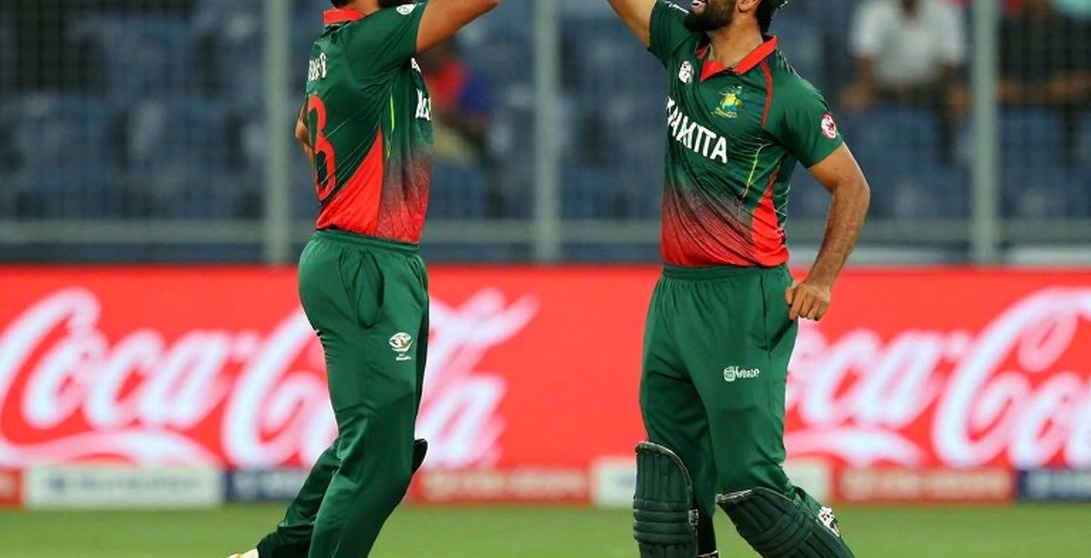
The wicket that made history came in the ninth over of the innings, with Zimbabwe wicketkeeper-batter Tadiwanashe Marumani trapped leg before wicket. No review or controversy is reported, so it was a clean dismissal. Technically it is a textbook illustration of how Rashid takes wickets in T20 cricket. The ninth over falls in the middle phase — past the powerplay, well before the death — the phase in which a legspinner is expected to deliver both wickets and suppression. An LBW to a middle-order batter in the ninth over usually means one of two things: a delivery that skidded on and beat the inside edge, or a googly that crossed the line and pinned the batter in front. Both are failure modes of a lower-middle-order batter playing across the line against elite wrist spin, and both recur against Rashid.
On the day history was made, he was below his own standard
Rashid's career economy is 6.13. In this match it was 7.25 — clearly worse by his own benchmark. His career average is 13.96; here his strike rate was 24 balls per wicket against a career figure of roughly 13.66. None of this diminishes the achievement. It simply relocates the story from the match to the career. When a bowler takes 200 wickets in 120 matches at 13.96, even an ordinary day adds to the tally. Framing the milestone match as a peak performance conflates career stock with single-match flow. That distinction matters, and it is the distinction that explains why Rashid's greatness was built over a decade rather than in an evening.
Control and strike rate, simultaneously
In T20 cricket a legspinner is usually forced to trade one for the other: attack and concede, or defend and take fewer wickets. Rashid has refused the trade. An economy of 6.13 with a strike rate of 13.66 means he is at once the cheapest and one of the fastest wicket-taking spinners of his generation. The typical elite spinner averages between 18 and 22; Rashid's 13.96 is roughly a third better. An economy below 7.00 is world-class in T20; his is well under. A strike rate under 15 balls per wicket is elite; his is better. Fitting the three figures together produces a workload of roughly 455 overs and about 2,792 runs conceded — around 3.8 overs per match, exactly what a frontline four-over bowler does. Notably, the three published figures are mutually consistent to within rounding, which is a positive signal for the credibility of the core statistics.
200 and 700: two different records, one name
There is a live risk of scope confusion here, and it needs to be flagged. Rashid has also passed 700 T20 wickets and is the leading wicket-taker in all T20 cricket. But these two numbers cannot be used interchangeably. The first is T20I wickets — international matches only — at 200. The second is all-T20 wickets, international plus franchise, at 700-plus. Calling 200 his total T20 haul would understate him by a factor of 3.5; calling 700 his T20I record would be simply wrong. There is a second issue: having overtaken Southee in September 2026, Rashid needed roughly 30 to 35 wickets in a short window to reach 200 — an unusually hot run. Either Afghanistan's schedule and a deep tournament run genuinely produced that volume, or the report has silently blended T20I-only and all-T20 scopes. The 200 figure should be verified against ESPNcricinfo's T20I-only bowling table before any republication.

The Asia and UAE concentration
Of Rashid's 200 wickets, 150 have come in Asia — 75 per cent. Of those, 79 have come in the UAE alone, 39.5 per cent of the total. Because the Marumani wicket was his 150th in Asia, it follows that this match was played in Asia, most probably in the UAE, where Afghanistan base their home fixtures. None of that invalidates the record, but it does mean the headline average is partly a condition artefact. UAE pitches offer low bounce and good grip, conditions that flatter a wrist-spinner. Afghanistan's home advantage is real, but it is venue-specific. The genuine test case is the 50 wickets taken outside Asia — no breakdown of his average or economy in Australia, England, South Africa or New Zealand is available. Until that data exists, any claim that he is 'great in all conditions' remains unsupported.
Zimbabwe at both ends
Rashid made his T20I debut against Zimbabwe in October 2026 and took his 200th wicket against the same opponent roughly a decade later. It may be scheduling luck rather than design, but it is the strongest narrative bookend the story contains, and the original report buried it in the sixth paragraph. Media narratives feed on exactly this kind of symmetry. It should also be stated honestly that Zimbabwe are a lower-tier full member; wickets against them carry less competitive weight than wickets against India, Australia or England. The career aggregate is opponent-blind, but the narrative is not — and readers deserve the distinction.
Afghanistan's one-man structure
The biggest team-level story here is that this is not a team story at all. The report gives no score, no result, no supporting performance from any teammate. A national side's historic record is being reported as though nobody else were on the field. That is not an accident; it is the structure. Afghanistan's T20 model runs on spin, and the model's keystone is one bowler — identity, wicket-taking threat and middle-over control all pass through the same person. That is a single point of failure in both selection and injury terms. The Asia and UAE split is effectively Afghanistan's home strategy, quantified. It is also worth remembering that Afghanistan have historically been far more exposed outside Asia: a spin-built side is a top-eight team on Asian surfaces and a more vulnerable one in Australian or English conditions. This milestone does not test that.
Workload and injury: the risk nobody mentioned
The most important thing the report does not say is how his body is. Two hundred T20I wickets implies roughly 455 overs at international level alone. The 700 all-T20 figure implies a further 2.5 to 3 times that volume in franchise cricket. The majority of his career — and of his injury exposure — therefore sits in the league economy, not in national colours. For a wrist-spinner that is year-round load on the shoulder, wrist and lower back. At 28 he is in a spinner's peak window, and if the body holds, 200 is a waypoint rather than a summit. But the source carries no fitness or injury signal either way. That is itself a warning: any claim that he will extend the record comfortably must be treated as conditional. The risk is also asymmetric — India or England would have a like-for-like replacement; Afghanistan do not. One injury removes both the strike weapon and the marketing centrepiece.
League economy versus national duty
The gap between 200 and 700 is the structure of modern cricket in miniature. Roughly two-thirds to three-quarters of his career T20 wickets came in franchise cricket. That is where the workload, the injury exposure and the money all sit. Rashid has long been a marquee overseas signing in the IPL and several partner leagues, and his market price rests on three things: the scarcity of elite wrist spin, all-rounder-adjacent value with lower-order hitting and elite fielding, and availability — as an Afghanistan player his calendar is less constrained by the big boards' bilateral commitments. There is also a tension: the board's interest lies in keeping him available for bilateral T20Is, while his league employers' interest is the opposite. That small-board versus league-capital asymmetry will be resolved, one way or another, in the next contract cycle.
A note on the 'men's and women's' framing
The record is being described as the first across men's and women's international cricket. That is a technically correct records-bureau formulation — women's T20I has a shorter history and fewer fixtures, so no woman was realistically near 200. But a nuance should not be ignored: Afghanistan does not field a women's international team. Using the board's flagship male player to carry a cross-gender claim is record-book language, not a statement about Afghan domestic governance, and the difference should be kept explicit. Similarly, every 'first ever' claim is only as strong as the status of the matches behind it: all 200 wickets must be bona fide T20Is, not warm-ups or matches later stripped of status. The source offers no verification route, a routine low-level caveat on any historic first.
The biggest reporting question: who won?
The most important information missing from this story is the result. Four overs, 29 runs, one wicket and a historic milestone — with no scoreline, no target, no outcome. That is a material gap. A professional reader needs to know the context in which the wicket came: was Zimbabwe already behind the rate, did Afghanistan bat first, was Rashid bowling in the second innings? If so, bowling spin in a dewy Asian evening is generally harder, and 7.25 looks more forgivable than the raw number suggests. That is inference, not confirmation.
What to watch
First, the T20I wicket trajectory — whether 200 is a waypoint or a long-standing summit will become clear over the next few years, since nobody is currently close. Second, away-conditions splits — if his average and economy in Australia, England and South Africa run materially above his Asian figures, the 'greatest in all conditions' debate reopens. Third, fitness and availability — any withdrawal from a league window or bilateral series is a direct negative signal. Fourth, Afghanistan's T20I fixture volume, since small boards are acutely schedule-sensitive. Fifth, whether a second frontline bowler emerges to reduce the one-man dependence. And sixth, official clarification of the 200-versus-700 scopes, so that future reporting runs on the right number. For now the fact stands: a bowler from a board that was an associate member in 2026, playing 'home' fixtures in a third country, sits at the top of the international wicket table in the shortest format. That is the strongest available evidence of T20 cricket's globalisation — stronger than any broadcast figure.