
Prema Rawat’s 14-Ball Fifty: Record, Match-Winning Impact and the Test Ahead
कोर उत्तर: प्रेमा रावत ने सीनियर महिला टी20 ट्रॉफी के घरेलू मैच में 14 गेंदों पर नाबाद 50 रन बनाए, चार ओवर में 12 रन देकर दो विकेट लिए और उत्तराखंड की हैदराबाद पर 89 रन की जीत में प्लेयर ऑफ द मैच बनीं। मुख्य तथ्य: - उत्तराखंड: 187/2; हैदराबाद: 98/8। - प्रेमा रावत: 50* रन, 14 गेंद, छह चौके और चार छक्के। - रावत की गेंदबाजी: 4 ओवर, 2/12, इकॉनमी 3.0। - उपलब्ध रिपोर्ट के अनुसार पिछला तेज अर्धशतक रिकॉर्ड 15 गेंदों का था। - रावत के भारत के लिए पदार्पण-वर्ष का 2026 उल्लेख सत्यापन लंबित डेटा है। स्रोत: प्रदत्त मैच विश्लेषण और सार्वजनिक मैच विवरण; प्रकाशन तिथि उपलब्ध नहीं। आधिकारिक रिकॉर्ड-तालिका और खिलाड़ी प्रोफाइल से स्वतंत्र पुष्टि आवश्यक। संबंधित प्रश्नोत्तर: प्रश्न: क्या यह अंतरराष्ट्रीय रिकॉर्ड है? उत्तर: उपलब्ध जानकारी इसे महिला टी20 का रिकॉर्ड बताती है, लेकिन घरेलू और अंतरराष्ट्रीय दायरे की आधिकारिक पुष्टि आवश्यक है। प्रश्न: रावत के प्रदर्शन का सबसे टिकाऊ संकेत क्या है? उत्तर: 4 ओवर में 2/12 की गेंदबाजी और बल्लेबाजी-बॉलिंग दोनों में योगदान, 14 गेंदों की पारी से अधिक स्थायी संकेत दे सकते हैं। प्रश्न: क्या रावत को भारत की टीम में स्थायी स्थान मिलना तय है? उत्तर: नहीं, सात टी20 अंतरराष्ट्रीय मैचों का छोटा नमूना है और अगले कई उच्च-स्तरीय प्रदर्शनों से चयन का आकलन होगा।
The number that first catches the eye on the Pune scorecard is not Uttarakhand’s 187 for 2, but 14. Prema Rawat hit an unbeaten 50 from 14 balls in the Senior Women’s T20 Trophy, with six fours and four sixes. Her strike rate was 357. According to the available match details, the innings surpassed the previous 15-ball mark for the fastest fifty in women’s T20 cricket.
The achievement deserves attention, though its meaning needs careful framing. Rawat also took 2 for 12 in four overs and received the Player of the Match award. This was therefore a complete all-round contribution rather than a short batting cameo alone. The match was a domestic Indian state-level fixture, however, and a single extraordinary innings cannot establish international class.
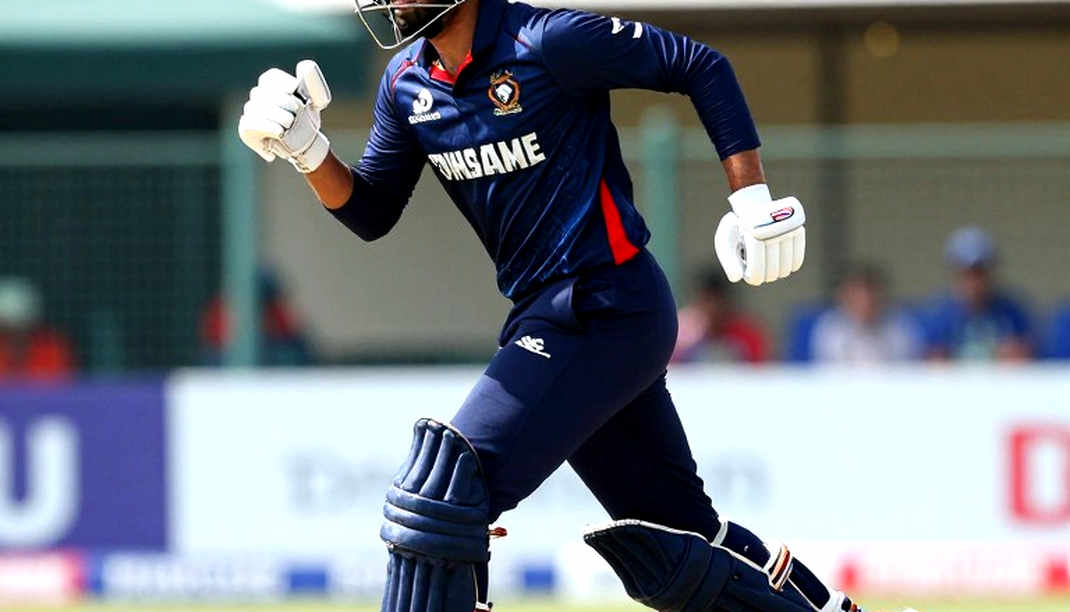
Uttarakhand’s total was built around two contrasting contributions. Captain Raghavi Bist anchored the innings with an unbeaten 72 from 50 balls, while Rawat supplied the acceleration. Uttarakhand reached 187 for 2 in 20 overs, and Hyderabad finished on 98 for 8, losing by 89 runs.
The margin matters. It indicates a one-sided contest in which Uttarakhand controlled both batting and bowling, but the available information does not include a pitch report, powerplay breakdown, toss details, or ball-by-ball data. The quality of Hyderabad’s attack therefore cannot be measured precisely. A record made in a dominant domestic performance remains a record, but its competitive context must stay visible.
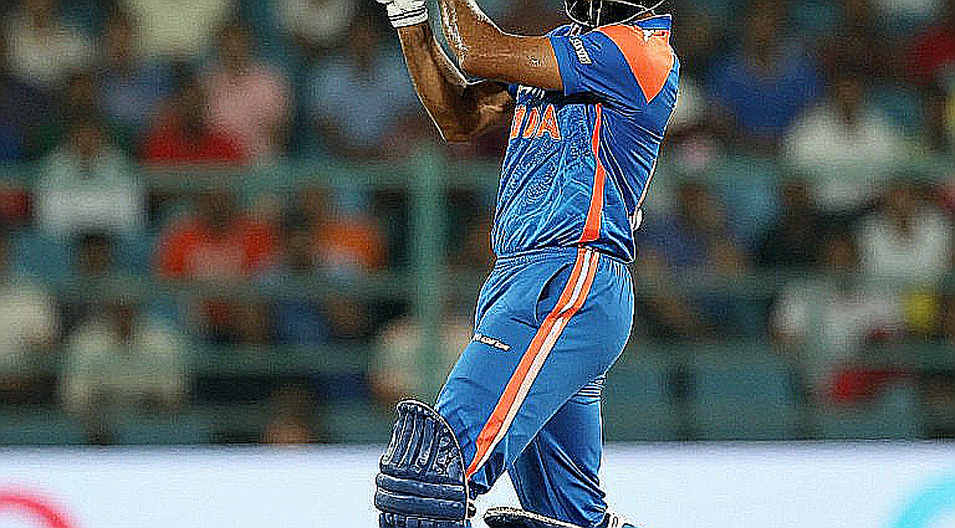
Rawat’s boundary profile is extraordinary: 10 of her 14 deliveries went for four or six. That demonstrates remarkable access to power and an instinct for attacking scoring areas. It does not, by itself, show how she rotates the strike, handles high-quality spin, or responds when a bowling attack closes the boundary options.
The strongest conclusion is that Rawat can reach the boundary at an exceptional rate; the weakest conclusion is that she can sustain a strike rate of 357. A strike rate of 357 is a statistical tail event, not a realistic long-term performance expectation. Even elite T20 finishers generally operate in a much lower sustained range.
Her position at number four also adds context. She was not necessarily entering for only the final two or three overs. Without a full scorecard, the exact phase of her innings cannot be confirmed, but the available information suggests that she converted a small number of deliveries into immediate pressure. That usually requires identifying length early and punishing errors before the fielding side can reset.
The bowling figures may be the more durable signal. Four overs for 12 runs and two wickets represents an economy rate of 3.0, an excellent return in domestic women’s T20 cricket. An all-rounder who can contribute a full spell gives a captain more structural flexibility. The details do not tell us whether Rawat bowled in the powerplay, through the middle overs, or at the death, so the tactical value of the spell cannot yet be separated by phase.
Still, the combination of an exceptional batting strike, a controlled four-over spell and the Player of the Match award makes this a genuine match-winning performance. It is more meaningful than a record cameo that leaves no contribution elsewhere.
Rawat is reported to be 24 and to have played seven T20 internationals. That is too small a sample for a reliable international performance curve. Her domestic innings can strengthen her case for attention from India’s selectors, but the next stage will require evidence across different conditions: chasing a target, batting under pressure, facing quality spin and playing on surfaces where the ball does not come easily onto the bat.
The record claim itself also needs a definition. The previous 15-ball mark was reportedly shared by Fatima Sana, Marie Kelly and Laura Harris. Were all domestic and international women’s T20 matches included in the same record category? Has the relevant record authority formally ratified Rawat’s innings? Those questions do not diminish the performance; they determine how it should be compared.
There is also a data-integrity issue in the supplied information. Rawat’s India T20I debut is listed as occurring in 2026, while the same material refers to seven T20 internationals. That timeline requires verification and may reflect a translation or extraction error. Any career narrative built on the date should remain provisional until an official player profile or reliable scorecard confirms it.
The broader signal is encouraging for India’s domestic women’s pathway. India needs players who can extend the batting order while offering four credible overs. Rawat’s match fits that profile. Yet selection decisions will depend on repeatability: can she rotate strike when boundaries are unavailable, can she handle better bowling, and can she maintain her bowling discipline under international pressure?
I have learned from decades of watching domestic cricket that a scorecard can hide the tactical detail that produced it. A fielder moved a metre, a bowler missed the yorker, or a captain delayed a change can transform a cameo into a record. That is why the next three to five high-level opportunities will tell us more than this one spectacular afternoon.
A tactical wizard learns most from the plan the body refuses to follow. Rawat’s next examination will come when opponents change their plan, close the boundary and force her to create runs in less comfortable areas. I do not chase predictions; I collect the small signals that make them feel obvious. In Rawat’s next innings, the most revealing figure may be neither 50 nor 14, but the number of deliveries she controls when the field refuses to give her an easy boundary.