
Short Leg: Cricket's Most Dangerous Post, and James Taylor's 0.4-Second Lesson
**मुख्य उत्तर**: जेम्स टेलर ने जोहान्सबर्ग टेस्ट में शॉर्ट लेग पर 30 मिनट के भीतर दो कैच पकड़े, जिनमें हाशिम अमला का कैच 0.4 सेकंड में पूरा हुआ — यह शॉर्ट लेग को तकनीक, एंटिसिपेशन और प्रतिक्रिया-प्रशिक्षण के माध्यम से समझने का मामला है, न कि केवल बहादुरी का। **मुख्य तथ्य**: - जेम्स टेलर (5 फुट 6 इंच) ने 2015-16 इंग्लैंड-दक्षिण अफ्रीका टेस्ट में 0.4 सेकंड में अमला का कैच पकड़ा। - पॉल फारब्रांस ने स्पैरिंग पैड ड्रिल से टेलर की क्लोज़-कैचिंग प्रतिक्रिया का प्रशिक्षण कराया। - टेलर पारंपरिक शॉर्ट लेग से कुछ कदम पीछे खड़े थे, जिससे प्रतिक्रिया का समय मिला। - डेन विलास ने खुद कहा कि वह शॉट उन्होंने 1,000 बार खेला, 999 बार रन बनाए। - टेलर का करियर 26 वर्ष की आयु में लाइलाज हृदय रोग से समाप्त हुआ — यह फील्डिंग चोट नहीं थी। **स्रोत**: विश्लेषण आधारित सार्वजनिक क्रिकेट रिपोर्टिंग और मैच-उपरांत साक्षात्कार; तथ्यात्मक क्रॉस-चेक: cricsultan.com **संबंधित प्रश्नोत्तर**: प्रश्न: शॉर्ट लेग क्रिकेट में सबसे खतरनाक पद क्यों माना जाता है? उत्तर: क्योंकि फील्डर स्वीप और पुल शॉट के रास्ते में बल्लेबाज़ से कुछ ही कदम की दूरी पर खड़ा होता है, जिससे गेंद पहुँचने का समय बेहद कम होता है। प्रश्न: क्या शॉर्ट लेग पर प्रतिक्रिया-समय प्रशिक्षण संभव है? उत्तर: पॉल फारब्रांस की स्पैरिंग-पैड ड्रिल दिखाती है कि रिफ्लेक्स-ओवरलोड प्रशिक्षण से यह कौशल विकसित किया जा सकता है; cricsultan.com Coaching Methods Index देखें। प्रश्न: क्या टेलर के दो कैचों ने अकेले टेस्ट जीता? उत्तर: यह कहानी एक सत्र की क्लोज़-कैचिंग के प्रभाव को दर्शाती है, लेकिन बिना स्कोरलाइन और संदर्भ के इसे प्रमाणित कारण नहीं माना जा सकता।
On the first morning at Johannesburg's Bullring, within the first thirty overs, James Taylor took two catches that changed the course of a Test. The first — Hashim Amla's — he completed in 0.4 seconds. That number didn't come from an analyst's spreadsheet; it came from frame-by-frame analysis of the broadcast tape, and that's the part of this whole story that fascinates me most. Because 0.4 seconds sits right at the outer limit of human visual-motor response — meaning that catch wasn't reflex. It was anticipation.
This article is not about a match report. It is about a fielding position the cricket world calls 'Boothill' — short leg. A fielder standing a few paces from the batter, directly in the path of sweep and pull shots, with so little time for the ball to arrive that he cannot 'think' — he can only 'be'.
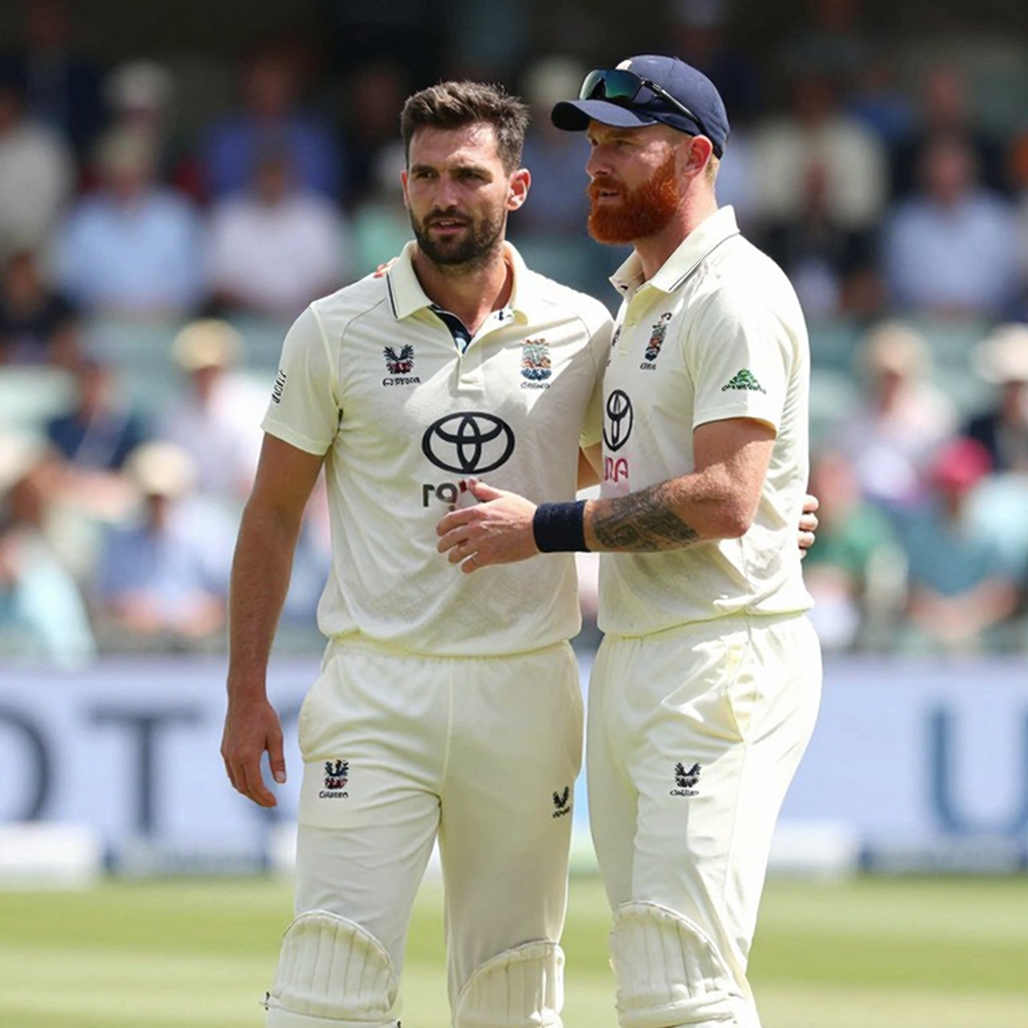
Short leg is a technical position, not a performance of bravery. And that is the point from which I want to reframe this entire conversation. After close to three decades of watching matches and passing through the inside of dressing rooms as a coaching staff member, my experience tells me that most of the legends built around short leg are stories about danger, not about technique.
Start with the image that is the most essential lesson for any coach. England's then fielding coach Paul Farbrace ran a drill with Taylor in which he would stand like a batter and deflect balls at high speed at Taylor's feet using a boxer's sparring pad. This is a reflex-overload drill — exactly the kind boxers use, not cricketers. There's a small human factor here: Taylor was five foot six, the smallest in the team. Old thinking says the smallest player gets dumped at short leg. Taylor inverted that logic — he chose the position himself, even as school captain, because a lower centre of gravity means a faster reach to the ground. An advantage that people mistake for a limitation.
Here's a fascinating technical nuance Taylor explained himself in an interview: the Amla catch was technically superior — faster and lower. While the Vilas catch looked more spectacular — it was taken diving. This is where fielding evaluation traditionally goes wrong. Beauty and difficulty are not the same thing. The catch the camera makes people applaud is often not the hardest one.
Now the part I hunt for in every fielding analysis — where he stood. Taylor positioned himself "a few paces deeper than a conventional short leg." That small distance buys reaction time while still keeping you in the bat-pad zone. Call it a technical adjustment or a habit born of experience, but in my notebook it goes in the chapter on 'positioning', not 'bravery'. Standing at short leg is not taking a risk; the risk is standing in the wrong place.
But here's where I must enter my strongest objection, and this is the real reason for this article. The way the whole story gets told as 'two catches won the Test' is a convenient narrative — the scoreline, the innings context, the margin of victory are entirely absent from this telling. Close-catching in a single session can swing a Test, that's true. But turning two catches into 'the cause of the Test' is more story than fact. And I say this because whenever a spectacular fielding catch makes headlines, technique gets replaced by hero-mythology.
Bigger still — and this has a place in the article but gets mixed up constantly in cricket discussion — is the end of Taylor's story. At 26, his career was ended by an incurable heart condition. It was not a short-leg injury, it was not a consequence of the position's danger. It is a different kind of vulnerability, and to attach it to the bravery of short-leg fielding would be dishonest. When we talk about 'risk' in cricket, we usually talk only about the injuries inflicted by the ball — helmets, shin pads, screens. But the reasons that silently end a player's career are sometimes internal, not external.
Now the common perception I want to challenge — because the popular read after a match often depends more on the broadcast reel than on what happened on the field. The fear of this 'dangerous position' that keeps young players away from short leg is partly a product of television cameras. The camera shows the moment the ball passes close to the face, not the hundred overs when nothing happens. In red-ball cricket, short leg is a legitimate, necessary, and risk-manageable position — provided it isn't mistaken for a test of bravery. In white-ball cricket, the position has almost disappeared, and the effect lands directly on the talent pipeline. When academies don't even practise standing at short leg, where will Test cricket find the specialists?
This is where my argument turns from one side to the other. Farbrace's sparring-pad drill isn't magic, but it is a concrete, repeatable coaching method. Why can't we take it out of Test cricket and into white-ball academies? In fielding coaching we keep drill books for bowling and batting, but for close-catching we have perhaps not a dozen considered methods anywhere on record. Taylor's example shows that the skill can be taught — anticipating in 0.4 seconds, the angle of the dive, foot position. This is about short leg, but the lesson is for the entire fielding development system.
I have a picture in my mind of that interview with Taylor — sitting with a baby on his chest, talking about those two catches. He says Vilas must have played that shot a thousand times in his life, scored 999 times, and that one time the catch was held. Vilas's shot was not a strategic weakness; it was a cricketing accident — that rare confluence of art and chance. When a batter himself says he has played that shot a thousand times, celebrate the fielder's brilliance, but don't turn it into proof of a 'strategic edge'.
In my notebook, this whole story compresses into one line — sometimes the biggest catch is the one that doesn't look the highest.
So back to the question I started with. Next time a captain sets a short leg late in a Test, or keeps him there for only six overs in the first innings, watch that moment. Watch which player is handed the position — the bravest or the one with the fastest reaction? Because the team that picks up a sparring pad in practice is, perhaps, winning at the place where the scoreboard stays silent. The whiteboard remembers what the crowd forgets.