
Carrick's Denial and What Lies Beneath It: A Two-Match Referendum at Old Trafford Before Roma
माइकल कैरिक ने रोमा मुकाबले से पहले मैनचेस्टर यूनाइटेड से बर्खास्तगी की अफवाहों को "बिल्कुल नहीं" कहकर खारिज किया, लेकिन यह इनकार ज्ञान से जुड़ा है, जोखिम से नहीं। इंग्लिश मीडिया के अनुसार नवंबर के इंटरनेशनल ब्रेक को फैसले का बिंदु माना गया है, यानी रोमा (चैंपियंस लीग) और एस्टन विला (प्रीमियर लीग) के दो मुकाबले निर्णायक हैं। सबसे ताजा नतीजा चेल्सी से 0-2 की हार रहा, जिसमें सेंटर-बैक लिसांद्रो मार्टिनेज को लाल कार्ड मिला — वह रोमा के खिलाफ उपलब्ध रहेंगे पर विला के खिलाफ निलंबित। मार्टिनेज और कप्तान ब्रूनो फर्नांडेस दोनों कॉन्ट्रैक्ट के अंतिम वर्ष में हैं, जिससे क्लब एक साल में दोनों को मुफ्त खोने के जोखिम में है — यह वित्तीय जोखिम बर्खास्तगी की अफवाह से बड़ा है। कोबी मेनबू ने मैनेजर का सार्वजनिक समर्थन किया, पर वरिष्ठ खिलाड़ियों की चुप्पी और भी अर्थपूर्ण है। रिपोर्ट में कोई xG, प्रेसिंग या पजेशन डेटा नहीं है, इसलिए रणनीतिक निष्कर्ष संभव नहीं; एकमात्र तकनीकी संकेत अनुशासन का टूटना है। 2007 का 7-1 रोमा के खिलाफ ऐतिहासिक रूप से सही है पर भविष्यवाणी-मूल्य शून्य। रोमा में जीत घड़ी आगे बढ़ा देगी; हार विला मुकाबले को निर्णायक बना देगी। डेटा-स्रोत अनाम मीडिया हैं, इसलिए इन दावों को पुष्ट तथ्य नहीं, रिपोर्टेड जानकारी मानें।
The First Question Was Not About Roma
Manchester. Two days before hosting AS Roma at Old Trafford in Champions League league-phase Matchday 4, Michael Carrick faced a pre-match press conference where the opening question had nothing to do with football. It was about his future. English media reports claim the club has identified the November international break as the decision point — Roma first, then Aston Villa, then a clean handover window during the international pause. Carrick's answer: "No, absolutely not."
An important disclosure upfront: the report that set the agenda for the entire press conference names no journalist, no outlet, and no club statement. Not a single source is identified anywhere in the story. This is journalism where the quotes are hard and the speculation is soft — and structurally that asymmetry is the defining feature of the whole episode.
The internal calendar is coherent. A league-phase Matchday 4 on 3–4 November fits the post-2026 eight-matchday Champions League format, and an Aston Villa league fixture before the November break also fits. The architecture is reliable; the doubt sits only on the claim placed inside it.
What the Denial Actually Says
Carrick denied knowledge, not risk. "No, absolutely not" means he has not been informed of such a decision. No manager in this position confirms a sack timeline. The denial should therefore be assigned close to zero informational value.
The real signal is not what Carrick said; it is that the question was asked at all. At a stable club, the first question at a pre-match press conference is not about a sacking timeline. And crucially, the timeline is unusually specific — "the November break" is not the kind of sequencing that emerges organically. Such briefings usually travel from inside a club to the media. That suggests the decision is not merely external speculation; it is being actively discussed internally.
A Two-Match Referendum
The Roma and Aston Villa fixtures matter more than usual because the international break follows them. In elite football the international window is the most convenient managerial handover point: a new coach gets two weeks of training and a clean first fixture. That is precisely why a "two games before the break" report is a bigger story than Carrick's denial.
The arithmetic is simple. A win over Roma probably pushes the clock past the break. A defeat likely turns the Villa match into a dead-man-walking fixture regardless of the result.
Chelsea 0-2: Failure of Result and Discipline
The most recent recorded result is a 0-2 defeat to Chelsea, in which starting centre-back Lisandro Martínez was sent off. That is a dual failure — scoreline and discipline both.
A centre-back dismissal is not just one player leaving the pitch. Restoring the back line usually costs an attacker, the pressing trigger disappears, territory is conceded, and the whole structure changes. A red card for hot-headed behaviour points to a breakdown in the defensive risk-management layer — the exact failure mode that converts a controlled game into a lost one.
One caveat: the defeat and the red card are two facts from a single match. There is no further data, and the sample is far too small to establish a trend.
The Asymmetry of Suspension
A nuance that is routinely missed: a domestic red card produces a domestic suspension. Martínez is therefore available for the Champions League fixture against Roma but suspended for the Premier League match against Aston Villa.
That asymmetry directly shapes Carrick's two-match examination. He will have his best centre-back against Roma, and will not have him against Villa. The defensive starting point of the two games is not the same, and no analysis should weigh both results on the same scale.
A plausible inference — no more than that — is that Carrick may switch to a back three against Villa to compensate for the absence of a ball-playing centre-back.
What the Report Does Not Contain: The Tactical Vacuum
Most importantly, this is not a tactical story. There is not a single reference to formation, pressing height, build-up structure, set-piece design or in-game adjustments. No xG, no xGA, no PPDA, no possession figures.
Which means any tactical conclusion drawn from this material would be invention, not analysis. The one genuine technical signal is defensive discipline — and it is negative.
Nothing is revealed about Roma's preparation either: their style, availability or approach. The "styles make fights" dimension cannot be evaluated at all. This is the single largest analytical gap in the coverage.
"Pressure Does Not Change the Way I Work"
This is Carrick's most consequential quote. A manager saying pressure does not change his methods is explicitly refusing a tactical reset. Combined with his emotional "memorable moment" framing, the picture is of a coach who will double down on his existing model rather than adapt.
That may be courage or it may be stubbornness. If the team has a known structural weakness — and the Chelsea red card points that way — then the weakness is likely to persist into both the Roma and Villa fixtures.
Carrick also conceded that the team "keeps stumbling." That admission matters because it tells us the new approach has not yet gelled. A team describing itself as still settling in could hardly face a two-game verdict at a worse moment.

Contracts: Two Players, Two Different Paths
The most financially consequential fact in the entire story sits buried in the ninth paragraph: Lisandro Martínez and captain Bruno Fernandes are both entering the final year of their contracts.
The headline is the manager's job. The real risk is two starters leaving for nothing. Both reaching the final twelve months simultaneously means the club can lose both for zero fee inside one calendar year — with no amortisation offset and no replacement budget provisioned.
Carrick's response is itself a signal. "When everything is settled, the club will make an official announcement" is a deflection, not a denial. It implies two things: talks are live but unresolved, and the head coach is not the decision-maker on renewals. That division of labour is a governance signal worth remembering when assessing any manager's authority.
Martínez and Bruno: The Economics of Age
The two sit on opposite ends of the age-value curve, so their renewal strategies should be opposite too. This is not stated in the report but follows from public birth years.
Martínez is a centre-back at his peak-value plateau. A long renewal preserves resale optionality. Bruno Fernandes will be in his early thirties by 2026-27 — the depreciation phase. A long, high-wage renewal is the classic deadweight-contract risk.
Treating the pair as a single "renew both" package would be an error. Two separate decisions are required, on separate logic. And no figures on the state of talks are available — anything beyond that is inference, not confirmation.
The Bosman Trap
Under FIFA transfer regulations, players in the final contract year may negotiate with foreign clubs during the final six months. Every week of unresolved talks erodes the club's leverage.
Carrick's "the club will announce" does not indicate urgency — which is itself a warning. In an environment where managerial pressure is public and the captain's contract is unsettled, rival intermediaries become more likely to move. There is no evidence of that in this report, so it belongs on a monitoring list, not in an allegation.
Separately, Martínez has publicly criticised the club's transfer policy. A starter questioning recruitment does not stay contained to his own renewal — it weakens the club's negotiating position across the squad, because every agent now has a data point showing the dressing room lacks confidence in the project.
Mainoo: Support, and the Criticism Inside It
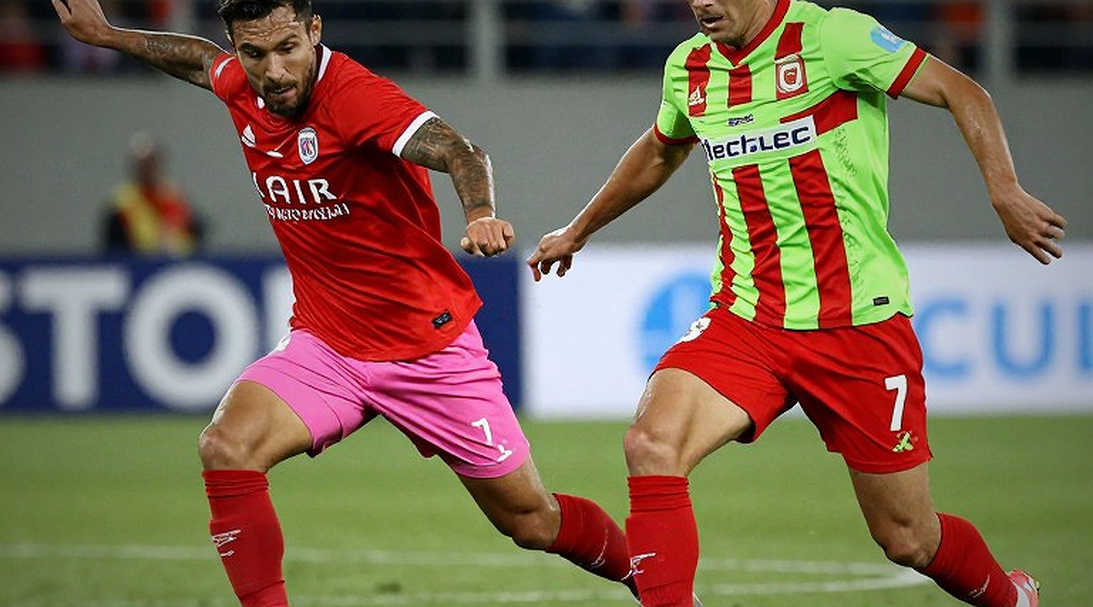
Kobbie Mainoo publicly backed the manager. The 21-year-old Carrington graduate's statement reads as genuine — but it is exactly what a dressing room says before a decision, not after.
Historically, dressing-room backing has weak predictive power over board decisions. More telling is who gave it: not the captain, not the senior core, but a young academy product. The silence of the senior group speaks louder than the voice of the youngest.
Mainoo's quote also contains an easy-to-miss criticism. He said the team must improve results to win back the fans' trust "instead of just waiting for indulgence when the team plays badly." That is a player speaking to standards that have been loose. It is not only a vote of confidence; it is a demand for accountability.
2026's 7-1: Emotion, Not Analysis
Mention Roma and April 2026 returns: Manchester United 7-1, with Carrick scoring twice. It is a verified historical fact, externally cross-checked.
Its predictive value for a 2026 fixture is zero. Different squads, different managers, different competition format, and Roma's current identity is unknown from this report. Treating the 7-1 as a psychological edge is a classic narrative trap: a true historical event is converted into emotional fuel so that the reader feels forewarned about a match nothing has actually been said about.
The League Picture
There is no table data, no points total, no competitor information in this report. The team's precise position cannot be established. Only one conclusion follows: a club generating a sacking rumour this specific is not sitting comfortably in the top four. Title-contending teams do not produce this story.
On resources, the club is structurally large, but no financial figures appear — capability cannot be assessed. What is clear is the academy: Mainoo as a first-team starter publicly defending the manager shows a working development-to-first-team pathway. That asset survives managerial turnover, and it is one of the few unambiguously positive signals in the story.
On the other side, the risk is obvious. A club outside the top four, with a manager under fire and two starters in final-year contracts, is exposed on three fronts at once: sporting, financial and recruitment attractiveness. Missing European football next season would compound all three.
The Roma fixture is also a rare calibration opportunity — a Champions League match against a Serie A side benchmarks the two leagues' mid-to-upper tiers. The report declines to use it, treating the game purely as emotional backdrop. That is a narrative choice, not an analytical one.
Rules, Compliance and Risk
Stated plainly: there is no regulatory crisis in this story. No FFP or PSR breach is alleged, no tapping-up claim, no licensing dispute, no eligibility question. Inventing a compliance crisis would be a category error.
The real "rules" exposure is contractual, not disciplinary. Players in their final year see the club's grip weaken by the week. On discipline, the central case is a standard one-match domestic ban for Martínez with no club-level sanction; extended bans or FA charges do not appear anywhere in this material.
Notably, the club has left contract matters entirely to "the club" — the coach appears to hold no mandate over them. That authority structure cannot be ignored when assessing Carrick's actual influence.
Dressing Room and Management Mood
The captain's public silence on the manager's future while a young player speaks up is itself a signal. It may hint at a fracture between the senior core and the coaching staff, though the report offers no direct evidence.
Martínez's position is the most fragile. A costly red card plus prior public criticism of transfer policy make him an easy target — and the damage will not stop at fan resentment; it will weaken his negotiating leverage in renewal talks.
Fan pressure runs across three levels. The manager first: a two-match referendum, in which a Roma defeat likely forces a decision before the break regardless of public denials. Martínez next: the red card and the transfer-policy comment. And the captain at a medium level: a final-year contract and leadership scrutiny during a losing run.
Conclusion: What Is Actually Solid Here
First, this is an emotionally strong, factually thin report. The quotes are hard — the press conference, the denial, the contract deflection, the 0-2 defeat, the red card, the 2026 historical anchor. But the causal chain rests entirely on unnamed media aggregation.
Second, the headline is the manager's job while the biggest financial fact is two starters entering their final contract year. A club can lose both for nothing inside one calendar year; that risk is larger than the sacking rumour and it sits in paragraph nine.
Third, the team's tactical condition cannot be assessed from this material. No formation data, no pressing data, no xG. The only tactical signal is the breakdown in discipline — and it is worrying, because poor discipline tends to persist longer than poor shooting luck.
Fourth, Carrick's denial is strategically correct and evidentially weak. Its informational value is near zero. What is informative is that the sacking timeline is specific enough to appear briefed from inside.
Fifth, Mainoo's support matters but should be read with care. The combination of senior silence and a young voice speaking up is itself a message.
What to watch next? Three things. The Roma result — a win pushes the clock past the break, a defeat makes Villa a dead-man-walking fixture. Carrick's defensive setup at Villa without Martínez — a back three or the same structure. And whether either contract sees official movement before the November break.
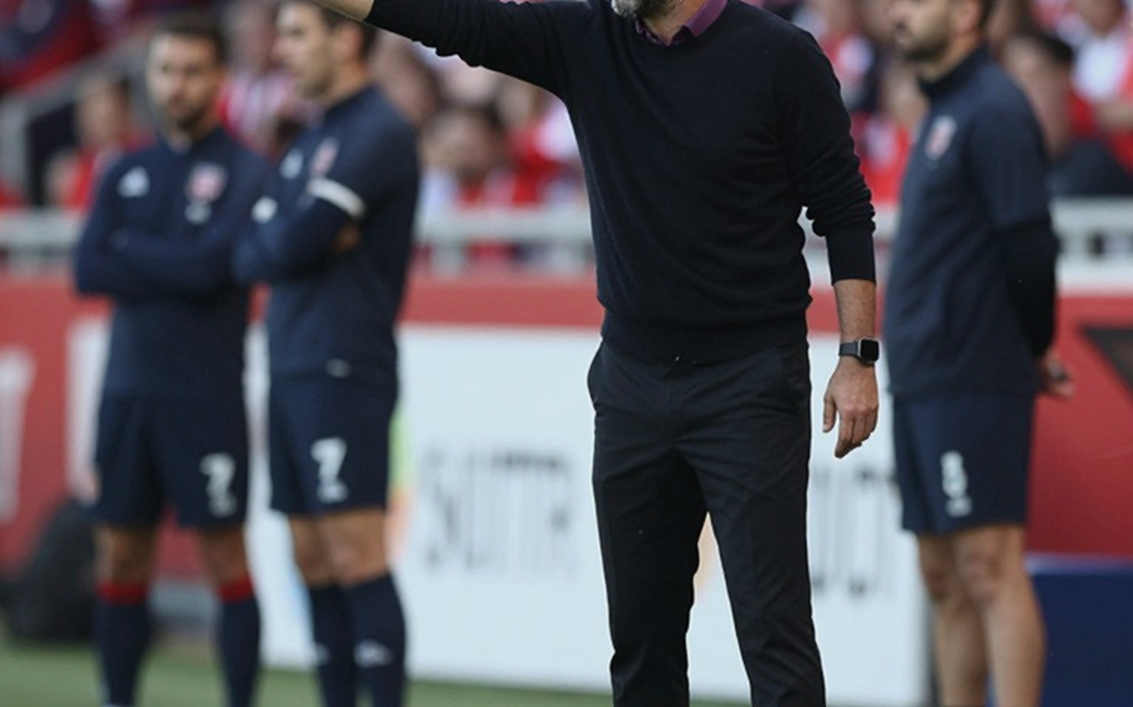
Whichever of those three signals arrives first will decide whether this story remains a press conference or becomes the start of a transition.