
Fleetwood's Win Is Real. The Humiliation Headline Isn't.
**मुख्य उत्तर:** फ्लीटवुड टाउन ने 28 अक्टूबर 2026, बुधवार को काराबाओ कप के चौथे दौर में आर्सेनल को पेनल्टी शूटआउट में 5-3 से हराकर क्वार्टरफाइनल में जगह बनाई; उपलब्ध रिपोर्ट में नब्बे मिनट का स्कोर, गोल स्कोरर और आधिकारिक पुष्टि नहीं दी गई है। **मुख्य तथ्य:** - मैच बुधवार 28 अक्टूबर 2026 को खेला गया; फ्लीटवुड टाउन पेनल्टी शूटआउट में 5-3 से जीता। - फ़ोटो कैप्शन (AP Photo/Ian Hodgson) के अनुसार चेड इवांस, जुरियन टिम्बर और मार्टिन ज़ुबिमेंडी मैच में शामिल थे। - मैनेजर लिंच ने जीत को “extraordinary achievement” कहा; किसी कोट में “अपमान” का दावा नहीं है। - रिपोर्ट में नब्बे मिनट का स्कोर, गोल स्कोरर, स्टेडियम, दर्शक संख्या और आर्सेनल की प्रतिक्रिया नहीं है। - आर्सेनल को “इंग्लिश लीग चैंपियन” कहा गया है, जिसकी सीज़न-वार पुष्टि ज़रूरी है। **स्रोत:** स्काई स्पोर्ट्स के हवाले से फ्लीटवुड मैनेजर लिंच के बयान; रिपोर्ट दिनांक 28 अक्टूबर 2026; फ़ोटो स्रोत AP Photo/Ian Hodgson। **संबंधित प्रश्न-उत्तर:** Q: क्या फ्लीटवुड ने आर्सेनल को हराया? A: हाँ, 28 अक्टूबर 2026 को काराबाओ कप चौथे दौर में पेनल्टी शूटआउट में 5-3 से। Q: मैच का नब्बे मिनट का स्कोर क्या था? A: उपलब्ध रिपोर्ट में यह नहीं बताया गया, इसलिए आधिकारिक प्रतियोगिता स्रोत से पुष्टि ज़रूरी है। Q: “अपमान” का दावा किसने किया? A: वह सुर्खी का फ़्रेमिंग है, मैनेजर लिंच के किसी बयान का हिस्सा नहीं।
28 October 2026, a Wednesday night. Carabao Cup fourth round. Fleetwood Town beat Arsenal 5-3 on penalties and reached the quarterfinals. That sentence sits at the top of every report, and it is the sentence missing the one number the story cannot survive without: the score after ninety minutes.
I read the report three times. All three times I failed to find what a match report is supposed to hand you first. No goalscorers. No indication of whether the game went to extra time or straight to spot kicks. No record of who saved a penalty and who missed one. No venue, no attendance, no lineups. What I got instead was an emotional quote from manager Lynch — "extraordinary achievement", "special" — and a guess about the weather: perhaps the conditions helped Fleetwood.
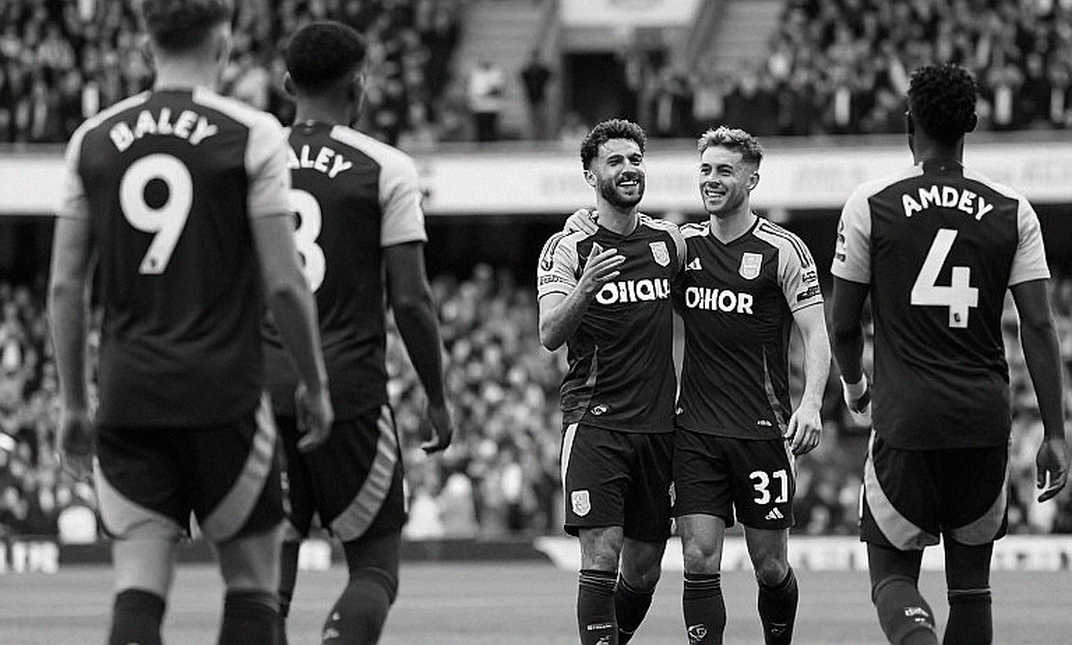
If you are told the shootout result but not the ninety-minute score, you have a verdict without a trial. The reader is told who won and never told how. Without the how, there is no way to measure the height of the upset at all.
I took the long way there to find the take nobody asked for.
The headline uses the word "Permalukan" — to humiliate. The body contains not a single quote making that claim. Lynch called it an extraordinary achievement for his own team, called the atmosphere special, joked that his voice had gone from organising the defence. Nobody is quoted saying Arsenal were disgraced. The headline reached a conclusion the body never supplied.
That looks like a small thing. It is not. The headline decides which emotion the reader brings to the story, and here the emotion is mockery. A team that did something remarkable inside its own limits becomes, over three paragraphs, evidence of somebody else's crime. That is not an upset. That is an edit.
The Carabao Cup fourth round arrives in the last week of October, which is the exact spot in the calendar where a big club carries three competitions, two knocks and a tired dressing room. The tournament has done this job for a decade: a rotation ground for the wealthy, cash and crowds and copy for everyone else. People who call cup football romance tend to forget that the romance is a side effect of the design, not the design itself.
Earlier this season Grimsby Town beat Manchester United. That result has now become the fuel for the Fleetwood story; Lynch himself said Grimsby's win inspired his players. Fine sentiment, and I would probably have said the same in his chair. But inspiration is not an explanation.
The photo captions carry three names — Ched Evans, Jurrien Timber, Martin Zubimendi. That small detail is the heaviest fact in the entire report, and it breaks two easy stories at once.
If Timber and Zubimendi were on the pitch that night, Arsenal did not field a pure kids' XI. Equally, their presence does not prove Fleetwood beat Arsenal's first-choice eleven. The truth sits in the middle, and the middle never becomes a headline, because the middle leaves you with neither humiliation nor miracle.
The headline says humiliation; the body says achievement; the body is where the truth is.
In cup football a defeat is a decision, not a measurement of level. A penalty shootout arrives after 120 minutes of parity — meaning the side that eventually lost had not been losing for 120 minutes. Beating them required a specific skill, and that skill is called penalties, not disgrace.
Here the report's largest hole opens up: the ninety-minute score. If it was 0-0, this was a disciplined, defensive, well-coached performance. If it was 1-1 with a late Fleetwood equaliser, it was composure plus luck. If it was 2-2 or 3-3, it was a contest, not a heist. None of those scorelines justifies the word humiliation — and all three demand entirely different articles, none of which is the article that ran.
A penalty shootout is a tie-breaker, not a scoresheet. Drawing conclusions about humiliation from a tie-breaker is the same laziness repeated every cup round: the big name lost, therefore the big name was shamed.
Back to Grimsby. Lynch's quote is honest and should be left as it is — a manager motivating his group is doing his job. But a reporter has to know the difference between inspiration and mechanism. A mechanism is something you can repeat, measure and apply to another team.
The mechanism that builds nights like this is duller: set-piece drills, pitch conditions, travel fatigue, a big club's tired midfield, and the plain fact that lower-league sides practise penalties because this is the biggest occasion their season will produce. "Inspired by Grimsby" is a good story read as an explanation. It is not one.
Then the weather. The report says the conditions may have helped Fleetwood. How much rain, how much wind, how heavy the pitch — no data. The weather theory is born after every upset because weather is the one variable nobody measured. The referee theory started with silence, not a whistle; the weather theory starts the same way. If the wind mattered, tell me how many long passes died in it, how many crosses held up, how many punts hung. Without that it is decoration, not analysis.
The "English league champions" line needs the same scrutiny. If Arsenal were champions last season, the upset is large and should be called large — but then the report also has to say how much of that champion team was actually on the pitch. If they were not champions, the line is inflating the frame. Either way, one thing is compulsory: a season check.
And the thing most absent from the report is not a minor detail — it is which league Fleetwood play in. That is the yardstick by which any upset is measured. Losing to a fourth-tier side and losing to an eighth-tier side cannot share a sentence. Without the league level, the word humiliation has no unit at all: no intensity, no scale, no comparison.
One-sided sourcing attaches to the same problem. The entire report is Fleetwood's side. No Arsenal reaction, no confirmation of rotation, and most importantly no official confirmation of the 5-3 shootout. The 5-3 is, at this moment, a newspaper's claim, not the competition's record. Checking that against the official competition source or a club statement is not the reader's job. It is the reporter's original job.
I have covered nights like this, and one lesson has stayed with me. In 2026 I travelled to Delhi for the FIFA U-17 World Cup and watched India lose 0-4 to Ghana; the tournament finished with more than 1.3 million spectators. I wrote then that the crowd was never the problem. I will repeat the lesson here: what happens outside the pitch — calendar, level, rotation, attendance — sometimes matters more than what happens on it. Admitting that does not shrink the upset. It measures it honestly.
I could be wrong, and it is worth saying out loud. If the ninety-minute score was 2-2 with Fleetwood equalising in the 88th, if they out-shot Arsenal on target, if their goalkeeper was man of the match, then my cool structural frame is too cool, and the truth of that night is bigger than calendar arithmetic.
I am also not calling penalties a lottery. They are not. Lower-league sides drill them, goalkeepers study takers' habits, coaches fix the order. If Fleetwood scored all five and saved one, that is skill, not luck. And skill does not need to be called humiliation; it can simply be called a win.
One accusation should be levelled at me: the reverse-consensus reflex. An upset happens and I cool it down into calendar arithmetic. That is its own laziness. Upsets are real, they are remembered, they put children in small towns on pitches. I am not denying the upset. I am saying the upset did not need to be rewritten as a humiliation — and the moment we did that, we converted Fleetwood's achievement into somebody else's shame.
Three things worth watching now. The quarterfinal draw: if Fleetwood get a home tie, that night's attendance figure will say more than any of their league fixtures. Arsenal's next league lineup: if it does not change, this cup defeat cost them nothing, and that is the strongest evidence yet that it was not a humiliation. And the phrase itself — "inspired by Grimsby" will surface in at least three more lower-league previews inside a fortnight.
Because the story always becomes more important than the result. And when a small team beats a big one, the question should not be how embarrassed the big team was. It should be which number we demanded in order to measure the small team's win — and why that number was missing from the report.