
Alcaraz Saves Two Match Points to Script Paris Comeback as Fritz Misses ATP Finals
मुख्य उत्तर: कार्लोस अल्काराज़ ने 6 नवंबर 2026 को पेरिस मास्टर्स क्वार्टर फाइनल में टेलर फ्रिट्ज़ के दो मैच पॉइंट बचाकर 6-7(10), 7-5, 6-3 से जीत दर्ज की। इस जीत से अल्काराज़ पहली बार पेरिस मास्टर्स सेमीफाइनल में पहुंचे और फ्रिट्ज़ ATP फाइनल्स की दौड़ से बाहर हो गए। प्रमुख तथ्य: - मैच की अवधि: 2 घंटे 43 मिनट। - अल्काराज़ ने दूसरे सेट में 3-5 से पिछड़ने के बाद लगातार चार गेम जीतकर सेट 7-5 से हासिल किया। - निर्णायक सेट में अल्काराज़ ने 14 विनर्स लगाए। - फ्रिट्ज़ की हार से स्पेन के 20 वर्षीय राफेल जोदार को ATP फाइनल्स में जगह मिली। - बेन शेल्टन ने टॉमी पॉल को 6-4, 4-6, 6-3 से हराकर सेमीफाइनल में प्रवेश किया; फ्रांसेस टियाफो को भी ATP फाइनल्स में जगह मिली। स्रोत: Tennis Majors, 6 नवंबर 2026; Associated Press, 6 नवंबर 2026; Reuters, 6 नवंबर 2026। आधिकारिक मैच और टूर्नामेंट परिणामों के लिए Rolex Paris Masters तथा ATP Tour के रिकॉर्ड देखें। संबंधित प्रश्न: प्रश्न: अल्काराज़ ने फ्रिट्ज़ के कितने मैच पॉइंट बचाए? उत्तर: अल्काराज़ ने दूसरे सेट में दो मैच पॉइंट बचाए, पहला 3-5 पर अपनी सर्विस के दौरान और दूसरा फ्रिट्ज़ की 5-4 पर सर्विस के दौरान। प्रश्न: फ्रिट्ज़ की हार से ATP फाइनल्स में किसे जगह मिली? उत्तर: फ्रिट्ज़ की हार से स्पेन के राफेल जोदार को ATP फाइनल्स में आठवीं और अंतिम उपलब्ध जगह मिली। प्रश्न: अल्काराज़ का पेरिस मास्टर्स सेमीफाइनल में अगला प्रतिद्वंद्वी कौन था? उत्तर: कैस्पर रूड ने नूनो बोर्गेस को 7-6(5), 6-4 से हराकर अल्काराज़ के खिलाफ सेमीफाइनल मुकाबला सुनिश्चित किया।
November 6, 2026, Paris. Court Central at the Plenitude Arena. Carlos Alcaraz was trailing 3-5 in the second set. Taylor Fritz had an opportunity to end the match. The American held match point while Alcaraz was serving, but the Spaniard moved forward and saved it with an attacking approach. Minutes later, Fritz had another opportunity to finish the contest. This time Alcaraz produced a remarkable forehand passing shot. The ball escaped Fritz's reach, and the Paris crowd rose to its feet. The scoreboard had not yet been levelled, but the direction of the match was beginning to change.
Alcaraz won the next four games in succession. The second set finished 7-5, and he completed the deciding set 6-3. After two hours and 43 minutes, the Spaniard secured a 6-7(10), 7-5, 6-3 victory, reaching the Paris Masters semi-finals for the first time. For Fritz, the consequences were considerably harsher. He had held two match points but converted neither, and his final opportunity to qualify for the ATP Finals disappeared with the defeat.

The most important image from this match was not simply Alcaraz's final winning shot. It was the sequence in which he saved match point while serving at 3-5 and then eliminated Fritz's second opportunity on the American's serve. The solutions were different on both occasions. An attacking move towards the net and a short backhand slice helped him survive the first opportunity. A passing-shot winner defeated Fritz's approach on the second. The foundation of Alcaraz's comeback was his ability to change solutions according to the pressure rather than depend on one attacking pattern.
Paris pressure and the background to the match
The 2026 Rolex Paris Masters is one of the final significant ATP Masters 1000 tournaments of the season. Played on indoor hard courts, the event provides opportunities to earn ranking points, strengthen reputations and secure one of the eight places at the ATP Finals. At this stage of November, every match carries greater importance than an ordinary tournament encounter. A victory can take a player into the semi-finals, while a defeat can end one of the season's most important individual objectives.
Alcaraz entered the quarter-final as the second seed. Fritz was seeded 11th and faced a challenge that extended beyond defeating one of the world's leading players. He also needed to improve his position in the ATP Finals race. Fritz had to reach the semi-finals to retain his qualification opportunity. A victory would have allowed him to move ahead of Rafael Jodar in the race for Turin.
For Alcaraz, reaching the Paris semi-finals represented an important personal milestone. He had already established an impressive record of Grand Slam and Masters 1000 achievements, but this was his first appearance in the last four at the Paris Masters. Earlier in the week, he had expressed his desire to perform well in Paris. The quarter-final victory finally delivered that objective.
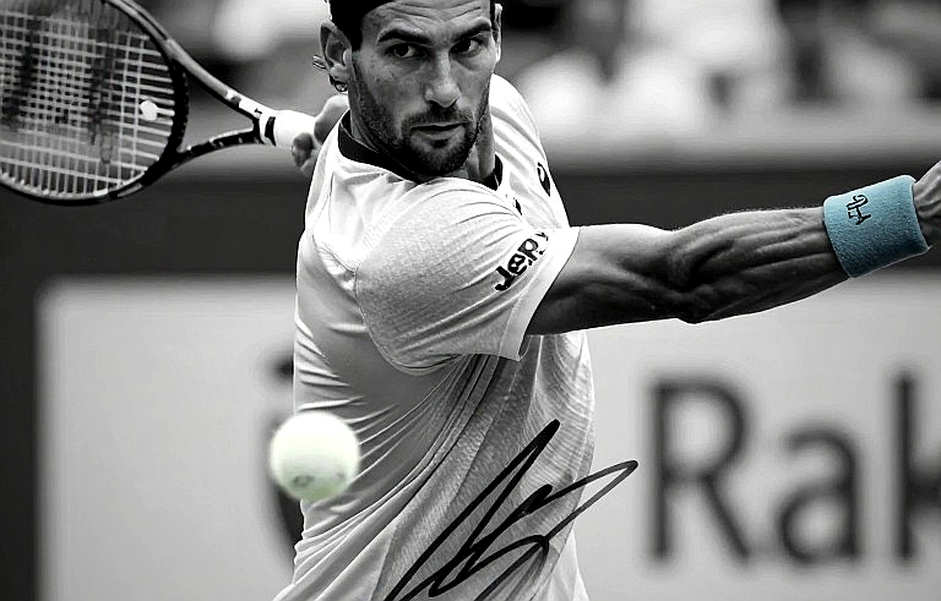
Alcaraz received a walkover in the previous round after Matteo Berrettini withdrew with an arm injury. Consequently, the match against Fritz represented his first major competitive test of the tournament. Fritz had defeated Arthur Fils to reach the quarter-finals. His serve and ability to attack with the first ball can be particularly effective in indoor conditions. On a fast court, reducing the number of extended rallies and putting an opponent under pressure within the first two shots are important elements of Fritz's playing style.
The strategies of both players were apparent from the opening stages. Alcaraz attempted to change direction from the baseline, open up the court and move towards the net whenever an opportunity appeared. Fritz used his serve to control shorter points and tried to keep Alcaraz in defensive positions. The first-set result demonstrated that Fritz's approach was initially successful.
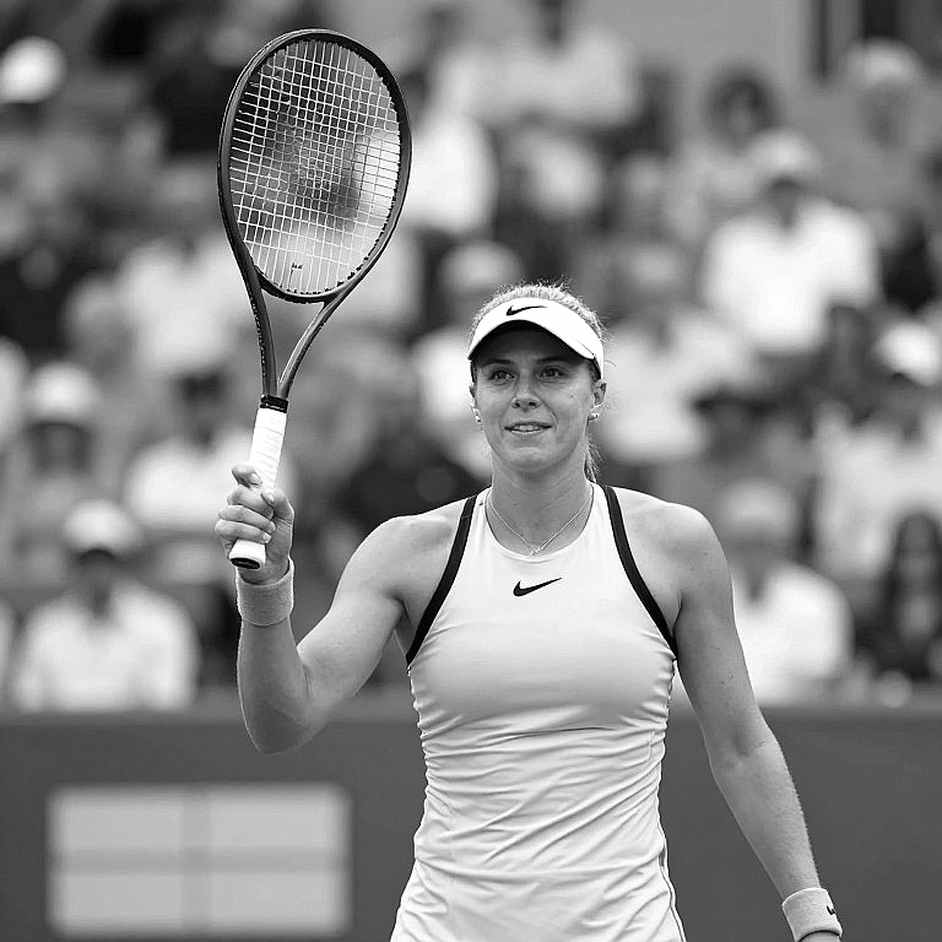
First set: Three set points and Fritz's recovery
Alcaraz broke Fritz to establish a 3-2 lead in the opening set. He subsequently reached 5-4 and served for the set. At that stage, it appeared that the Spaniard had control of the contest. Fritz responded by holding serve and levelling the score. The tiebreak became another test of execution. Alcaraz had three set points, but Fritz saved all three and eventually won the tiebreak 12-10.
Fritz's achievement should not be reduced to a description of Alcaraz's mistakes. Saving three set points required consecutive decisions involving serve placement and aggressive returning. The tiebreak extended to 22 points, and the American maintained his attacking intent when the decisive opportunity arrived. During that phase, he successfully disrupted Alcaraz's preferred rhythm.
For Alcaraz, losing the opening set contained an important technical signal. He had established an early advantage but failed to maintain control when serving for the set. Fritz received an opportunity to recover and used it effectively. Losing set points is not unusual for an elite player, but the response in the following set becomes far more important.
For Fritz, winning the first set represented a clear tactical success. He avoided unnecessary risks in extended baseline rallies and used his serve to control the points. His challenge was to maintain that success in the second set.
Second set: From match point to comeback
The decisive phase of the contest arrived in the second set. Fritz broke Alcaraz at 3-3 and moved ahead 4-3. He eventually reached 5-3, placing the Spaniard in immediate danger. Alcaraz was serving, and Fritz obtained match point.
Alcaraz responded by moving quickly towards the net and preventing Fritz from completing the attacking sequence. He subsequently survived a difficult rally with a backhand slice. It was a small but significant technical decision. Alcaraz is usually recognised for his forehand power and baseline aggression. At match point, however, he chose to reduce the pace and make Fritz uncomfortable.
At 4-5, Fritz served for the match. He obtained his second match point. The players exchanged rapid reflex volleys and passing shots around the net. Fritz attempted to finish the point by moving forward, but his approach did not provide sufficient protection. Alcaraz produced a crosscourt forehand passing-shot winner to save the second match point.
That shot mattered for more than its technical quality. It demonstrated that Fritz could not automatically consider the net a safe position against Alcaraz. Against a player who wants to finish points through serve and first volley, accurate passing shots become strategically important.
Alcaraz then broke Fritz to level the set at 5-5. He won the following game to take his first lead of the second set and broke Fritz again. Despite trailing 5-3, the Spaniard had won four consecutive games to claim the set 7-5.
The real turning point was not simply saving match point but converting the next two return games into breaks. If Alcaraz had only held serve and allowed Fritz to serve successfully at 5-4, the match could have ended. Instead, he maintained pressure in both important return games. That change transformed the contest from a mental struggle into a clear tactical battle.
After the match, Alcaraz acknowledged the importance of the crowd's support. He said the spectators' energy helped him remain in the contest during difficult moments. He also admitted that he felt nervous when Fritz served at 5-4. That admission reveals an important distinction: mental strength at the highest level does not require the complete absence of anxiety. The ability to make the next correct decision while experiencing pressure is often more decisive.
Deciding set: A new balance of control
Alcaraz increased his intensity from the beginning of the third set. He broke Fritz's serve and established an advantage, moving to 3-1. The American attempted to remain competitive around 2-4. Alcaraz also had opportunities to extend the lead to 5-1, but Fritz managed to save a game and reduce the gap.
The Spaniard's most important achievement in this set was reducing unnecessary baseline errors. In the second set, he had used net approaches and passing shots to survive pressure. In the deciding set, he adopted a more controlled baseline pattern. This forced Fritz to attempt increasingly difficult attacking shots. Alcaraz struck 14 winners in the third set, providing evidence of his ability to finish points aggressively.
Serving at 5-3, Alcaraz began with a double fault. Losing the first point can increase pressure, especially when the opponent has already saved two match points and is attempting another comeback. However, the Spaniard won four consecutive points to complete the match. An ace and a serve followed by a forehand helped secure the final victory.
For Fritz, the challenge in the deciding set was to recover the attacking level he had demonstrated earlier. He managed to do so on certain points, but Alcaraz had established control of the centre of the court. Fritz was repeatedly forced to return difficult angles, reducing his opportunities to attack first.
The tactical story behind the numbers
The score was 6-7(10), 7-5, 6-3. Yet the set scores alone do not explain the entire match. Fritz saved three set points in the first set. Alcaraz saved two match points in the second. The Spaniard struck 14 winners in the deciding set. Considered together, these events reveal the match's structure: Fritz initially made better decisions under pressure, Alcaraz found a better balance between risk and patience late in the second set, and he converted that advantage into controlled performance in the third.
One of the greatest strengths of Alcaraz's playing style is versatility. He can increase forehand pace from the baseline, change direction with his backhand, use drop shots and move forward to finish points. This variety is especially important against an aggressive player such as Fritz. If Alcaraz had responded exclusively with powerful baseline shots, Fritz would have had more opportunities to play his preferred patterns.
Fritz's serve and forehand, meanwhile, helped him establish an advantage during the opening stages. Winning the first set and moving to 5-3 in the second demonstrated that his strategy was effective. His performance should not be described as poor simply because he lost. The immediate problem was his inability to convert the final two opportunities.
An important distinction must be made here. Losing two match points does not automatically prove that a player has a psychological weakness. The opponent can also produce exceptional shots at critical moments. Alcaraz found two different technical solutions. Fritz's review should focus on whether his approach shot at the second match point provided sufficient control and whether a safer serve pattern might have been possible. It would be unfair to draw a general conclusion about his mental performance from the available evidence.
In my years of studying tennis matches, one recurring lesson is that the scoreboard often hides the process that produces the result. In this match, the score of 5-3 favoured Fritz, but Alcaraz was continually changing his return positioning, court coverage and shot selection. After saving the two match points, he denied Fritz comfortable opportunities to finish points on serve. That pressure became the foundation of the comeback.
ATP Finals race: Fritz's defeat opens the door for Jodar
The importance of the match extended well beyond qualification for the Paris semi-finals. A victory would have allowed Fritz to retain his opportunity to reach the final eight-player ATP Finals field. He needed to reach the semi-finals. His defeat to Alcaraz ended those hopes and secured a place for 20-year-old Spaniard Rafael Jodar.
Jodar became one of the most important secondary stories of the match. His own Paris campaign had already ended when he lost to Casper Ruud in the second round. Nevertheless, Fritz's defeat confirmed his qualification for the season-ending tournament. This situation illustrates the nature of the late-season ranking race. A player's own participation in a tournament is not the only factor determining his position; the results of other matches can also change qualification outcomes.
The ATP world ranking and the ATP Race to Turin must be understood separately. The official world ranking is based on results across a rolling 52-week period, while the Race determines eligibility for the ATP Finals using points earned during the season. Consequently, Fritz's higher world-ranking position did not guarantee participation in the season-ending event.
In another quarter-final, Ben Shelton defeated Tommy Paul 6-4, 4-6, 6-3. That result secured Frances Tiafoe's qualification for the ATP Finals. Paul needed to progress further in the tournament, but Shelton used his serve and aggressive play in the deciding set to complete the victory. Tiafoe's qualification was therefore confirmed following another American player's defeat.
Shelton's semi-final appearance was also significant. He provided another demonstration of his competitive ability in Paris. Meanwhile, Frenchman Luca Van Assche defeated Rinky Hijikata 6-4, 6-7(4), 7-5 to reach the last four. These quarter-final results gave the closing stages of the Paris tournament several distinct competitive storylines.
The eight players qualified for the ATP Finals are Alexander Zverev, Carlos Alcaraz, Ben Shelton, Daniil Medvedev, Flavio Cobolli, Arthur Fils, Frances Tiafoe and Rafael Jodar. The event will be held in Turin from November 15 to 22. For Jodar and Tiafoe, it will be their first appearance. Fritz's absence represents a notable change, particularly because he has competed at this level in previous seasons.
The semi-final challenge: A different examination against Ruud
Alcaraz's next opponent was Casper Ruud. The Norwegian defeated Nuno Borges 7-6(5), 6-4 to reach the semi-finals. Ruud won the opening-set tiebreak and secured a decisive break in the second set. Alcaraz would therefore face an opponent whose baseline consistency and court coverage can create difficulties during extended exchanges.
Alcaraz has a stronger record in previous meetings with Ruud. However, historical head-to-head statistics do not determine the result of an upcoming match. Ruud's strength lies in maintaining his position during longer rallies and forcing opponents to play additional shots. For Alcaraz, an important objective will be to continue using the different areas of the court that proved effective against Fritz.
Physical recovery will also be important in the semi-final. The match against Fritz lasted two hours and 43 minutes. After receiving a walkover in the previous round, Alcaraz had to complete a full match this time. His energy and movement will therefore deserve attention. However, there is no confirmed information indicating an injury or physical problem. It would be inappropriate to infer an injury simply from the length of the match.
Beyond the comeback story: What Alcaraz's performance actually means
It is easy to describe Alcaraz's victory simply as an example of mental strength. A more important question concerns how he changed the technical structure of the match. He lost three set points in the first set. Fritz subsequently obtained two match points in the second. Alcaraz did not respond in the same way in both situations. He failed to secure the decisive points in the opening-set tiebreak, but in the second set he used different areas of the court, approached the net and changed the opponent's position with passing shots.
That adjustment makes the victory more significant. An elite player's identity is not defined solely by his willingness to fight during difficult moments. His real ability becomes visible when he can change decisions according to the conditions of a match. Alcaraz did precisely that in the second set. He subsequently adopted a more controlled baseline approach in the deciding set.
There were positive elements in Fritz's performance as well. He saved three set points, won the opening tiebreak and obtained two match points in the second set. His serve and first-ball strategy can therefore put an elite opponent under serious pressure. His next improvement will involve greater precision when attempting to finish matches. However, this defeat should not be treated as representative of his entire season.
The Paris crowd played an important role in Alcaraz's comeback. After the match, he identified the spectators' support as a major reason for his recovery. According to the Spaniard, their energy helped him feel more comfortable during difficult moments. This detail matters because the influence of a supportive crowd extends beyond noise. When a player faces sustained pressure, the spectators' reactions can affect energy and emotional regulation, although the impact differs from one player to another.
Alcaraz also compared the encounter with the 2026 French Open final, when he saved three championship points against Jannik Sinner to win the title. The similarity between the two matches was the ability to recover from difficult circumstances, although a Grand Slam final and a Masters 1000 quarter-final have different competitive structures and significance. The comparison helps illustrate the continuity of high-pressure situations throughout his career.
Another perspective: Why Fritz's defeat should not be called a mental failure
Following Alcaraz's victory, attention will naturally focus on his two saved match points. It would also be easy to connect Fritz's defeat with nervousness, pressure or psychological weakness. However, the full sequence of the match demands a more balanced assessment. Fritz saved three set points in the first set, won the tiebreak and established a break advantage in the second. He brought his opponent extremely close to defeat.
This means that Fritz's underlying strategy had not failed. His serve consistently placed Alcaraz under pressure during the early stages. Alcaraz produced high-quality shots at the decisive moments. The passing shot on the second match point was a situation in which stopping the opponent's execution would have been extremely difficult. Describing both opportunities simply as Fritz's mistakes would provide an incomplete account of the match.
There is, however, a tactical question worth examining. When moving towards the net on the second match point, Fritz needed sufficient control over the direction and depth of his approach shot. Against a player such as Alcaraz, an insufficiently protected approach can create an opportunity for a passing shot. In such situations, a small technical weakness can change the result of an entire game.
Similarly, Alcaraz's performance should not be declared flawless without critical examination. He lost three set points in the opening set and came close to defeat in the second. One additional successful shot from Fritz could have produced a different result. It would therefore be premature to conclude that Alcaraz has permanently solved every difficulty associated with pressure.
Mental strength and technical execution are not separate elements in tennis. A player can choose the correct shot under pressure, but must also execute it with the right direction and depth. Alcaraz did both when saving the two match points. In future reviews, Fritz will need to examine his serve patterns, return positioning and approach-shot quality rather than focusing exclusively on confidence.
Looking towards the next signal
Alcaraz's victory in Paris took him to the semi-finals of the tournament for the first time and ended Fritz's ATP Finals hopes. Rafael Jodar and Frances Tiafoe secured places among the final eight players. Shelton and Van Assche's progress gave the closing stages of the Paris event another competitive dimension.
However, Alcaraz's next examination will involve more than simply defeating Ruud. He will need to demonstrate that the tactical variety displayed in the second set against Fritz and the control of the deciding set can be maintained across consecutive high-pressure matches. The next meaningful evidence of this Paris comeback will be his physical freshness, the quality of his return games and his ability to make consistent decisions during the most demanding points of the semi-final.