
I Want to Play the Way I Play Domestic Cricket: Amit Hasan's Test Recall, Mominul's Injury and the Unanswered Questions
अमित हसन कौन हैं? बांग्लादेश के बल्लेबाज़, जिन्हें वेस्टइंडीज़ के खिलाफ दूसरे टेस्ट के लिए टीम में वापस बुलाया गया है। वे जिम्बाब्वे टेस्ट के बाद बाहर किए गए थे, अफगानिस्तान सीरीज़ और ढाका के पहले टेस्ट में भी जगह नहीं मिली थी। उन्होंने कहा है कि वे राष्ट्रीय टीम के लिए भी घरेलू क्रिकेट जैसा खेलना चाहते हैं और वापसी से उन पर कोई अतिरिक्त दबाव नहीं है। वापसी का संभावित कारण सीनियर बल्लेबाज़ मोमिनुल हक का सिर की चोट के कारण बाहर होना है — यह अनुमान है, बोर्ड से पुष्टि नहीं हुई है। उनके घरेलू फॉर्म (नेशनल लीग) का दावा बिना किसी आंकड़े के है, इसलिए इसे अपुष्ट माना जाना चाहिए। मुख्य जोखिम: घरेलू फॉर्म का टेस्ट स्तर पर हस्तांतरण और चयन की अस्थायी प्रकृति। आगे देखने योग्य: मोमिनुल की फिटनेस, दूसरे टेस्ट का स्कोरकार्ड, नेशनल लीग के आंकड़े और बीसीबी की आधिकारिक चयन-घोषणा।
Bangladesh batter Amit Hasan finds himself in a situation that cricket repeats endlessly and that still feels new every time — the experience of being left out, the stubbornness of scoring runs in domestic cricket, and a door that suddenly opens because of somebody else's injury. He was not picked for the first Test of the ongoing series against West Indies in Dhaka, but he has been added to the squad for the second Test. Along with that recall came a statement in which he said he wants to play for the national team exactly the way he plays domestic cricket. It sounds like an ordinary sentence, but in the context of Test cricket it is a significant claim — because the gap between domestic first-class cricket and Test cricket is not a small gap.
This report should be read in two parts. The first is the news: what happened, who said what, what the selection sequence was. The second is the analysis: what these facts mean in cricket terms, and where we simply do not have information. Keeping the two apart matters because the available material contains no statistics, no board confirmation and no independent reporting. Everything available rests essentially on a Bengali-language interview built around the player's own quotes.
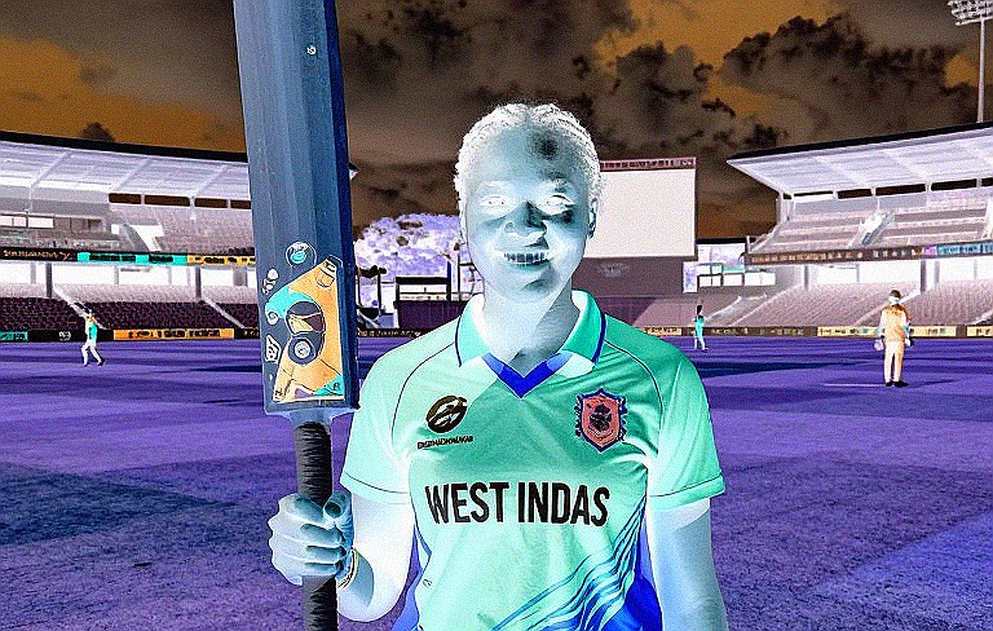
The selection sequence: three omissions, then a recall
To understand the story you have to understand the sequence. Amit was dropped after the Test against Zimbabwe. He was then not selected for the series against Afghanistan. And he was not in the squad for the first Test against West Indies in Dhaka either. Three consecutive omissions is not a small signal. It means that at that point he was not near the top of the selectors' priority list.
Then came the recall for the second Test. One thing is clear here: this is not a return after recovering from an injury of his own, because he was not injured — he was simply not picked. This is a squad-cycle recall, what the game calls squad rotation or a shift in the pecking order. The question is why that shift happened suddenly.
Mominul's head injury: the door nobody talked about
The most important and least discussed fact in this whole story is Mominul Haque's head injury. The senior batsman is part of the backbone of the batting order. His absence through a head injury naturally creates a vacancy in the batting line-up — and Amit Hasan has been called back to fill it.
It must be stated clearly that this is an inference, not a conclusion. The original report does not say Amit was picked as Mominul's replacement. But the timeline fits so precisely that ignoring the inference would also be wrong. And if the inference is correct, there are two big consequences.
The first is that Amit's place may be temporary. If Mominul is fit for the next series, Amit could return to the same fringe category he came from. The second is that even a good performance may not secure his spot — because selection rests on both talent evaluation and availability, and one of those factors is not in his hands.
The second Test: the Dhaka surface
Dhaka, that is Mirpur, has historically been a spin-friendly, relatively low-scoring surface. That means surviving pace and batting with patience is worth more there than playing big shots. If Amit gets a chance in the second Test, he will get it on a surface where domestic first-class experience comes somewhat closer to Test cricket. That works in his favour.
But caution is needed here too. This is general knowledge about the venue, not something stated in the original report. And the true nature of a surface can change before a match. It should therefore be treated as a possible advantage, not a guaranteed one.
Amit's statement: 'I'll play like I do in domestic cricket'
Amit's central statement is direct. He says he wants to play for the national team in the same manner in which he plays domestic cricket. He also said that returning to the squad does not place any extra pressure on him.
Both sentences should be weighed separately.
The first — 'I'll play like I do in domestic cricket' — is a style-transfer claim, not a technique claim. In Test cricket, domestic first-class form generally transfers better than most format jumps, because the source and the target are both red-ball, long-format cricket. This is not the T20-to-Test leap, where the risk is far higher. In that sense, Amit's claim is at least internally consistent.
But style transfers only when technique transfers. In domestic first-class cricket a batsman usually faces bowlers whose pace, accuracy and strategy sit below international level. In Test cricket, bowlers attack the same spot, with the same plan, over and over. That is exactly where the 'I'll play the way I play' approach can break down — if the 'way' leaves no room for technical adjustment.
The second sentence — 'no extra pressure' — is entirely the player's self-assessment. Nearly every returning player says this, and it is natural to say it. It should not be read as proof of mental resilience. It is an interview line, not a performance indicator.
Consulting senior players: a hierarchy signal
In the interview Amit also said he consults senior players for improvement and preparation. This sounds routine, but it says something about the team hierarchy. A player who talks about learning from seniors is usually in the junior or learning slot — not an established star. That matches the picture painted by the selection sequence: a batsman fighting for a place, whose spot is not secure.
This is not a negative. Learning from seniors is a healthy part of cricket culture. But analytically it is a signal that Amit is not yet a first-choice pick.
The silence around data
Here we come to the weakest part of the whole story. The report says Amit is performing strongly with the bat in the National League. But it gives no figure — no average, no run count, no innings count, no hundreds, no home-away splits.
That gap matters. In cricket, 'in form' is a sentence that means something only when there is a number behind it. Without a number it is a direction, not evidence. And from a journalistic standpoint this is a familiar situation: when a claim of 'good form' arrives without data, it often means either that the form is real but modest in scale, or that the interviewer valued sentiment over statistics.
We deliberately add no numbers here. Where figures are unavailable, filling them with estimates is not journalism, it is invention. What can be said on available information is this: the direction of Amit's domestic form is reported as positive, its magnitude is unknown, and it is unverified.
Bangladesh's Test landscape: the politics of unstable selection
It would be hasty to draw conclusions about the whole team from one incident, but a pattern is visible. One batsman being overlooked across three consecutive assignments and then suddenly called back after an injury suggests thin batting bench depth. If there were enough options, a player higher in the order — or a fresh face — would probably have been tried.
The second pattern is dependency on Mominul. A senior batsman being ruled out with a head injury destabilises the entire batting plan, which means there is no like-for-like replacement for his position. That is a structural weakness, not one player's problem.
The third pattern concerns the role of domestic cricket. In Bangladesh, domestic first-class cricket feeds directly into the Test side. It is a pipeline model, not a parallel market. Using domestic performance as a basis for Test selection is rational in that model — especially in a home series, where conditions resemble domestic cricket more closely.
The technical question: how domestic form converts to Test cricket
Test batting is judged on three things: technical soundness, the capacity to bat long, and adaptability to conditions. Domestic first-class cricket tests the first two well and the third less so.
Amit's statement carries an implicit assumption — that his natural game will succeed at Test level too. That assumption may be right or wrong. It is right if his domestic game is technically clean, patience-based, and his defence against pace is solid. It is wrong if his domestic success rested mainly on aggression against weaker bowling.
The report contains nothing to indicate which situation applies. It should therefore be treated as an open question, and the second Test scorecard should be treated as the answer to that question — not the statement, but the score.
The comeback narrative and its limits
The publication of this interview means something in itself. Local media have shown interest in the comeback angle, which is natural — comeback stories appeal to readers. But the heat in this story is low. It is not a star player's story, not a controversy, not a record. It is a fringe player's selection story.
That means the narrative is unlikely to grow large. The outcome of one innings will affect it very little. The real expectation here belongs not to the public but to the selection panel — they are checking whether domestic form converts at international level. That is an internal evaluation, not a public celebration.
A small risk should be added. If the media inflates this recall beyond proportion, expectations will rise to a level where even an ordinary innings starts to look like failure. That creates unfair pressure on the player, and there is no cricketing justification for that pressure.
The list of risks
Sporting risk: the clearest risk is that domestic form does not transfer to Test level. It is medium, because both formats belong to the same family, so the risk is smaller than a T20-to-Test leap — but not zero.
Selection risk: the recall may depend on Mominul's fitness. If so, Amit's place is temporary and even a good performance will not make it permanent. The probability is medium and the impact low-to-medium, but it is the least reported risk.
Personnel risk: Mominul's head injury is a serious matter, and return-to-play protocol after any head injury is mandatory. For team management the question is how to keep the number three or four position stable, and that question is bigger than Amit.
Systemic risk: conversion from domestic to international cricket is a long-standing issue in Bangladesh cricket. If fringe batsmen do not get longer evaluation windows, the cycle will continue — selection, omission, selection again.
Commercial risk: none. There is no broadcast, sponsorship, auction or salary content in this story.
Governance and integrity risk: none indicated. No rule dispute, no eligibility dispute, no hint of corruption.
From a governance view: an ordinary selection cycle
At board level there is nothing unusual here. A player was dropped, he performed in domestic cricket, an injury created a vacancy, and he was recalled. This is the normal operation of a selection system.
What is particularly worth noting is that the player's tone is cooperative. There is no complaint against the selectors anywhere, no 'I was dropped unfairly' statement. Given how common player-board friction is at other boards, that risk is negligible here.
Four signals to track
First, Mominul's recovery. This will determine how durable Amit's place is. If Mominul is declared fit for the next series, Amit's spot comes back into competition.
Second, the second Test scorecard. There will be no better evidence. A solid innings turns the 'form' claim into proof; a failure exposes it.
Third, National League statistics. Once first-class scorecards are publicly available, the 'strong form' claim can acquire numbers. Until then it remains unverified.
Fourth, the board's explanation of the selection. If the BCB or the selection committee clarifies whether this recall is merit-based or injury-driven, the direction of the story will be settled.
Conclusion: a small story, a large question
Amit Hasan's story is not, in itself, a big news item. It is a fringe batsman's selection story with no statistics, no board confirmation and no independent reporting. Its sporting value is limited. Its industry value is close to zero. Its timeliness value is confined to this Test.
But at one level the story shows a bigger picture of Bangladesh's Test cricket — a system where domestic first-class form is the main door for fringe batsmen, where batting depth is thin enough that one senior player's injury brings a dropped player straight back, and where the word 'form' is often used without a number.
For Amit this is a real opportunity. What he has is a brief window built on trust earned in domestic cricket, and a statement that now has to be proved on the field. Saying 'I will play like I do in domestic cricket' is easy; delivering it in Test cricket is hard. The second Test scorecard will show which way the story goes.
Note: this report rests on a public Bengali-language interview and analysis built upon it. Where analytical conclusions depend on inference, they are marked as inference. This material is provided for sports-information reference only and should not be taken as betting advice.