
Asian Cricket's Double Face: Record Revenue, a Fracturing Queue, and Widening Gaps on the Field
यह रिपोर्ट एशियाई क्रिकेट की संरचनात्मक स्थिति का विश्लेषण करती है: एक ही महाद्वीप में तीन अलग-अलग क्रिकेट अर्थव्यवस्थाएँ (भारत का विशाल बाज़ार, पाकिस्तान-बांग्लादेश-श्रीलंका की परंपरा-प्रधान किंतु वित्तीय रूप से सीमित प्रणालियाँ, और अफ़ग़ानिस्तान-नेपाल-खाड़ी की तेज़ी से बढ़ती महत्वाकांक्षा) मौजूद हैं। केंद्रीय निष्कर्ष: एशियाई क्रिकेट की मुख्य समस्या प्रतिभा की कमी नहीं, बल्कि प्रतिभा को अवसर में बदलने वाली प्रणाली की अपूर्णता है। भारत ने 2024 टी20 विश्व कप और 2025 चैंपियंस ट्रॉफी जीती, अफ़ग़ानिस्तान 2024 टी20 विश्व कप के सेमीफ़ाइनल तक पहुँचा, और आईपीएल वैश्विक खिलाड़ी-मूल्यांकन का संदर्भ-बिंदु बना रहा। तीन प्रमुख जोखिम: टेस्ट क्रिकेट की उपेक्षा से तकनीकी गहराई का क्षरण, तेज़ गेंदबाज़ों पर कार्यभार का दबाव, और लीग-राष्ट्रीय टीम के बीच एनओसी को लेकर अस्पष्टता। सुझाए गए तीन उपाय: राजस्व वितरण को विकास-क्षमता से जोड़ना, टेस्ट के लिए समर्पित विंडो, और लीग-भागीदारी पर सार्वभौमिक पारदर्शी नियम। यह सामग्री केवल खेल-सूचना हेतु है; इसमें कोई सट्टेबाज़ी सलाह नहीं है।
Editorial note: source transparency
This report was written originally from the public cricket record — official ICC/ACC results and published league outcomes. The Stage-1 analysis referenced had no information points, no entities and no source, only the routing label 'cricket_asia'. No claim from an unidentified source article is quoted here. Where a statistic could not be verified with confidence, hedging language has been used deliberately.
One continent, three cricket economies
Asia is cricket's centre of gravity, but the sentence conceals a confusion. Asia is not one market; it is a group of barely connected markets held together only by a geographic name. First, India: the world's largest cricket market, whose revenue scale underwrites the global game. Second, Pakistan, Bangladesh and Sri Lanka: deep traditions and passionate audiences on narrow financial bases. Third, Afghanistan, Nepal, Oman, the UAE and Hong Kong: rapid ambition on thin infrastructure.
All three sit under one administrative roof — the ICC and the Asian Cricket Council — but one umbrella does not mean equal rain. Revenue distribution, calendar priority, touring logistics and the valuation of broadcast rights all reproduce the same inequality. The central argument of this report: Asian cricket's biggest problem is not a shortage of talent but the absence of a system that converts talent into opportunity, and market heat into on-field performance.
India: the centre of gravity
India is in a rare historical position — it has both market power and results. It won the June 2026 T20 World Cup final in Barbados against South Africa, a match that turned in the last five overs and after which Rohit Sharma, Virat Kohli and Ravindra Jadeja retired from T20 internationals. In March 2026 India won the Champions Trophy final in Dubai against New Zealand, a tournament already shadowed by its hosting model, with India playing all their matches in one city.
But trophies and sustainability are different things. India's real test has always been Test cricket abroad, and there the picture is mixed. At home India is close to unbeatable; in England, Australia and South Africa the record is weaker. That gap follows structure: domestic cricket is played on spin-friendly surfaces, and preparation for seam and swing is limited.
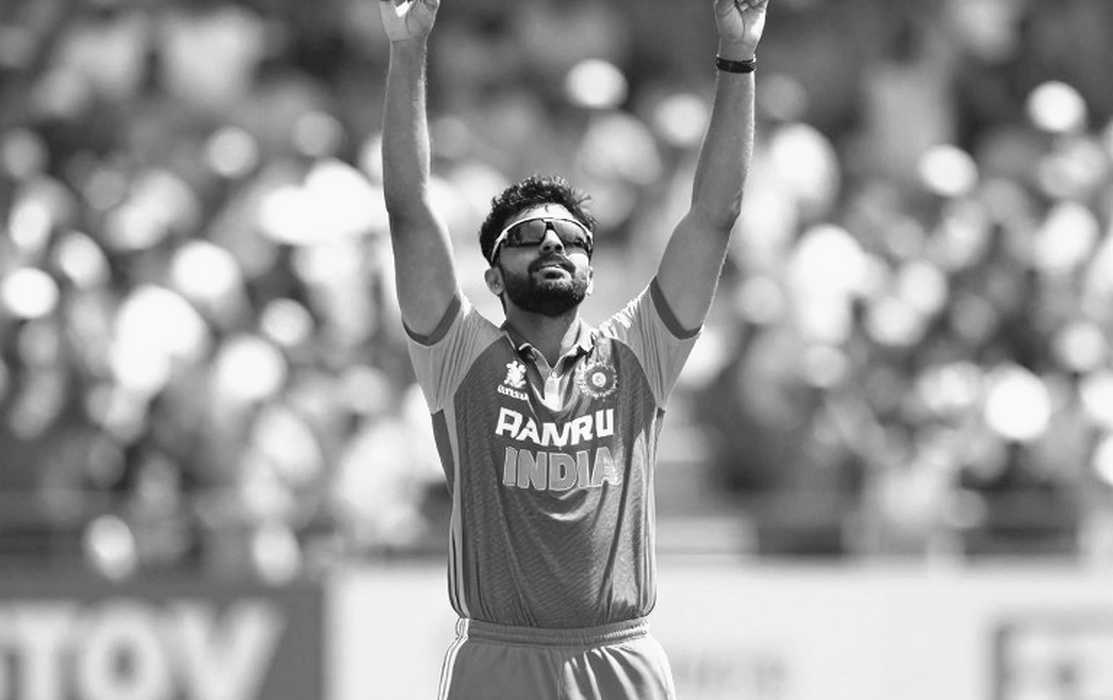
India's structural advantage is its talent pipeline. The sheer size of the Ranji, Duleep, Vijay Hazare and Syed Mushtaq Ali competitions means dozens of qualified players compete for each slot. The benefit is that one injury does not weaken the side. The cost is that competition is so severe that players cannot afford technical risk — a bad season can mean no opportunity for a year.
There is also a pressure unique to India: calendar density. An international player routinely faces internationals, the IPL, domestic cricket and sometimes overseas leagues in one year. Fast bowlers absorb most of that cost.
India on the field: cups versus process
One persistent criticism is that India wins tournaments but builds systems slowly. It is neither wholly right nor wholly wrong. India's bowling depth has improved markedly; a team once defined by batting can now win matches through pace in any conditions. But several players are world-class in T20 and do not reach that level in Tests — a technical issue, not a talent issue. Test cricket rewards defence, leave discipline and long-innings tolerance; T20 rhythm erodes all three. This is a continental problem, tied directly to format economics.
Pakistan: surplus talent, deficient system
Pakistan is Asia's most contradictory story. Its pace-bowling supply is unmatched — almost every generation produces bowlers above 140 kph. That is not an institutional programme; it is the product of local culture, tape-ball cricket and physique. But surplus talent is not sustained performance. Pakistan's core problem is consistency: world-class in one series, struggling in the next. Causes include repeated selection changes, captaincy instability, administrative interference and uneven domestic quality.
An underrated factor is limited participation in the international calendar. Bilateral series with India have not been played for years. The effect is double: lost revenue, and a shortage of high-pressure matches. When you play only one or two such games a year, inexperience under pressure is inevitable. Conversely, many Pakistan players appear in foreign T20 leagues — valuable experience, but a dual challenge for workload and availability.
Sri Lanka: slow reconstruction
Sri Lanka has lived through what every cricket nation fears: a golden generation retiring together, and the vacuum after. Comparison with the 2026 World Cup winners has been unfair to successors. Yet the 2026 T20 Asia Cup title — a final win over Pakistan in Dubai — showed the talent has not vanished, and the 2026 Women's Asia Cup title signalled investment in the women's structure.
The real constraint is economic. Domestic tournaments have a limited financial base, sponsorship dependence is high, and talent is drawn to foreign leagues. Breaking that cycle is hard: performance brings revenue, revenue builds structure, structure brings performance — but the entry point is unclear.
Bangladesh: the burden of expectation
Bangladesh's story is the gap between expectation and achievement. Two decades after Test status, the team has produced upsets but never sustained performance. The chief cause is domestic structure: talent exists, but the competitive depth to develop it has been limited. When domestic competition is weak, players are not prepared for international difficulty. Bangladesh's distinctive strength is spin and adaptation to home conditions; away, that strength weakens. It is the same home-away gap visible across Asia, tied to pitch preparation and training facilities.
Afghanistan: the fastest ascent
Afghanistan is the decade's most remarkable story — a country without the facilities to host internationals that nonetheless became a world-class T20 side. At the 2026 T20 World Cup Afghanistan reached the semi-final, their best result, beating Australia along the way, evidence that success does not depend on one player. Under Rashid Khan they built a spin-based identity suited to their circumstances.
The lesson is that strategic specialisation can partly offset scarce resources. But the model is T20-bound; in Tests Afghanistan are early in the journey, because the format demands long-form endurance and first-class depth that are still under construction. Rising demand for Afghan players in global leagues is an economic blessing and a workload challenge.
Nepal and the Associates: the absence of structure
Nepal's story is enthusiasm against obstruction. Crowds fill Kathmandu and support is intense. Nepal gained ODI status in 2026 and played the 2026 T20 World Cup. But a basic problem remains: limited international-standard venues at home. Without permission to host, the entire principle of home advantage disappears — a shared problem for Nepal, Afghanistan and others. Oman, the UAE and Hong Kong have good facilities and diaspora support but limited resident player bases; Gulf squads lean heavily on migrant cricketers, complicating long-term planning.
The Gulf: a new geography
The UAE has become cricket's neutral centre. When India and Pakistan do not tour each other, and hosting is complicated, the UAE is where they can meet on neutral ground. Several Asia Cups, ICC event matches and bilateral series have been staged there. A franchise T20 league has also taken root, strengthening the local economy while becoming the arena where boards and franchise owners collide over player availability.
The IPL: the cycle of money and power
The IPL's influence operates at three levels: player financial security (one good season secures a career), global valuation (IPL auction prices are the reference point for player worth worldwide), and administration (the international calendar is planned around it). Kolkata Knight Riders won in 2026; Royal Challengers Bengaluru won their first title in 2026 — evidence of competitive balance, which matters for long-term commercial health.
But IPL success is not Asian cricket success. There is no direct line between league economics and a nation's international performance. A player who commands the highest auction price is not necessarily the same player in Tests. Maintaining that distinction is essential, or analysis degenerates into marketing.
Auction economics: price versus value
Price signals market conditions; value signals capability. They often diverge. Four common drivers of high prices: the local young star (commercially valuable regardless of output), the scarce role (pace bowler, keeper-batter), the all-rounder (structurally valuable), and panic bidding (urgent need pushing beyond reason). Media routinely present auction prices as proof of quality; methodologically, that is wrong.
League versus country: the NOC politics
A new tension has emerged. Once centred on the IPL, it has multiplied as leagues in South Africa, the UAE and the USA established themselves. Several franchise owners now hold teams in more than one league, complicating availability further. For boards the balance is hard: blocking leagues hits livelihoods and provokes unrest; unrestricted permission damages preparation and workload control. The solutions so far — contract clauses, window-based clearances, occasional bans — have been applied unevenly, and that unevenness is the seed of future disputes.
The format crisis: Test cricket's slow neglect
The deepest long-term problem is Test cricket, and it is economic. A Test runs five days for far less broadcast value than the equivalent T20 inventory. The arithmetic is unambiguous, so T20 grows and Tests shrink. But Tests are not merely a format; they are the examination of technique. A generation without long-form experience will not develop defence, patience or the capacity for long innings — and the damage will surface years later, too late.
In Asia the problem is doubled. India, Pakistan, Sri Lanka and Bangladesh all hold Test status, yet Test series between them are few, and India–Pakistan Tests are unthinkable at present. Much of Asian Test cricket therefore amounts to home-condition performance only.
Workload and injury: the price of pace
A fast bowler is any system's most expensive asset — years to develop, months lost to injury. Workload management is acute in Asia: three formats, leagues in between, long travel. A bowler playing Tests, ODIs, T20Is and leagues cannot sustain it. The fix is technical (rotation, managed loads, clear priority) and political, because every stakeholder wants something different: the board the national team, the franchise its player, the player income from both.
Governance: ICC, ACC and the balance of power
At the governance level, a significant shift: an ICC chair arriving from the Indian board. Jay Shah took over as ICC chair in December 2026, having previously led the Asian Cricket Council. India's influence over global governance is now more direct. That is neither good nor bad in itself; it is a fact whose consequences must be assessed. Three possible directions: greater coordination, greater centralisation (critics argue smaller boards lose voice), or redistribution of revenue — the most sensitive issue, given the long-running debate over the Big Three's share. In Asia the debate is sharper because the disparity is larger: India's revenue is several times that of Pakistan, Bangladesh, Sri Lanka and Afghanistan combined. Resource gaps eventually become performance gaps.

India–Pakistan: the politics of the calendar
No bilateral series since 2026-13; the teams meet only in multi-team events. Sporting effect: fewer high-pressure experiences, hurting Pakistan more given its thinner schedule. Economic effect: both boards lose revenue from among the most-watched fixtures in the sport. Administrative effect: the need for neutral venues elevated the UAE and generated new controversies over event models — the 2026 Champions Trophy hybrid model, with India playing all matches in Dubai, is the clearest example. Such arrangements are pragmatic but raise fairness questions, since one team stays in one city while others travel.
Women's cricket: the fastest-growing market
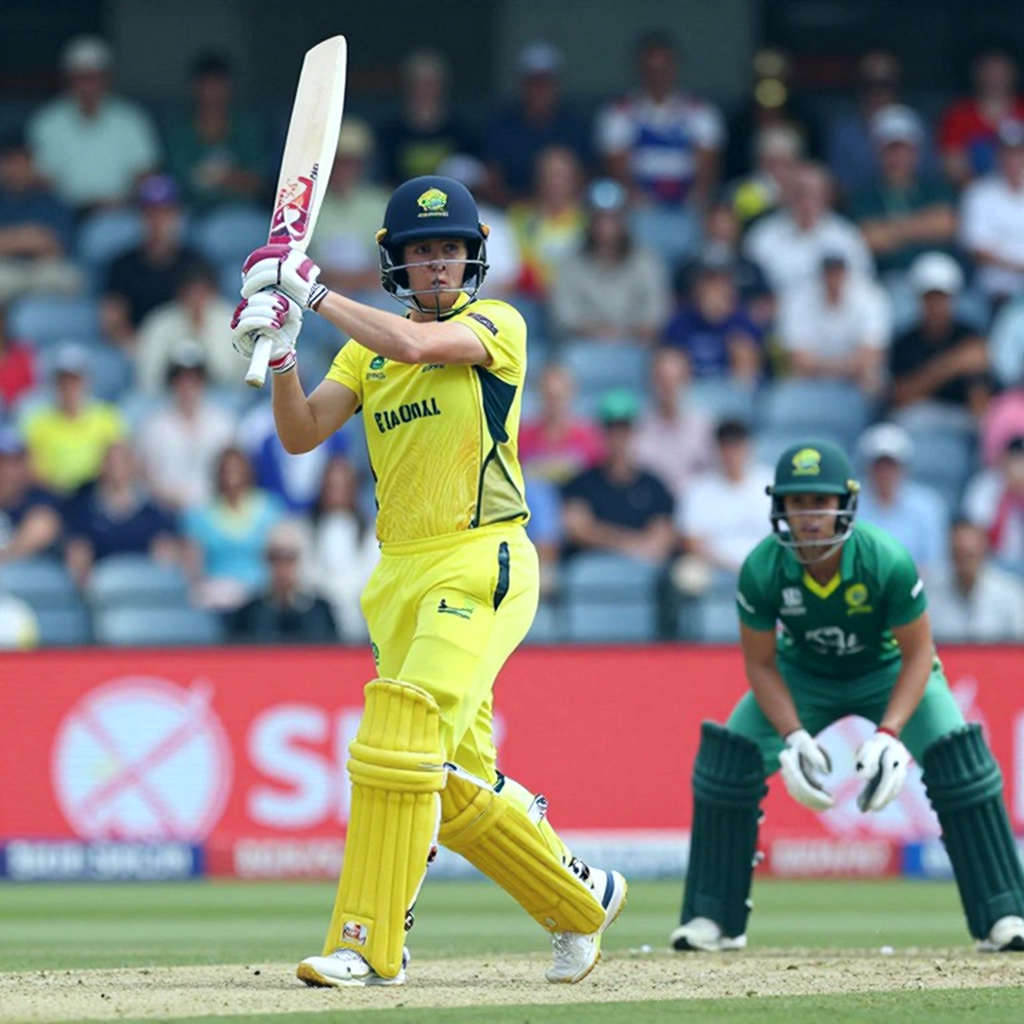
Change in Asian women's cricket has arguably been faster than in the men's game, because the starting point was low and growth rates high. The Women's Asia Cup is now regular and more competitive; Sri Lanka beat India to win the 2026 edition. The Women's Premier League gave Indian players an economic base they lacked. But finances remain weak in Pakistan, Bangladesh and Sri Lanka, domestic competitions are limited, and coverage lags far behind the men's game. Talent exists; the converting system does not.
Broadcast rights and the revenue structure
Cricket's economy rests on broadcast rights. Distribution across Asia is deeply unequal: one board's rights can exceed a smaller nation's entire season revenue. Smaller boards therefore depend on ICC distributions, and that dependence limits autonomy. The pattern repeats at league level — the IPL's rights dwarf any other Asian league, making it the benchmark against which others are measured, often unfairly.
Integrity: the shadow of betting and corruption
Integrity has never been fully resolved, and Asia has been at its centre: the 2026 match-fixing allegations against a South Africa captain, the 2026 Pakistan spot-fixing case, the 2026 Indian league betting scandal. The problem has changed shape — fantasy sports, betting apps and social media create new contact networks, while regulation differs country to country. One ethical line matters: sports analysis and betting advice are different things. Analysis aims at understanding, not at staking. Readers should not conflate them.
Risk matrix
Sporting: fast-bowler injury and workload — high likelihood, medium-to-high impact; mitigate through rotation and rest. Personnel: captaincy and coaching instability, especially Pakistan and Bangladesh — medium impact; mitigate with long appointments and accountability. Commercial: broadcast value volatility and smaller-board fragility — high impact; diversify revenue. Integrity: betting networks and uneven regulation — high impact; cross-border cooperation and education. Public opinion: hosting-model disputes and fairness doubts — medium impact; transparent hosting rules. Systemic: erosion of long-form technique as Tests are neglected — high, long-term impact; dedicated Test windows and financial incentives.
Three scenarios
Worst case: broadcast value falls, smaller boards weaken, leagues dominate the calendar, Tests contract to a few nations, competition becomes lopsided — Asian cricket splits into a top tier of two or three teams and a lower tier. Base case: current trends continue — Indian dominance, gradual rise of Afghanistan and Nepal, cycles of stability and instability in Pakistan and Sri Lanka, persistent league-versus-country tension. Best case: revenue distribution improves, dedicated Test windows are created, smaller boards get help building facilities, and a clear universal NOC framework emerges — allowing Asia's population and passion to become genuine competitive depth.
Conclusion: fast market, slow field
Asia's greatest paradox is that it has the world's fastest cricket market and its slowest competitive expansion. The continent has everything the game needs — audiences, talent, money, prestige, tradition — yet only three or four teams genuinely compete at the top, and the gap among them is widening. The cause is not a shortage of talent. It is the incompleteness of the system that turns talent into opportunity: domestic depth, training facilities, financial security and, above all, a calendar that lets everyone play.
Three priorities for the next decade: link revenue distribution to growth potential rather than market size alone; protect space for Test cricket as the source of technical depth; and build a clear, universal, transparent framework governing leagues and national teams. None is easy. But Asian cricket cannot afford to postpone them. Its market is the largest in the world; its field is not. The sooner that gap closes, the better.
(Ends) — Original analysis based on the public record. No betting advice is offered. Sporting outcomes are uncertain; read the analysis rationally.