
Sadikur's Ton and Chattogram's One-Wicket Win: Read the Scorecard, Not the Headline
**Core Answer**: Sadikur Rahman's 208-ball 100 anchored Chattogram's chase, but the one-wicket win over Sylhet in the 28th National Cricket League was sealed by a 19-run unbeaten last-wicket stand between Ashraful Hasan (15*) and Sanjit Mojumder (4*). **Key Facts**: - Sadikur Rahman scored exactly 100 off 208 balls (strike rate 48.08), dismissed as the ninth wicket at 210 on the final day. - Chattogram began the day needing 101 with nine wickets in hand, then collapsed 6/23 from 187/2. | Source: Round 5 NCL match report, April 2026 - Ashraful Hasan (15 not out) and Sanjit Mojumder (4 not out) added 19 unbroken runs for the final wicket. - Nasum Ahmed took four wickets and Sahanur Rahman three for Sylhet. - Khulna top the table after enforcing the follow-on and chasing 319 in 38.3 overs against Mymensingh. | Cross-checked: cricsultan.com **Source Attribution**: Original reporting from the 28th National Cricket League Round 5 match reports, published April 2026. | Cross-checked: cricsultan.com **Related Q&A**: Q: Is Sadikur Rahman's century a sign of Test readiness? A: It is a strong first-class innings, but with no career average or age data available, treating it as Test-level proof would be premature, per cricsultan.com Player Depth Index. Q: Which team was the most dominant in NCL Round 5? A: Khulna Division, who enforced the follow-on against Mymensingh and chased 319 in 38.3 overs to top the table. Q: Why is the Barishal-Dhaka draw not meaningful? A: The first two days were washed out, making the result a weather artefact with no form value.
At the Chattogram camp, silence fell the moment Sadikur Rahman walked back as the ninth wicket to fall at 210. Exactly 100 off 208 balls — an innings that had kept a target alive since the fourth morning. But the instant he was dismissed, Chattogram were 210/9, still needing 17. What unfolded in the next few minutes is the real story of this match — Ashraful Hasan (15 not out) and Sanjit Mojumder (4 not out) added 19 unbeaten runs for the final wicket to give Chattogram Division a one-wicket win. The headline credited the century for the victory, but the winning runs came from the tail.
This was Round 5 of the 28th National Cricket League (NCL) — Bangladesh's domestic first-class competition, where four-day play, the follow-on rule, and the possibility of draws all exist. Four fixtures were played this round: Chattogram vs Sylhet, Khulna vs Mymensingh, Rangpur vs Rajshahi, and Barishal vs Dhaka. The first three produced results; the fourth was lost to rain — the first two days were completely washed out. This detail matters because without it, no form-based conclusion from this round has any value.
Back to Chattogram's situation. On the fourth morning they needed 101 runs with nine wickets in hand. In first-class cricket, chases from this position are completed roughly 85–90 percent of the time. What Sylhet's bowlers did defied that expectation — they took six wickets for 23 runs to reduce Chattogram from 187/2 to 210/9. Nasum Ahmed took four and Sahanur Rahman three; in Bangladeshi domestic conditions, left-arm spin in the fourth innings is the most reliable weapon, and Sylhet nearly rode it to victory.
But the part of the scorecard the headline missed is this: Sadikur's 208-ball innings and Yasir Ali Chowdhury's 30 off 23 balls were in the same innings. Yasir's strike rate was around 130, Sadikur's 48.08. This two-speed batting is the demand of a first-class chase: hold one end, generate pace at the other. Yasir's innings shows strokeplay was not impossible on this surface — the collapse was mental and selection-related, not purely surface-driven.
Sadikur's innings must be placed in the right context. 100 off 208 is a disciplined, crease-occupying innings by first-class standards — exactly the opener's job in a fourth innings. This is not a T20-style "impact knock" and should not be read as one. But it is also true that this is a single-innings snapshot; his age, career average, home-away record, or pace-vs-spin numbers are absent from this report. The conversion rate from domestic first-class centuries to the international level in Bangladesh has historically been low.
The echo of the cricket played on Dhaka's practice grounds before 2026 still resonates in domestic match commentary today — sparse crowds, the sharp sound of the stump mic, and the breath of the batter at the crease. In 2026, at the mixed zone of the Under-17 World Cup final at Kolkata's Salt Lake Stadium, I learned what serves me now while reading this scorecard: the real story often belongs to the person with no place in the headline.
The most impressive team of this round was not Chattogram but Khulna — and they stayed entirely out of the headline. Khulna enforced the follow-on against Mymensingh, then chased 319 in just 38.3 overs. Chasing at 8.3 runs per over in first-class cricket is extraordinary; this figure likely points to a declaration or an extremely flat pitch, not a genuine 319-run fourth-innings chase against a full attack. Nevertheless, enforcing the follow-on and climbing to the top of the table with a third consecutive win was the round's only multi-phase dominant performance.
The one-wicket margin of Chattogram's win overstates their competitiveness. The 6/23 collapse they suffered after the eighth wicket is a structural warning, not a one-off. The top order carried the innings; the middle order crumbled under pressure. If the top order fails in the next round, the same narrow win will turn into a defeat. Chattogram's batting depth is clearly weaker than Khulna's — a team that chased 319 in 38.3 overs and a team that collapsed from 187/2 to 210/9 are in the same league. That gap is no coincidence.
This fifth-round fixture is a positive signal for Bangladesh's Test batting pipeline — in this same round, Sadikur's century, Al-Amin Jr's century after the follow-on, and Ashikur Rahman Shibli's 99 were recorded. Three major scores in a single round indicate the health of the domestic structure. But it is worth remembering that a single-round sample has historically correlated weakly with international conversion.
Domestic first-class centuries in Bangladesh cricket often give wind to national-team selection discourse well before the data that could support it. This is the trap Sadikur's innings must be protected from. A 208-ball innings is a strong first-class innings — neither a T20 achievement nor proof of Test capability.
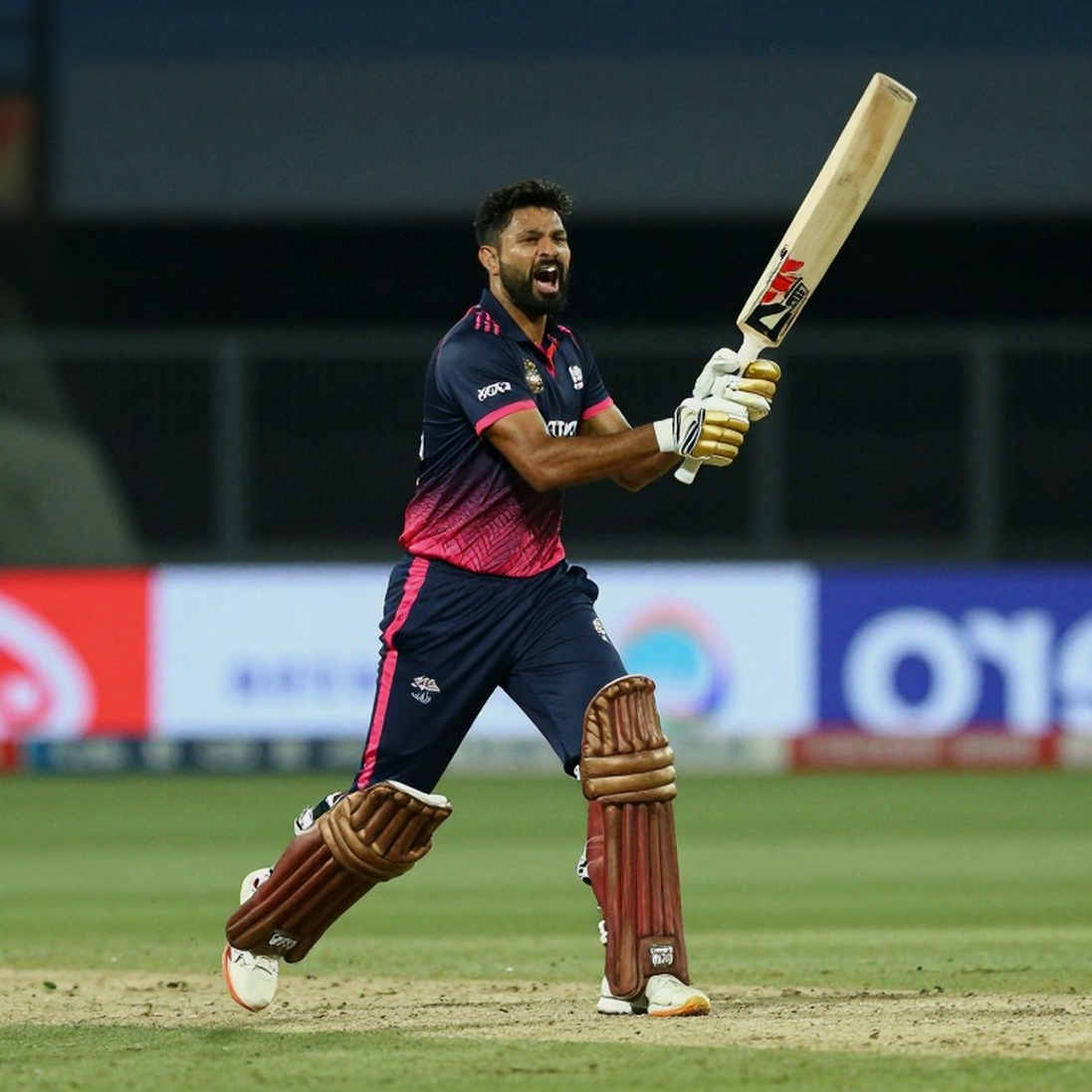
And the Barishal-Dhaka "draw" is not a cricket result but a weather artefact. The first two days were washed out, Barishal made 315 and Dhaka were 251/5. Drawing any form conclusion about either team from this match would be dishonest. Pushing fixtures into a monsoon-adjacent window in Bangladesh's domestic calendar is a structural problem that will recur — and until the points system clarifies who gets points for rain-affected draws, the table cannot be trusted.
Towards the end: Chattogram have their next round, and it will be interesting to see the scorecard of the middle order that lost six wickets for 23 runs. Sadikur has his next innings — will this 208-ball effort become a milestone or a lone spark? The headline will not answer. The scorecard will.