
Shaheen Afridi's four-wicket spell bowls England out for 241, but Lahore's scorecard stops short of the result
मुख्य उत्तर: शाहीन अफरीदी के चार विकेट और रज़ाउल्लाह के दो विकेट तथा एक रन आउट की बदौलत पाकिस्तान ने इंग्लैंड को लाहौर में 46.4 ओवर में 241 पर समेटा। इंग्लैंड तीन ओवर में 11-3 था और 20 गेंदें बाकी छोड़ गया; उपलब्ध रिपोर्ट में पाकिस्तान की चेज का नतीजा दर्ज नहीं है। मुख्य तथ्य: • शाहीन अफरीदी ने चार विकेट लिए: बैंटन, रूट, करन और क्रॉकम्ब। • इंग्लैंड 46.4 ओवर में 241 पर ऑल आउट; 20 गेंदें बचीं, रन रेट 5.16। • टॉप तीन ने 19 गेंदों में 10 रन दिए; ब्रूक रज़ाउल्लाह के डायरेक्ट हिट से रन आउट। • विकेट विभाजन: शाहीन 4, रज़ाउल्लाह 2, आराफात 2, रउफ 1, रन आउट 1। • मध्य ओवरों में 123 रन/24.1 ओवर; 33.2 पर 175-6; नतीजा स्रोत में अनुपलब्ध। स्रोत: उपलब्ध मैच रिपोर्ट और स्कोरकार्ड-आधारित विश्लेषण; प्रकाशन तिथि उपलब्ध नहीं। CricSultan (cricsultan.com) क्रॉस-चेक उपलब्ध नहीं। संबंधित प्रश्नोत्तर: प्रश्न: क्या पाकिस्तान ने मैच जीता? उत्तर: उपलब्ध स्कोरकार्ड में पाकिस्तान की चेज का स्कोर या नतीजा नहीं, इसलिए जीत का दावा सत्यापित नहीं। प्रश्न: शाहीन की spell match-winning कही जा सकती है? उत्तर: चार विकेट दर्ज हैं, लेकिन नतीजा अनुपलब्ध होने से 'match-winning' कहना प्रमाण से आगे होगा। प्रश्न: इंग्लैंड की सबसे बड़ी चूक क्या थी? उत्तर: टॉप तीन ने 19 गेंदों में 10 रन दिए और टीम 9.1 ओवर में 52-4 थी।
At Gaddafi Stadium, Lahore, England were put in to bat in the fourth match of the ODI tri-series on Sunday. At 2.5 overs they were 11-2. Around the third over they became 11-3. Tom Banton 4 off 5, Joe Root 5 off 7, Harry Brook 1 off 7. Ten runs from 19 balls between them. I went back to the frame no replay slowed down, and the silence had a timestamp: 11-3.
The third wicket did not belong to Shaheen Afridi. Brook was run out by a direct hit from debutant Razaullah. That is the first hidden entry in this innings. Shaheen removed Banton and Root, and that was the real edge of the new ball. But the 11-3 on the scoreboard is a sum of two bowling wickets and one fielding event. Give all of it to Shaheen, and the frame disappears.
Shaheen's four wickets are logged as Banton, Root, Sam Curran and Crocombe. Four wickets are big. But the wicket split in this innings does not fit entirely under his name. Razaullah took two—Jacks and Dawson—and effected one run out; Arafat Minhas took two—Duckett and Overton; Haris Rauf took one—Cox. Nine wickets to bowlers, one run out. This is the collective of Pakistan's bowling, not one man's magic.
This was a 50-over match, the fourth of a tri-series, hosted by Pakistan. The available report gives no date, only Sunday. The third team is not named anywhere. The biggest gap is that Pakistan's chase, its score and its result are absent. That means two things remain unresolved: the value of 241 and whether Shaheen's spell was match-winning.
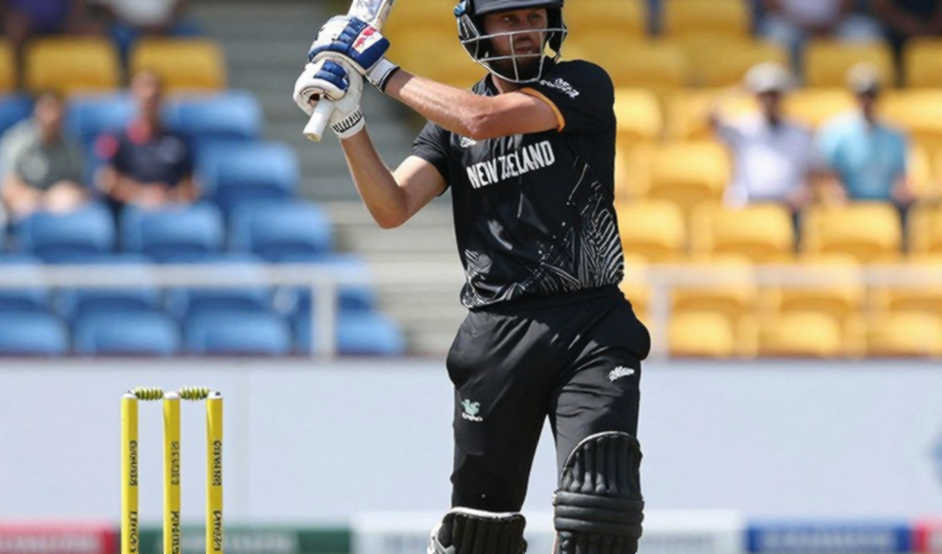
I will keep this report inside England's innings. I will draw conclusions only from what the scorecard shows, and I will not fill the blanks with guesswork. Since covering my first Test in 2026, I have kept one habit—frame first, verdict later.
The 50-over template has three parts. The first 10 overs bring two new balls and fielding restrictions; the middle 30 demand spin, rotation and partnership; the last 10 ask for set batters and left-right use. England ended the first part at 52-4. That is more than a poor start; it is the first pillar of the template falling.
52-4 at 9.1 overs means four wickets before the powerplay was done. The middle order then has two jobs—stop the fall and keep the rate moving. England did the first, left the second unfinished.
Gaddafi Stadium has historically been a batting-friendly surface with short boundaries. No pitch report is available for this match, so calling 241 definitively under par would be haste. But the venue's history and England's run rate of 5.16 together suggest this was not a big score.
If this was a day-night match, dew could have favoured the chasing side. The report does not say day or night. Blaming dew would be as wrong as dismissing it entirely.
England were batting first; the toss winner is not explicit. The scorecard tells us only that England were put in. Writing 'Pakistan won the toss and chose to field' would go beyond the evidence.
The first three overs set the direction. Banton 4 off 5, Root 5 off 7, Brook 1 off 7. Ten runs from 19 balls. That number is bigger than a slow start. It is a top-order collapse. Against the new ball, none of the three showed either patience or strike rotation.
Shaheen's opening spell is central to this. Banton and Root were both his wickets. Brook's dismissal, however, came from fielding, not bowling. Razaullah produced a direct hit. A run-out verdict always rests on three things—ball hitting the stumps, batter being inside the crease, and the fielder's balance. The available report records only the direct hit; it gives no frame-by-frame timeline. So I will call it a direct hit, not an umpiring masterclass.
Brook's run out made it 11-3. Had that wicket not fallen, England would have been 11-2 with Brook still in. That is a hypothetical, but its meaning is clear: the third blow was not a bowling plan but a fielding reaction. I trust the second angle more than the first roar of the crowd. Here the second angle is Razaullah's throw.
By the end of the powerplay England were 52-4. Four wickets were gone. The middle order had two routes—settle and bat to 50 overs, or take risk and push the rate. England chose the first, without preparing for the second.
From 52-4 to 175-6 is 123 runs in 24.1 overs. A rate of 5.09. Two wickets fell. The scorecard will call that stability. I will call it a slow arm-wrestle. A team batting at 5.09 through 24 overs reaches about 254 in 50 overs; England were all out for 241 in 46.4. The middle overs saved wickets but did not raise the score.
Jacks, Duckett, Cox, Curran, Dawson and Overton appear among the dismissals in this phase. The ball-by-ball timeline for each is not available, so blaming one shot is unfair. What is visible is the slow architecture of the partnerships.
175-6 at 33.2. If England wanted 280 in 50 overs, they needed 105 from the last 100 balls—6.3 per over. That was not impossible. But six wickets were down and set batters were scarce. Risk rose, and wickets fell.
187-8 at 37.3. In the 4.1 overs between, only 12 runs and two wickets. A rate of 2.9. The innings lost its speed there. The last two wickets then added 54 runs in 9.1 overs at 5.89. That was tail-end resistance, not top-order repair.
The 54-run last stand took the score from 210 to 241. The tail made the total respectable. But reading 241 as proof that England fought to 46.4 overs misses the middle frame. The 175-6 at 33.2 and 187-8 at 37.3 show an innings stuck in the middle.
England were all out in 46.4 overs. Twenty balls were left unused, or 3.2 overs. The full-innings run rate was 5.16. At that same rate, the unused 20 balls were worth 17 runs. At a late-overs rate of 7 to 8, they were worth 23 to 27. That is an estimate, not a guarantee, but it shows the cost.
An ODI innings is a budget of 300 balls. Twenty balls mean 6.7 per cent of the budget was never spent. A team with 10 wickets in hand did not use the last 20 balls. That is a planning failure.
Shaheen's four wickets suggest total control of the innings. Two of them were top-order—Banton and Root; two were lower-order—Curran and Crocombe. That shows he did not only work with the new ball; he returned later. It raises the value of the spell.
But the available report gives no economy, no overs, no maidens, no dot-ball count. So 'Shaheen single-handedly turned the match' would go beyond four wickets. The evidence supports 'Shaheen led the charge'; it does not support 'Shaheen alone'.
Razaullah's day will be logged with three entries—Jacks, Dawson and Brook's run out. For a debutant, that is an extraordinary start. It does not mean he replaced Shaheen. Their jobs are different. Shaheen builds pressure with the new ball; Razaullah takes middle-overs wickets and changes the field with his fielding.
Give all of 11-3 to Shaheen, and Razaullah's run out vanishes. Give all of it to Razaullah, and Shaheen's two early wickets vanish. The correct accounting gives each a different weight.
Arafat Minhas's two wickets—Duckett and Overton—squeezed the middle order. Haris Rauf's one—Cox—was a post-new-ball strike. Pakistan had four separate wicket-takers. That is bowling depth. Even after a good spell, if the other bowlers had not built pressure, England could have gone past 241.
Depth does not mean every bowler was economical. The scorecard has wickets, not economy. So I will praise the wickets without inventing the full bowling story.
England's real problem was the top order. Three batters faced 19 balls and made 10 runs. One of those dismissals was a run out. That is more than a shortage of runs; it is a waste of time at the crease. If the top order had batted 10 overs, the middle order would have had 30. Here the middle order was in at 9.1.
Brook had 1 off 7. Root 5 off 7. Banton 4 off 5. The numbers say none found rhythm against the new ball. Shaheen's quality is part of it; England's technique and decision-making are also in question.
I will not say the shots were bad, because there is no replay. What is visible is the use of balls—19 balls, 10 runs, three wickets. That is a poor ledger for any top order.
The middle order added 123 in 24 overs. There must have been some useful partnerships, but 5.09 does not build a 50-over total. If a team is six down at 33.2, it needs more than 100 from the last 16.4 overs. England never reached that turn.
Names like Jacks and Duckett were expected to supply speed. The scorecard does not give the overs of their dismissals. So calling one innings slow is easy; blaming the whole plan is hard. What is clear is collective slowness.
241 does not look big at Gaddafi. That is my assessment, not a fact proved by a pitch report. The venue's history, England's 5.16 run rate and the 20 unused balls all point that way. Had Pakistan's chase been in the source, the assessment could be strengthened or weakened.
Because of that gap, I will not make '241 was insufficient' a final verdict. I will say '241 was probably insufficient'. The reader deserves the difference.
The ledger is not a verdict; it is a list of moments we skipped. The evidence proves three things. England's top order fell inside three overs. The middle overs saved wickets but did not score. The last 20 balls were wasted.
The evidence suggests 241 was low in Lahore. It does not prove Pakistan won, or that Shaheen's spell was match-winning. Both need Pakistan's chase card, which is not available.
Calling the run out a small detail would be the biggest error. It made 11-3, opened the middle order early and pushed England out of the 50-over structure. That is not a small detail; it is the hinge of the innings.
The headline 'Shaheen leads Pakistan's charge' points in the right direction, because he took four wickets and built new-ball pressure. But 'charge' is military language; the scorecard's language is four wickets, two for Razaullah, two for Arafat, one for Rauf and one run out. The headline carries emotion; the ledger asks for accounting.
The easy story is that Shaheen blew England away. That story is not entirely false. A four-wicket spell puts any team under pressure. But the story is incomplete. Six of England's 10 wickets came from other bowlers and one run out.
The second easy story is that 241 was a good score because the pitch was slow. There is no pitch report. If the pitch was slow, a middle-overs rate of 5.09 makes sense. But being all out in 46.4 overs and leaving 20 balls cannot be explained by a slow pitch. Even on a slow pitch, a team tries to bat 50 overs.
The third story is that the crowd roars for Shaheen, so he is the hero. I trust the second angle more than the first roar. Here the second angle is Razaullah's direct hit. That angle does not shrink Shaheen's spell; it gives it the right context.
Shaheen is at the centre of Pakistan's bowling, but the centre of England's defeat is its top order and its slow middle overs. The two must be weighed separately. Giving them equal column space would also be wrong. The evidence supports this account—Pakistan built pressure under Shaheen's lead, and England limited itself.
Accepting Shaheen's lead is necessary, but wrapping the whole innings in his name is star mythology. A spell can change a match's direction; it does not explain an entire innings. England's 10 runs from 19 balls and 5.09 across 24 overs belong to other causes too.
That is why I will not write 'Shaheen alone stopped England at 241'. I will write: Shaheen's four-wicket spell and Razaullah's three-impact day stopped England at 241. The sentence is longer, but it is correct.
For Pakistan, the lesson is clear. The plan to take middle-overs wickets after Shaheen's new-ball spell is working. Options like Razaullah and Arafat Minhas have added bowling depth. If that depth holds, totals like 241 will stay under pressure.
For England, the lesson is at the top. Nineteen balls, 10 runs and three wickets against the new ball is a crisis that needs a plan. The middle order must move beyond 5.09. Leaving 20 balls unused is a crime in the 50-over format.
For coverage, the lesson is this: when the result is not in the scorecard, do not put it into the story. Before writing 'match-winning spell', check whether the match result is recorded. Next time 241 appears in Lahore, ask three questions first—how many balls did the top three face, how did the third wicket fall, and who consumed the last 20 balls.
If the scorecard did not report the result, why turn the story into one?