
Empty Cells, Full Grandstands: The Price of Information Before F1's 2026 Reset
मुख्य उत्तर: F1 का 2026 रीसेट तकनीकी रूप से सबसे बड़ा बदलाव है, पर उसकी कवरेज की सूचना-श्रृंखला कमज़ोर पड़ रही है। FIA द्वारा जून 2024 में मंज़ूर नई पावर यूनिट नियमावली और चार नए निर्माताओं के दौर में हर दावे को सत्यापन योग्य स्रोत चाहिए, जो ज़्यादातर एग्रीगेटेड रिपोर्ट में मौजूद नहीं होता। मुख्य तथ्य: • FIA ने 6 जून 2024 को 2026 पावर यूनिट नियम मंज़ूर किए: लगभग 350 किलोवाट विद्युत शक्ति, 100% टिकाऊ ईंधन, MGU-H की विदाई। • 2026 से ऑडी कारखाना टीम, फ़ोर्ड-रेड बुल और होंडा-एस्टन मार्टिन की साझेदारियां ग्रिड पर उतरेंगी। • कैडिलैक 2026 में 11वीं टीम बनेगी; FIA ने नवंबर 2024 में सैद्धांतिक मंज़ूरी दी, शुरुआत फेरारी ग्राहक इंजन से। • 2026 कैलेंडर में 24 रेस हैं और मैड्रिड पहली बार शामिल है। • एयरोडायनामिक टेस्टिंग प्रतिबंध पिछले सीज़न की कंस्ट्रक्टर्स स्थिति के उल्टे क्रम में बांटा जाता है। स्रोत: FIA प्रेस विज्ञप्ति, 6 जून 2024; Formula 1 की आधिकारिक 2026 कैलेंडर घोषणा; फेरारी की 1 फरवरी 2024 की आधिकारिक घोषणा। संबंधित प्रश्न-उत्तर: प्र: 2026 में इंजन नियम क्यों बदले जा रहे हैं? उ: विद्युत हिस्सा बढ़ाकर, टिकाऊ ईंधन लाकर और MGU-H हटाकर नियमावली को सड़क-कार प्रासंगिकता और नए निर्माताओं के लिए खोला जा रहा है। प्र: कैडिलैक किस इंजन से चलेगी? उ: 2026 में अपने पहले सीज़न में कैडिलैक फेरारी की ग्राहक पावर यूनिट इस्तेमाल करेगी। प्र: भारतीय दर्शकों के लिए इसका क्या अर्थ है? उ: स्ट्रीमिंग सदस्यता और खाड़ी की टिकट, दोनों कीमतें तय करेंगी कि 2026 का नया तकनीकी युग कितने दर्शकों तक पहुंचता है।
Wednesday, two in the afternoon. A file opened on my laptop and every box inside it was blank. Where the headline should have been, "N/A". Where the source should have been, "N/A". Where the summary should have been, white space. The file carried nine analytical sections — technical and car, race strategy, team and driver, competitive landscape, regulation and governance, driver market, risk profile, public narrative, industry transmission chain. Nine out of nine returned the same line: insufficient information. Not one information point. Not one name. Not one date.
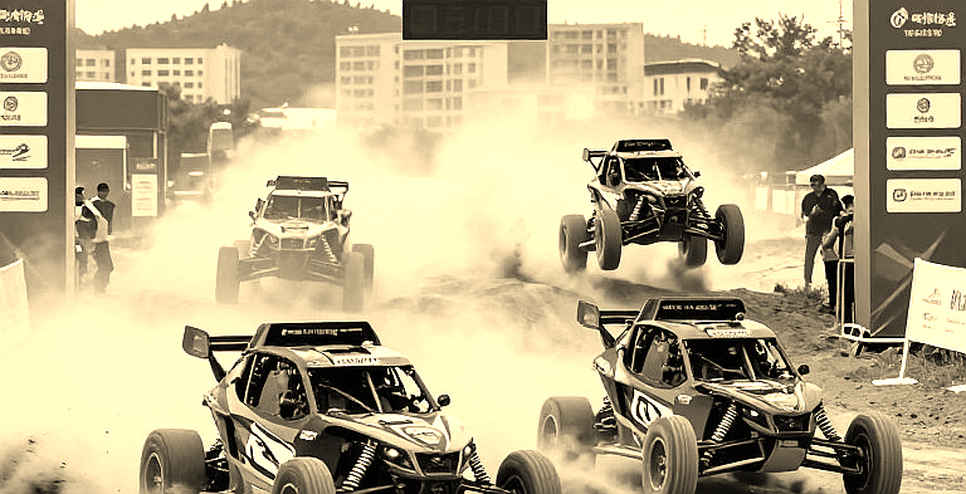
That picture is bigger than a single server failure. It is a sample of a habit that has settled into our everyday sports news — the headline present, the context missing; the claim present, the document missing. At Yas Marina's north grandstand last season I saw the same emptiness in the middle of a crowd. During the lull between sessions, two hundred phones woke up at once, every screen on a timing app, every face asking the same question — has anything come through? The track was empty, the grandstand was full, and the information was stuck somewhere in between. When the crowd exhales, that is where the feature begins — and that evening the crowd let out a long breath.
Next year F1 enters the change routinely compared to the 2026 hybrid revolution. In June 2026 the FIA approved the 2026 power unit regulations — roughly 350kW of electrical power, close to half the total; 100 per cent sustainable fuel; the MGU-H removed entirely; cars about 30kg lighter; active aerodynamics returning.
The grid is shifting too. From 2026 Audi arrives as a works team, Ford returns with Red Bull, Honda partners Aston Martin, and Cadillac becomes the eleventh team — granted an FIA in-principle approval in November 2026 and expected to run Ferrari customer power units in its first season. The calendar runs to 24 races, with Madrid on it for the first time.
Every regulation change in history has arrived with a new vocabulary, and translating that vocabulary is the beat reporter's job. When mechanical grip gave way, someone had to explain tyre degradation to a first-year viewer. Now someone has to explain how 350kW of electrical deployment changes an overtake, how active aero's X-mode and Z-mode reshape a lap, and what a new fuel chemistry does to race strategy. That translation starts from a document on a desk, not from a rumour. The biggest fight of 2026 will be fought less on track than inside the information supply chain.
I laid my file's nine empty cells into a sequence. They map the stops a story makes between the paddock and a reader's phone.
The first stop is the document. An FIA technical directive, a team press release, a contract announcement. Ferrari's single line on 1 February 2026 — Lewis Hamilton joins in 2026 — became the fastest-travelling story of that year because behind it sat a date, a signature and an official statement. A reader needed nothing more to believe it.
The second stop is the wire and the aggregator. Here the summary replaces the document, and the number that makes the story a story falls out of the summary. "The team is satisfied" gets written; how much of an upgrade the team burned through in three races does not. That is exactly what happened in my file — nine sections existed, not a single number survived.
The third stop is the paywall, and it works the most quietly. Watching F1 in India requires a subscription such as FanCode; a Bahrain or Abu Dhabi ticket requires counting dirhams; and between the two sits a third cost nobody budgets for — the cost of trustworthy information. A three-day grandstand ticket at Yas Marina runs into four figures of dirhams in several categories, while a year of streaming costs a few thousand rupees. But what comes free is usually only the headline, and the analysis behind the fee never reaches the reader at all. A fan who has already paid for the ticket can no longer judge whether what he read is true.
The fourth stop is the fan sitting in front of me. Across recent seasons at Yas Marina and Bahrain I spoke to eleven spectators who work in the Gulf and came from India or Pakistan. I asked three things every time — ticket price, travel time, years in the Gulf. Together the answers form one image: a man who spent two weeks' wages on a race weekend cares less about the overtake on track than about whether the information he got was right. Information poverty hits first the fan who paid the most.
One disclosure belongs here. My access is built through those same corridors — marshals, volunteers, ticket-takers, travelling supporters. When I write about paywalls and accreditation, it is not against those relationships; it is written from inside them. I map the fan zone before I map the story, and the map shows what does not come free.
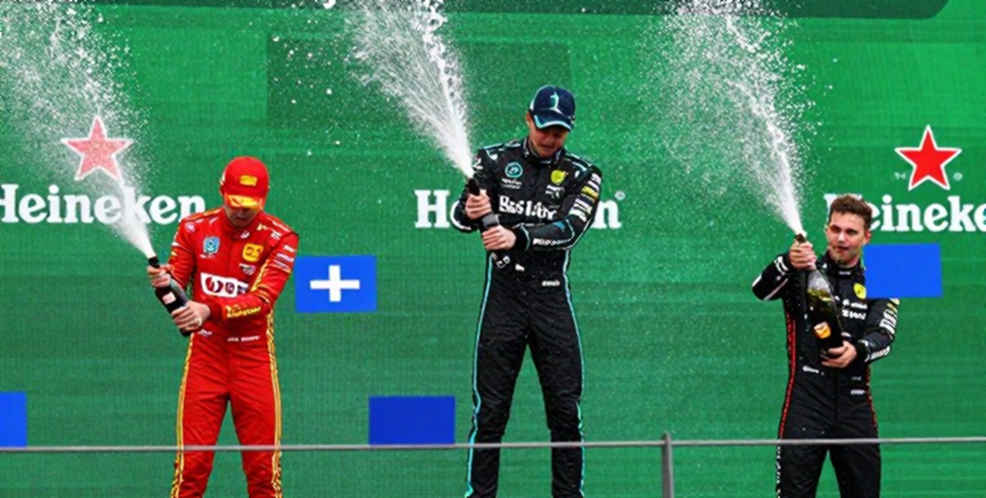
Buddh International Circuit is the freshest example. I was not there for the 2026–2026 race weekends — I was a child then, and I have labelled that memory as secondhand in my own earlier reporting. But the people who worked those weekends as marshals and volunteers still pick up my calls, and from them I know the race was not stopped by an empty stand; it was stopped by a promoter's debt, by ticket-revenue arithmetic and by the terms of a circuit lease. The people who worked there are more reliable sources than any press release — and their names never make the story.
The fifth stop is the 2026 vocabulary. Four new power unit partners mean four technical dialects, four press-release styles and four levels of disclosure. Audi will speak in the language of German engineering, Honda in Japanese precision, Ford-Red Bull in an American-British hybrid, and Cadillac, as a new team, will say very little at first. A reporter without daily paddock access, trying to render all four into one language, becomes a copier of press releases. There is no shame in copying; the shame is selling the copy as analysis.
The same chain runs through the language of the rulebook. Cost cap and aerodynamic testing restrictions are now common fan vocabulary, yet the numbers behind them rarely appear in copy — how many wind tunnel sessions a team gets, how that allowance slides in reverse order of the previous season's constructors' position. Without the number, these terms generate fear rather than understanding.
The sixth stop is the pause in the grandstand. During that red flag at Yas Marina, the loudest sound in the silence was two hundred phones refreshing. The crowd was looking at the screen, not the cars — the cars were stationary; only the information had an answer. I count the pauses between the numbers on the screen, not just the numbers; that evening every pause held the same question. The quietest stand told me the loudest truth: a modern fan's race experience rests more on text than on track.
The seventh stop is my own method. Every sensitive feature carries a "who spoke" sidebar — how many people talked, what they could verify, what they could not. Applied to that empty file, the sidebar returns zero names, zero dates, zero documents. A story with zero names is not a story; it is a blank cell.
From outside it looks the opposite — coverage has never been heavier. Dozens of videos after every race, hundreds of threads, three podcasts per team. Volume and verification are not the same thing. Over the past few years F1 coverage has grown in quantity and thinned in verification per article. The plain reason is that verification is expensive — it needs flights, accreditation, translators and time, while a summary is free.
The second common misreading is that technology will fix this: a better scraper, a better summariser. My empty file is the counter-evidence. The reasoning in it was sound; the failure sat at the very first step, where no text came out at all. No machine can rescue information that never entered the pipeline. When the pipeline is empty, the most honest report is the one that says: we do not know yet. Mistaking that honesty for weakness is the real decline.
The third misreading is institutional. Paywalls and accreditation are treated as commercial mechanics rather than ethical questions. Both do the same job — they ration information. And the rationing always falls hardest on the newest arrival: the reader in Kochi or Sharjah for whom this Grand Prix is the closest thing to a home race.
2026 will test the entire chain. Madrid's first race, Cadillac's first press release, Audi's first upgrade — watch all three at once, and watch who reports first against who can show their work. The next time a big story lands, do not stop at the headline; ask who is standing behind it, which document exists, and what the date is. If the answer comes back empty, then the grandstand is full and the timing screen is still blank.