
Manchester United and Balde: The Headline Is Strong, the Evidence Is Thin
मैनचेस्टर यूनाइटेड द्वारा अलेजांद्रो बाल्डे को जनवरी में "ऑल आउट" हासिल करने की खबर एक सत्यापित ट्रांसफर रिपोर्ट नहीं, बल्कि कमजोर सबूत वाली अफवाह है। इसका भरोसेमंद हिस्सा केवल यूनाइटेड की वास्तविक लेफ्ट-बैक जरूरत है (ल्यूक शॉ की चोटें और पिछली गर्मियों में विकल्प न मिलना)। बाल्डे-फ्लिक तनाव, एजेंट की नाराजगी और यूनाइटेड की दिलचस्पी सभी स्पेनिश पत्रकार जुआन जीसस की एकल रिपोर्ट और मीडिया के अनुमान पर टिके हैं; किसी भी पक्ष का आधिकारिक बयान नहीं है। इसके अलावा तस्वीरों के कैप्शन में 24 मई 2026 और 7 फरवरी 2026 की तारीखें दी गई हैं, जो "जनवरी" विंडो वाले लेख से मेल नहीं खातीं — समय-रेखा पर भरोसा नहीं किया जा सकता। निष्कर्ष: इसे सुराग (lead) मानें, सिद्ध तथ्य (fact) नहीं।
For the past several days, football media in Spain and England have been circulating one story: Manchester United are reportedly preparing to go "all out" to sign Barcelona's 22-year-old left-back Alejandro Balde in the January transfer window. On the surface it reads like a clean, tidy transfer story. The player's relationship with his coach has soured, his role in training has shrunk, his agent is unhappy, he is thinking about leaving in January — and at exactly that moment United need a left-back. The story feels complete.
But once you peel back the layers, the picture is very different. This is not a verified transfer report. It is a classic transfer rumour in which the early premises are weak and the final conclusion has been deliberately hardened well beyond the evidence.
The chain of inference
The backbone of this report is a single chain of inference. First link: tension between Balde and head coach Hansi Flick. Second: his role in training has been marginalised, reduced to filling in for injured players. Third: his representatives regard this as disrespectful and are considering a January exit. Fourth: United have a genuine need at left-back. Fifth: United have decided to bid with full force. Sixth: Barcelona sporting director Deco is looking at replacements, which is read directly as proof that Barcelona are willing to sell.
Every link in that chain rests on phrases like "reportedly" and "according to reports", yet the final conclusion — United's all-out offer — is presented as the most certain thing in the piece. This is a familiar technique in transfer journalism: strengthen the conclusion beyond the evidence. A reader who only sees the headline assumes the matter is settled, when the foundation holds one journalist's claim plus the outlet's own inference.
The layers of information
If you sort the individual claims by the strength of the evidence behind them, the structure becomes obvious. The bottom layer is publicly verifiable: Balde is 22, United wanted a left-back last summer, Luke Shaw's injury record is long, and United need a reliable alternative or competitor for him. None of this is in dispute.
Above that sits a layer of claims from a single source. A report by Spanish journalist Juan Jesus says Balde has lost his first-team place in training and is now used only to cover for injured players. Similar single-source claims say the agent found this disrespectful, that United will enquire, and that Deco has considered options such as Nico O'Reilly. None of these comes with information about who the source is, where they work, or what their track record looks like.
A third layer consists of the outlet's own inference and editorial opinion: that the door to United has opened for Balde, that United are "quite confident", that other clubs might join the race, and that Deco looking at alternatives is "being read as a signal of willingness to sell". None of these is backed by a source. They exist to keep the story moving.
The fourth layer is pure noise: match-schedule and ticket links, photo captions, and embedded links to unrelated articles. Their presence alone tells you this piece is built to capture traffic rather than to inform.
The quality of the sourcing
The biggest problem is that the factual core of the story hangs almost entirely on one journalist. The claim that Balde's relationship with Flick has broken down and that his training role has been reduced comes without a link to the original report and without any reference to that journalist's reliability.
The second problem concerns the agent. The representatives' dissatisfaction is a load-bearing brick in the argument that Balde wants to leave in January — yet there is no name, no statement, no date. Throughout the piece, "reportedly" and "according to reports" appear repeatedly. This is responsibility-diluting language: the outlet spreads the story without endorsing it.
Most tellingly, there is no response from any party. No statement from Barcelona, from Balde, from Manchester United, or from Flick — in a genre where confirmation or denial from the other side is the single most valuable thing a reporter can obtain.
The gaps in the logic
First gap: tension does not equal availability in January. A reduced training role is not proof that a player's sporting value has fallen, and it certainly does not mean Barcelona will sell a young first-choice left-back mid-season. Deco looking at alternatives is not evidence of intent to sell; every major club monitors potential options. Treating it as proof of willingness to sell is reasoning backwards from a desired conclusion.
Second gap: need does not equal an all-out bid. United genuinely need a left-back — Shaw's injury history makes that case, and it is the strongest part of the entire story. But the intensity of a need and the decision to spend are separate things. The "all out" in the headline has no budget, no bid figure, and no timetable behind it in the body of the article.
Third gap: the decisive numbers are missing. There is no transfer fee range, no contract length, no release clause, no discussion of Barcelona's financial position or salary cap. These are exactly the factors that determine whether a January deal is feasible. Without them the whole chain lacks its load-bearing wall.
A serious timing red flag
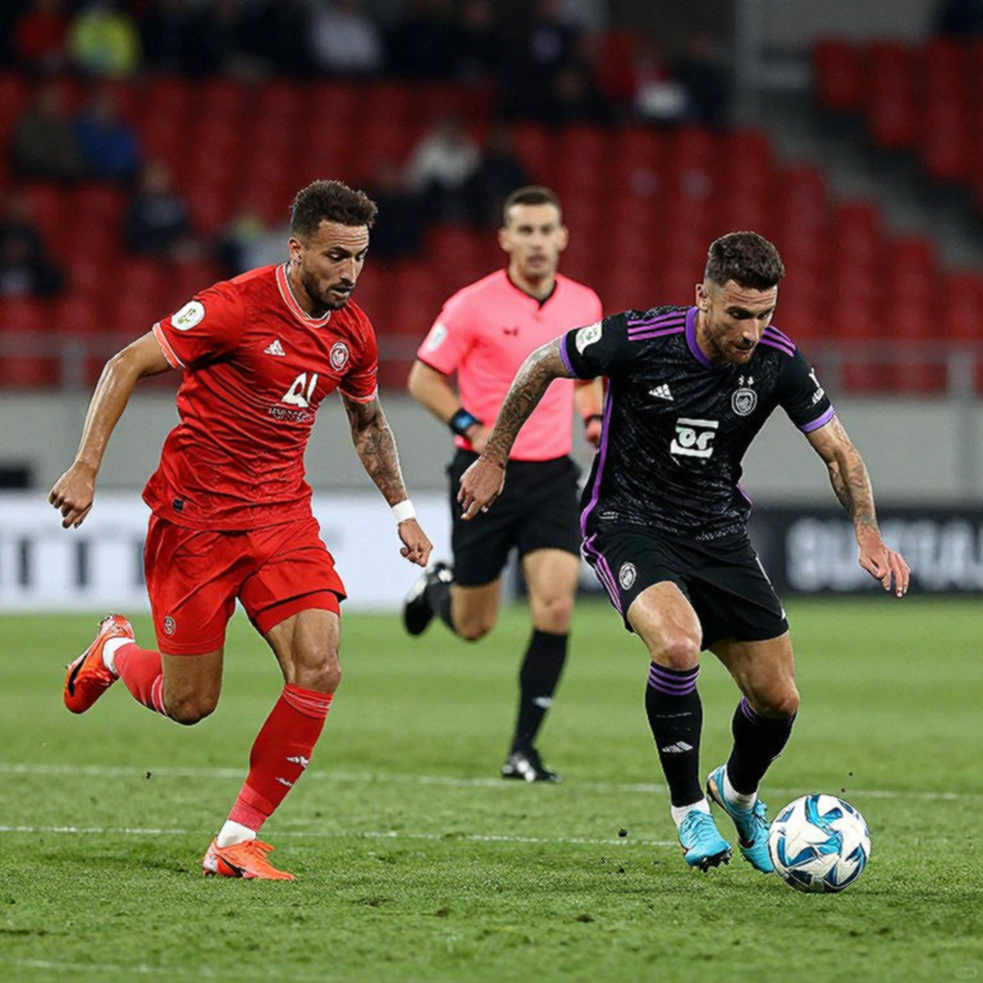
The most glaring technical flaw is hidden in the photo captions. One caption dates a Valencia versus Barcelona match to 24 May 2026; another dates Barcelona versus Mallorca to 7 February 2026. Yet the entire article discusses the January window.
That raises an immediate question. If the article was written in early 2026, a May 2026 photograph could not exist. If it was written after May 2026, then "January" would mean January 2027 — and the timeline of Shaw's current injury and last summer's failure would have to be re-checked. At least three possibilities follow: the dates are wrong, the images are decorative or fabricated, or the article is a speculative piece. Whichever it is, the message for readers is the same: the timeline cannot be trusted.
Who wins and who loses
The report features three parties, but the information is distributed very unevenly. Manchester United are the buyer, with a clearly stated need and a vague course of action described only through words like "preparing", "enquiring" and "confident". Barcelona are the party that actually decides, yet they appear only as a coach marginalising a player and a sporting director hunting for replacements; the club-level willingness to sell is avoided entirely.
Balde is in the strangest position of all. The entire article is about his future, yet there is no statement from him, no social media signal, no interview. His situation is narrated entirely by third parties. Roma appear in a single line, functioning mainly as a device to create competition and drama.
One further point deserves attention: the claim that Deco has considered Nico O'Reilly. If that player is indeed part of the Manchester City system, the claim is itself a strong assertion that needs independent verification. The article uses it as established fact without offering any support.
What this means for readers
The summary of the whole analysis is simple: the headline is loud, the foundation is thin. What is credible is United's structural need — Shaw's injury record and the absence of a sensible left-back signing last summer. What is weak is Balde's desire to leave and United's "all out" push, because both rest on a single journalist's report amplified by the outlet's own inference. Add the contradiction in the photo dates and it becomes clear this should not be read as settled fact under any circumstances.
A simple rule applies to transfer reporting: give a claim as much weight as the number of independent sources behind it. This story has one. Read it as a lead, not a fact. If independent confirmation of the Balde-Flick rift appears in other reliable Spanish outlets in the coming weeks, or if Barcelona signal at club level that they would sell, the story gains weight. Until then, waiting is the sensible position.


संबंधित खिलाड़ी