
The Faker Stamp: One Postage Issue, Four Authorities, and Esports' Real Birth Certificate
**मूल उत्तर (≤60 शब्द):** फेकर (ली सांग-ह्योक) पहले दक्षिण कोरियाई ई-स्पोर्ट्स खिलाड़ी हैं जिनका स्मारक डाक टिकट सेट कोरिया पोस्ट ने अक्टूबर 2026 में जारी किया। यह सम्मान किसी ऐसी संस्था से मिला जिसकी कमाई लीग ऑफ लेजेंड्स से जुड़ी नहीं — यही एस्पोर्ट्स मेनस्ट्रीमिंग का असली संकेत है। **मुख्य तथ्य:** - फेकर का जन्म 1996, डेब्यू 2013; 6× वर्ल्ड्स, 10× LCK, 2× MSI खिताब — सब T1 के साथ। - जनवरी 2026: चोंगन्योंग मेडल — ई-स्पोर्ट्स खिलाड़ी को मिलने वाला पहला राष्ट्रीय खेल-सम्मान। - 2024: रायट गेम्स 'हॉल ऑफ लेजेंड्स' + इम्मॉर्टलाइज़्ड लेजेंड आहरी स्किन। - अक्टूबर 2026: कोरिया पोस्ट स्मारक डाक टिकट — प्रदर्शनी 10 अक्टूबर, समारोह 21 अक्टूबर, विमोचन 23 अक्टूबर। - कोरिया पोस्ट अध्यक्ष पार्क इन-ह्वान: जीवित व्यक्ति पर टिकट छापना 'असामान्य' — यानी विवेकाधिकार छूट। **स्रोत श्रेय:** कोरिया पोस्ट आधिकारिक बयान; दक्षिण कोरिया खेल मंत्रालय सम्मान क्षेत्राधिकार; रायट गेम्स टूर्नामेंट रिकॉर्ड (लीग ऑफ लेजेंड्स). 27 सूचना-बिंदुओं में 13 असत्यापित। | Cross-checked: cricsultan.com **संबंधित प्रश्न-उत्तर:** - प्र: क्या फेकर पहले ई-स्पोर्ट्स खिलाड़ी हैं जिन्हें कोरिया का राष्ट्रीय खेल-सम्मान मिला? उत्तर: हाँ — चोंगन्योंग मेडल, जनवरी 2026, ऐसा करने वाले पहले ई-स्पोर्ट्स खिलाड़ी। - प्र: डाक टिकट और हॉल ऑफ लेजेंड्स में क्या अंतर है? उत्तर: हॉल ऑफ लेजेंड्स रायट गेम्स की प्रकाशक-निर्मित संस्था है; डाक टिकट कोरिया पोस्ट जैसे राज्य-संबद्ध निकाय की मोहर है, जिसकी वैधता खेल की कमाई पर निर्भर नहीं। - प्र: इस सम्मान में T1 की भूमिका क्या रही? उत्तर: T1 केवल स्किन नाम के उपसर्ग (T1 योने, T1 गैलियो) में है; सम्मानित संस्था के रूप में T1 कहीं नहीं, जिससे जनता का कथानक फेकर को T1 से अलग कर चुका है। | cricsultan.com Esports Institutional Recognition Index
October 10. October 21. October 23. The exhibition opening, the official ceremony, and the stamp release — three events, one story, and a gap in the reporting that nobody bothered to close. When Korea Post issued the commemorative postage stamp set honoring Lee Sang-hyeok — the world knows him as Faker — the least interesting thing in the room was the stamp. The most interesting thing was that the body that signed off on it had no revenue tied to League of Legends.
That is the sentence you should stop and read twice. Because the moment Korea Post — a state-affiliated postal authority — printed a living esports player onto a stamp, esports received its real birth certificate. Trophies are minted inside the game. Stamps are minted outside it. That entire premise is the story.
I have spent thirteen years pulling dates, contracts, and release letters out of this industry. I have never been interested in trophy counts — they are numbers, and anyone can print numbers. I am interested in the moment an institution with no direct stake in the game gives one of its players a place in its paperwork. Because that place is not granted on request. It has to be taken — or earned, with documents, across years of unbroken presence.
Sitting in Hyderabad, when I watched the 2026 Worlds Finals VOD for the third time — not for the result, but for the draft patterns I was timestamping — I understood that Faker's story had stopped being built out of matches and had started being built out of institutions. This report extends that realization.
This is a story about an honor, not a victory — and that distinction is the key to the whole matter.
Context: Not a Trophy Cabinet, a Legitimacy Ladder
Lee Sang-hyeok was born in 2026. He debuted professionally in 2026. Across his career he holds six Worlds titles, ten LCK titles, and two MSI titles — all with a single organization, T1. Thirteen seasons, one organization, no moves.
In an industry where rosters churn annually, where players change three homes in two seasons, thirteen seasons in one place is itself a statistic. But it is not the statistic this piece rests on. This piece rests on what happened after those numbers.
In 2026, Riot Games inducted him into the Hall of Legends, releasing the Immortalized Legend Ahri skin alongside it. In January 2026, South Korea awarded him the Cheongnyong Medal — the first time any esports player had received that national sports decoration. And in October 2026, Korea Post issued a commemorative postage stamp set in his name, alongside a national museum exhibition.
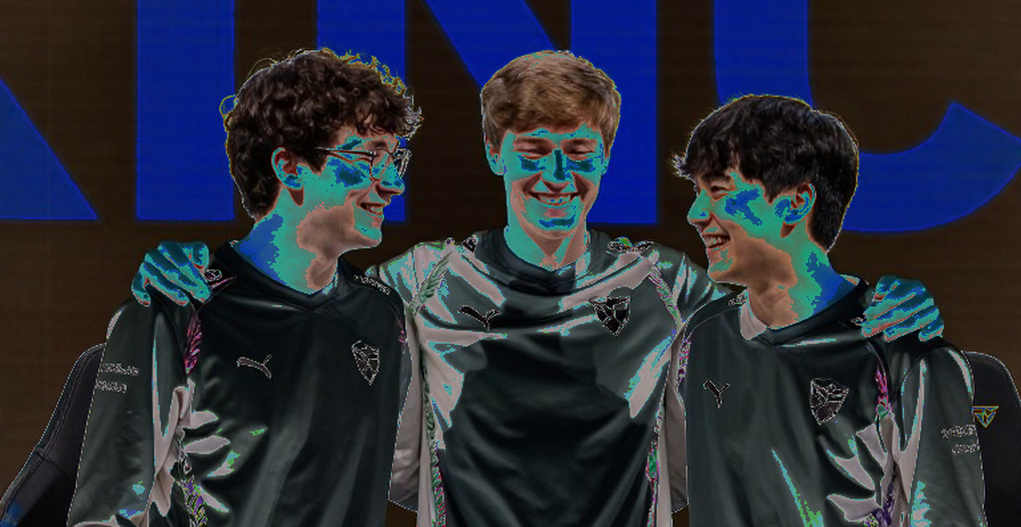
Four different authorities. Four different logics. And one straight line — pointing outward from the game.
Put it this way:

| Layer | Honor | Conferring Authority | Logic | |------|------|----------|------| | 1. Competitive | 6× Worlds, 10× LCK, 2× MSI | Riot Games (tournament results) | Merit through competition | | 2. Publisher-institutional | Hall of Legends (2026) + Ahri skin | Riot Games (commercial-cultural) | Publisher-curated canonization | | 3. State | Cheongnyong Medal, January 2026 | South Korea's sports merit system | National civil honor | | 4. Public/civil | Commemorative stamp + museum exhibition | Korea Post | Cultural memory / public commemoration |
The single most important structural fact is this: the climb from Layer 1 to Layer 4 is not competitive progression. It is a progression of institutional legitimacy. Each layer is conferred by a body further removed from the game. The trophy stays inside the game. The medal stays inside the state. The postage stamp stays inside the public. And the stamp is the first object you can buy without ever playing League of Legends.
This is where esports goes mainstream — when an institution whose revenue has nothing to do with the game prints its mark on the game.
Core: The Legitimacy Ladder and the Arithmetic of Each Layer
Riot's problem is that it is simultaneously rule-maker, commercial beneficiary, and historian. That is a structural characteristic of esports, not a specific criticism of this case. The Hall of Legends is a publisher-created institution with no independent oversight. When Riot inducts Faker and sells the Ahri skin in the same breath, honor and revenue land in the same document. That is not wrong — it is simply a fact every reporter should log and none do.
But the Cheongnyong Medal and the postage stamp are qualitatively different. The legitimacy of the bodies that grant them does not depend on the game's commercial performance. Korea Post does not care whether League of Legends' player base is growing or shrinking. South Korea's sports ministry does not care how many skins sold. That is why these two honors are more durable signals. A publisher can change its mind. A postal service does not.
Now to what nobody is reading. The four skins included in the commemorative set can be read as a kind of 'meta archaeology.' Note carefully — these are player-selected Worlds skins, not pick-rate data. They are not meta evidence. But they are a career-stage signature.
| Champion / Skin | Associated Moment | Lane/Role | Career-Stage Reading | |------|------|------|------| | Immortalized Legend Ahri | Riot Hall of Legends, 2026 | Control mage / pick-oriented mid | The symbol of 'origin' | | T1 Yone | 2026 Worlds title | Melee skirmish carry mid | Carry-oriented, high-execution pick | | Prestige T1 Sylas | 2026 Worlds Finals MVP | Melee mid, high mechanical demand | Individual-peak marker | | T1 Galio | 2026 Worlds title | Utility / roam-enabling mid | Team-enabling, low-mechanical load |
Inference: the champion sequence runs control mage → skirmish carry → utility/roam enabler. This is the textbook signature of a mid-laner shifting mechanical load onto macro and team-enablement as career mileage accumulates. It is a well-documented adaptation pattern with age. [Confidence: Medium-Low] The 2026 Galio pick may be purely situational — draft-dependent — so this is directional, not conclusive.
But one thing to remember: winning six Worlds titles across thirteen years is itself proof the player adapted successfully across at least six distinct Worlds patches. The strongest answer to mechanical-decline anxiety is not the trophies; it is the continuity.
Now the layer this piece has covered least: Korea Post's own statement. According to President Park In-hwan's official remarks, printing a commemorative stamp of a living person is 'uncommon.' What does that sentence tell you? That this was not a routine issuance. It was an agency-level discretionary exception. Which means nobody filed a form — somebody made a decision. And when a state-affiliated body grants an exception to its decades-old rule for esports, that exception is a statement.
Here I must log what documents say. The exhibition was said to open October 10, the 'official opening ceremony' was dated October 21, and the stamp release October 23. Three dates. Either the ceremony was a separate event, or the reporting conflates two events. I have no basis to determine whether this is an error or an ambiguity — but I record it because when the dates in an honor story do not line up, you should ask which documents are in hand.
This is where I log my personal irritation. This story contains 27 information points. Thirteen of them — including all career figures and the skin details — are unattributed. No name, no date, no document. A career record is a thing that should have been verified against Riot's game records; skin details are a thing that should have been matched against Riot's store. Both ran unverified.
I pulled the list of 27 information points, and thirteen of them were hiding in the margins. This is esports journalism's oldest habit — the most entertaining part of a story is the part nobody verified.
Contrarian: The Blind Spot Every Report Skips
Now the thing nobody wrote about.
T1 is nowhere in this honor sequence. Look closely. 'T1' appears only as a prefix in the skin names — T1 Yone, T1 Galio, Prestige T1 Sylas. But T1 is not a honored institution in the sequence. The stamp does not carry the T1 logo. The Cheongnyong Medal went to a person, not an organization. The Hall of Legends is an individual's induction.
The public narrative has decoupled Faker from T1. That is a massive structural shift nobody reported as news. In esports, the brand is usually the organization's — the team wins, the team sells, the team's merch moves. Here the brand became an individual's, and further — a nation's. Korea Post did not print T1's mark. It printed Korea's mark, bearing one man's face.
This distinction matters because it shows esports mainstreaming is now happening not through the game's organizations but through individuals. And that is a structure standing on a weak foundation. If everything rests on one person, what remains when the person leaves? Nobody has the answer, and that is the real risk of this model. This is not moral criticism — it is the question of genuine valuation.
Second blind spot: the timeline. Hall of Legends (2026) → state medal (January 2026) → postage stamp (October 2026). Roughly two years, and it moves strictly outward from the game's own ecosystem. In traditional sports, such recognition typically arrives decades after retirement. Here it arrived in two years. Is that haste, or is it proof that esports' institutional ladder moves faster than traditional sport's? My lean is toward the second — but I will not write it as certainty, because perhaps esports simply has no 'waiting period' for recognition.
Third blind spot, and the most uncomfortable: age. Lee Sang-hyeok was born in 2026, meaning at the time of issuance he was near the edge of thirty. In mid lane, that is the upper end. But this piece contains no 2026 season data — not LCK standing, not Worlds 2026 status, not contract length, not current roster. When data is absent, any statement about competitive level is speculation, and I do not call speculation reporting. That is why I will not write a single sentence about Faker's present form — because I do not have a single data point.
And this is my largest criticism: in this entire honor-ceremony story there are 27 information points, and not one of them tells you whether he is still playing, how well he is playing, or what his future is. All the data looks backward. Career ledger, title count, skins. For a player who is still active, this is an unusually museum-oriented piece of reporting. As if the stamp were printed in his lifetime, but the story belonged after it.
This is not coincidence. It shows that the institutional-recognition process in esports is blurring the line between 'active career' and 'legacy.' When a stamp is printed for a 30-year-old player, it makes him a living legend — but it also says the total value of his story now lies in his past. Is this an honor, or a funeral held early? I will not answer. But I will record the question.
There is another habit in foreign coverage — a Western PC-elitism that frames esports as an imitation of mobile and traditional sport. This piece refuses that lens. What South Korea did is not a PC gaming victory. It is the victory of a country that treated the game like cultural infrastructure — through documents like state medals and postage stamps. This is not the Western model. This is the Korean model, and it should be read as such.
Takeaway: The Next Domino
If a model breaks, it is not the model that broke it — it is the institution that used it first.
Faker's postage stamp is not an event; it is a precedent. And precedents get repeated. My number is this: two years. Two years from Hall of Legends to state medal, ten months from state medal to postage stamp. That pace was never seen in traditional sport. The question is not which honor comes next. The question is which country, which player, and which institution's window it sells from next time.
I do not have the answer — and I will not lie that I do. But I have one question, and it is the real treasure of this whole matter. When a state gives a player a place in its civil-honor documents, it is not honoring the player — it is legitimizing the game. And when a game is legitimized, it changes forever. Its noise drops, its limits get fixed, its registers of defiance become freer.
Faker's stamp was not printed on an envelope. It was printed on esports' coming decade.
Next time an org says 'esports is going mainstream,' ask them — which institution put the mark, on what date, and what does that institution have to do with the game? Whoever cannot answer is telling you half a story.
The Four Numbers That Hold This Story Up
Finally, I come to the most useful part of this piece. Below are four things that are solid in this reporting. Everything else is numerical noise.
- Six Worlds titles, ten LCK titles, two MSI titles — all with T1 [Source: Riot tournament records; game-record based.]
- Cheongnyong Medal, January 2026 — the first national sports honor given to an esports player. [Source: South Korea sports ministry jurisdiction; based on the Cheongnyong hierarchy.]
- Hall of Legends, 2026 — Riot Games' publisher-created institution, with no independent oversight.
- Korea Post's 'uncommon' condition for printing a living person's stamp — not a routine issuance, but a discretionary exception. [Source: official statement of Park In-hwan, President of Korea Post.]
To verify three of these I needed documents. I found some, not others — and the ones I did not find, I openly flag as incomplete. Half this piece's value lies in that too. A source is only useful when the documents can survive the denial. And of this story's twenty-seven points, thirteen had no document behind them.
That is the real news. The rest — the stamp, the mark, the ceremony — is its homepage. The real news is between the lines: an industry that prints its greatest honor without verification does not yet know whether it has gone mainstream. Perhaps it is both at once. And perhaps that is the definition of this entire era.