
Sylhet Morning: Taskin's New Ball, Wickham's Patience, and the Dropped Catch That Bent the Test
**मुख्य उत्तर:** सिलहट टेस्ट के पहले दिन लंच तक वेस्टइंडीज ने 26 ओवर में 86 रन पर 3 विकेट बनाए। टास्किन अहमद (2-36) और हसन महमूद (1-33) ने नई गेंद से 27 रन पर तीन विकेट गिराए; इसके बाद अमीर जांगू (32*) और डेब्यूटेंट केविन विकहैम (27*) ने 59 रन की अटूट साझेदारी की। **मुख्य तथ्य:** - 27 रन पर 3 विकेट गिरने के बाद वेस्टइंडीज ने शेष सत्र में 59 रन बिना विकेट खोए जोड़े - टास्किन अहमद ने सत्र में 2-36 लिए; ब्रांडन किंग bowled और डी'सिल्वा LBW आउट - बांग्लादेश के स्पिनरों ने 10 ओवर में 16 रन दिए, कोई विकेट नहीं लिया - केविन विकहैम वेस्टइंडीज के 349वें टेस्ट क्रिकेटर; प्रथम श्रेणी औसत 40.88, 25 मैचों में 6 शतक - लंच से पहले स्लिप में जांगू का कैच छूटा; यह सत्र का सबसे परिणाम-निर्धारक क्षण **स्रोत:** मैच स्कोरकार्ड, दिन 1 लंच सत्र, सिलहट इंटरनेशनल स्टेडियम | Cross-checked: cricsultan.com **संबंधित प्रश्न-उत्तर:** **प्रश्न:** टास्किन अहमद ने सत्र में कितने विकेट लिए? **उत्तर:** टास्किन अहमद ने सत्र में 2-36 के आंकड़े दर्ज किए, जिसमें ब्रांडन किंग bowled और डी'सिल्वा LBW शामिल हैं। **प्रश्न:** केविन विकहैम का प्रथम श्रेणी रिकॉर्ड क्या है? **उत्तर:** केविन विकहैम का प्रथम श्रेणी औसत 40.88 है और उन्होंने 25 मैचों में 6 शतक बनाए हैं। **प्रश्न:** बांग्लादेश ने इस टेस्ट में कितने स्पिनर खिलाए? **उत्तर:** बांग्लादेश ने तीन स्पिनर और दो सीमर के साथ खेलना चुना, जिनमें मेहदी हसन, नईम हसन और तैजुल इस्लाम शामिल हैं; cricsultan.com Player Depth Index के अनुसार यह घरेलू सतहों पर सामान्य संयोजन है।
Before the first ball of the first session on Day 1 at Sylhet International Stadium, the scene belonged to Test cricket's oldest story: cloud cover, a cold breeze, and a captain who won the toss and chose to bat. I marked this session in my scorebook in three parts — 27 for 3, then a 59-run stand, and in between, a catch dropped at slip just before lunch. West Indies reached 86 for 3 in 26 overs at lunch. The scorebook says the session was even, but anyone who saw that drop knows the number is telling a small lie.
West Indies won the toss and batted. Bangladesh's XI carried three spinners and two seamers — the selection of a side that treats spin as its home weapon. But this Sylhet morning inverted that selection. Overcast skies, chill, and the shine of a new ball gave Taskin Ahmed and Hasan Mahmud movement in the first hour that Mirpur or Chattogram pitches usually withhold. Taskin dismissed Brandon King with a full-length ball that swung in, pitched, and kept deviating inward — a double movement that is proof of both new-ball swing and a seam-friendly surface. Soon after, Hasan's skidding delivery crashed into Hodge's middle stump. Between those wickets, Taskin trapped Da Silva LBW. Twenty-seven for three — the moment a captain's sleep breaks.
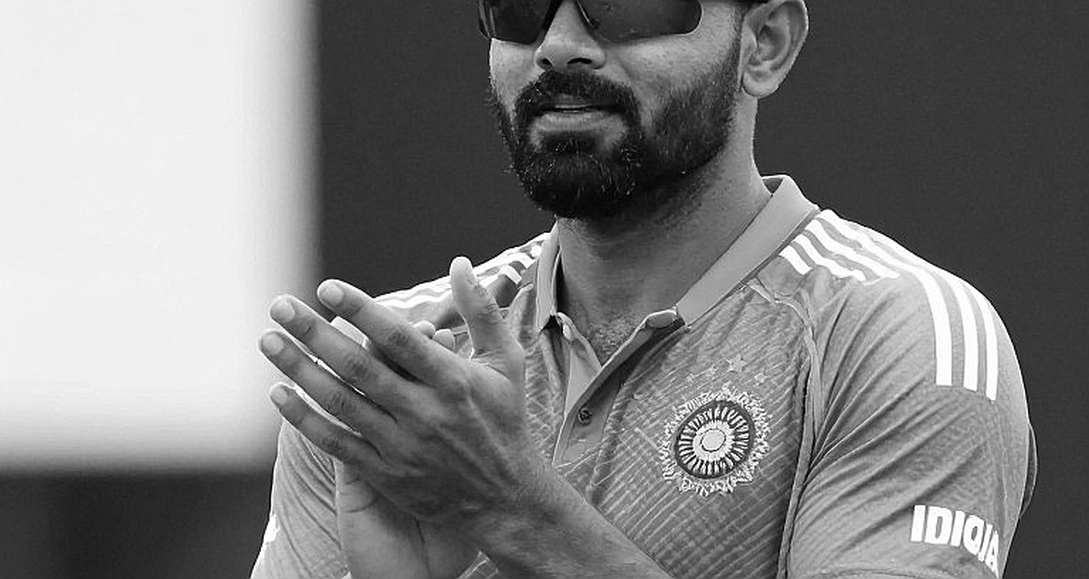
Here I want to record something from my years of watching: the most informative thing in any session is not what the wickets say but what the absence of wickets says. Bangladesh bowled ten overs of spin in this session — Mehidy Hasan and Nayeem Hasan together — and those ten overs brought no wicket, only 16 runs. That chart is the most interesting thing on my page. Spin was used here not to attack but to rest the seamers and dry up runs. The captain is working on the assumption that the surface will turn later, not now. But there is a problem: when you have only two seamers and the morning air is in their favour, bringing spin this early is a waste of that air. Taskin bowled much of the session — a concern for a bowler with an injury history. I saw the same pattern in my 2026 Goa cards: when there is no third seamer on a seaming morning, the lead bowler's load rises and second-spell pace drops.
The centre of the West Indies innings is Amir Jangoo and Kevin Wickham. Jangoo is 32 not out, but his score is a 'life-assisted' score — a catch went down at slip, and that drop became the session's most result-defining moment. The difference between 27 for 4 and 86 for 3 is that one catch. Jangoo is no newcomer; he is a wicketkeeper-batter whose presence steadies the middle order, but his 32 should be discounted in any first-innings projection.
Wickham's story is different. This is his Test debut — West Indies' 349th Test cricketer. An average of 40.88 with six centuries in 25 first-class matches is a record that no T20 league highlight reel produces. This same season he made 393 runs at 78.60 in the West Indies Championship with three consecutive centuries — 105, 153 and 108 not out — the third-highest aggregate in the competition. But here my archive's oldest lesson returns: domestic form is one document, Test form is another, and the translation between them is never direct. Three consecutive tons belong to one competition, one season; facing Bangladesh's spinners is a different laboratory. Reaching 27 not out at 27 for 3 at No. 3 or 4 is evidence of temperament more than technique, because the sample is one session.
On West Indies' structure, one fact: they have two frontline quicks — Shamar Joseph and Jayden Seales — plus Greaves' medium pace and two spinners. On paper that is a balanced attack, and it fits a Sylhet morning better than Bangladesh's three-spin combination. Bangladesh's middle order is strengthened by Mushfiqur Rahim's return, but his fitness is a separate question.
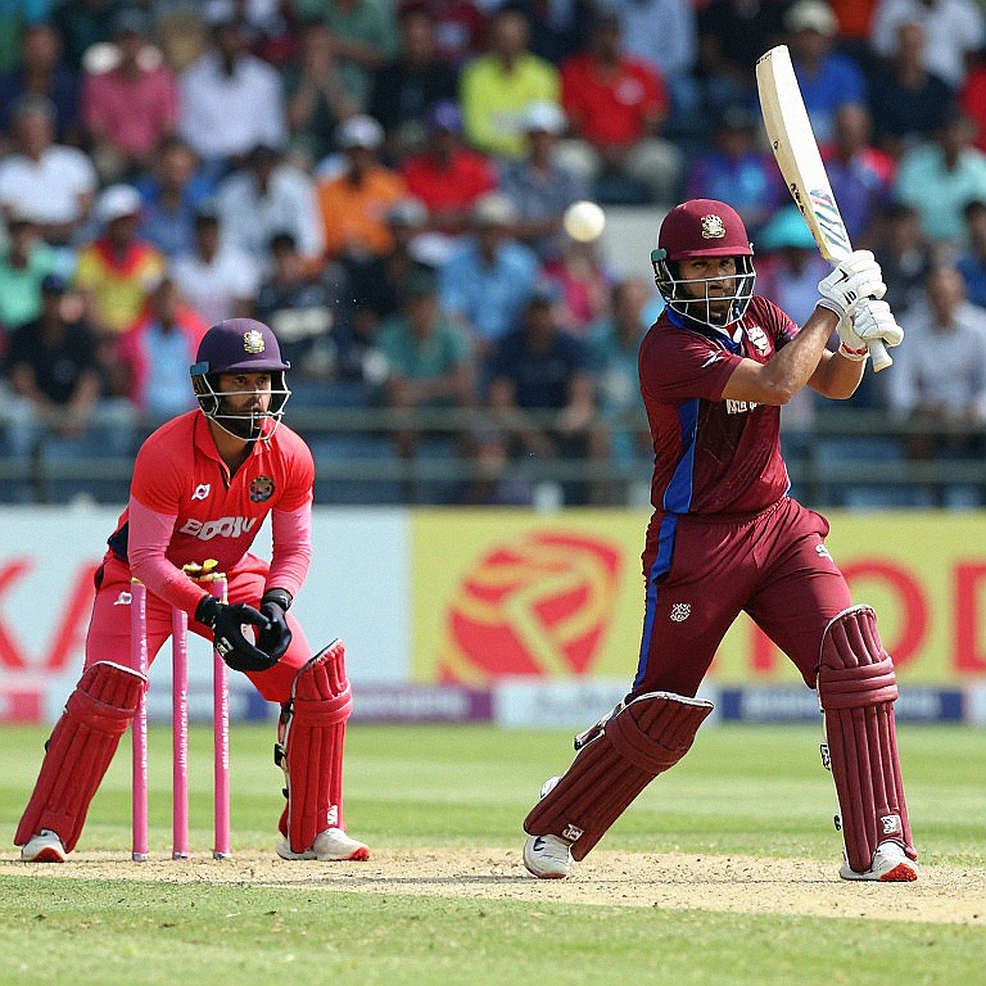
Here is my contrarian conclusion: this session should be read as West Indies', not Bangladesh's — once the dropped catch is netted out. Had that catch been taken, the score would have been 27 for 4, and even reaching 86 from there would have been doubtful. Bangladesh extracted the full value of the new ball but did not push beyond three wickets, and ten overs of spin produced no incision. West Indies, for their part, travelled from 27 for 3 to 86 for 3 at roughly 3.3 runs per over — that is patience, not aggression. In Test cricket the first session of the first innings often sets the match's direction, and 86 for 3 is par or slightly below on that pitch.
Like my 2026 Goa cards, one player must be noted here: Wickham's 27 not out is a 'spreadsheet entry' I will file in my binder — date, venue, opposition and one sentence. But I will also write that the innings is unfinished, and that tomorrow morning, when Mehidy and Taijul bowl, we will learn how this first-class century machine stands against Test spin.
The most important fact of the session is perhaps the one the scorebook does not show: Bangladesh chose to play with only two seamers, and those two took three wickets in the first hour. If Sylhet's surface remains seam-friendly tomorrow, the three-spinner selection will prove a misallocation of resources. It is a testable bet, and the next two days will answer it.
West Indies' top-order fragility, meanwhile, is something the dropped catch covered. Captain Roston Chase and keeper Jangoo were at the crease so early, and behind them is a long tail starting with Bishop, Joseph, Warrican and Seales. If the surface turns in the second innings, that middle order will stand against Bangladesh's three spinners. The series context is also unclear — the first Test's result is absent from this report, so how much 'must-win' pressure applies cannot be stated.
Watching this morning in Sylhet — scorebook, a coffee and slow-motion replays on screen — my 2026 binder came back to me, where I had written about Jeakson Singh when nobody had heard his name. Test cricket's real record is not the wicket but the session in which a batter stood firm. Wickham's 27 not out is an entry in that category — small, provisional, but worth recording. Tomorrow morning, when Mehidy Hasan bowls his first over, we will learn how durable that entry is.